
Trade volatility is now a permanent fixture of brand messaging, and silence is the most expensive option on the menu.
The tariff cycle has become a recurring writing assignment for every comms team. Whether the message is a 3 percent surcharge on imported components, the disappearance of a popular SKU, or a sudden pivot from “Made in China” to “Made in Mexico,” the words around the price are doing a job that pricing alone used to do: protecting trust.
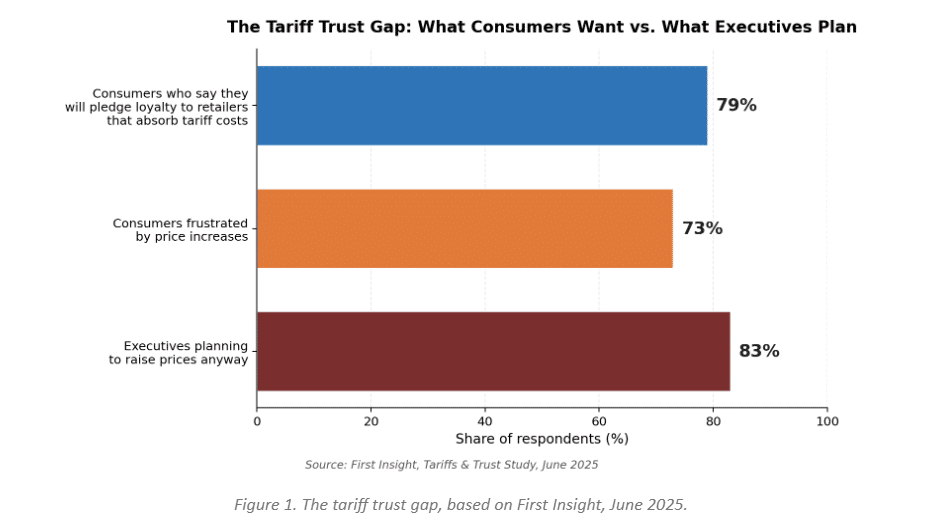
A 2025 study from First Insight found that 79 percent of consumers say they will pledge loyalty to retailers that absorb tariff costs, and lose trust in those that simply raise prices. The same study revealed something darker: 83 percent of executives plan to raise prices anyway. That is the gap PR and marketing leaders are now trying to close with words.
The new transparency premium
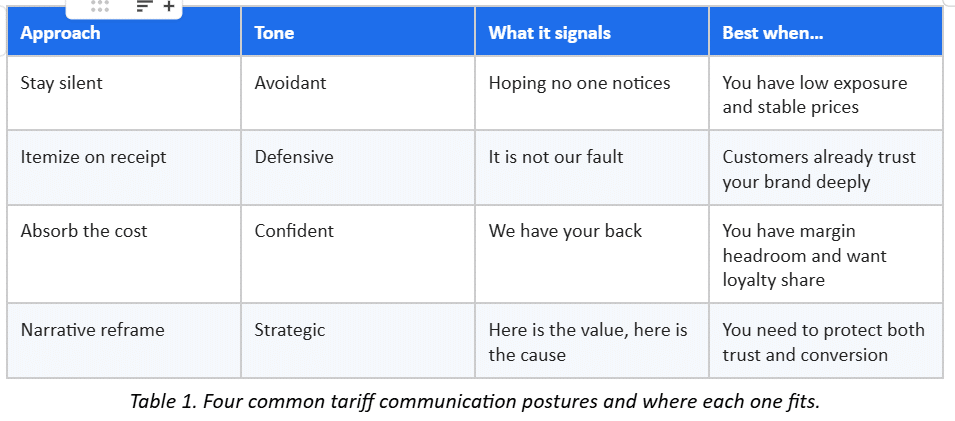
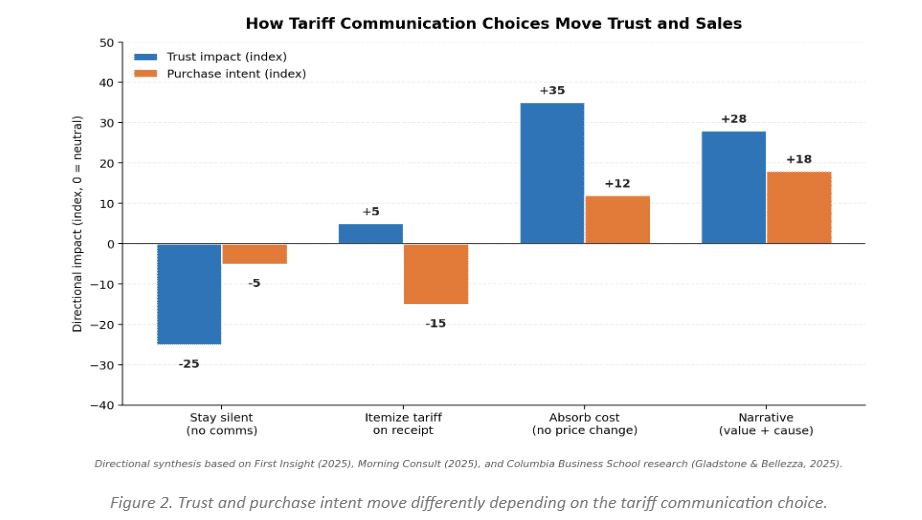
Consumers have learned to read between the lines on tariff messaging, and they punish two extremes: silence and over-explanation. A Columbia Business School-supported study of more than 1,500 adults, led by professor Joe J. Gladstone (Rady School of Management, UCSD) and Silvia Bellezza, found that itemizing tariff surcharges on a receipt does shift blame from retailers toward government. But it also reduces purchase intent. Disclosure works as PR. It hurts as a conversion.
That tension is the new operating reality, and it is where smart copy earns its keep.
“The biggest mistake brands make is writing tariff messaging the way they write press releases: hedged, jargon-heavy, all passive voice. When we test pricing notifications head-to-head, the version that says ‘we raised this price by four dollars’ beats ‘pricing has been adjusted to reflect macroeconomic conditions’ every single time. Customers do not need diplomacy. They need a sentence they can repeat to their partner over dinner.”
That is Lidiia Yushchenko, CMO at CustomWritings, whose team has tested hundreds of pricing notifications across academic and consumer audiences.
The price hike memo: what works
Three rhetorical moves are emerging across brands handling this well. Lead with arithmetic. Consumers can metabolize a $4 increase. They cannot metabolize “pricing optimization.” Name the cause once. Excessive blame-shifting reads as bad faith. Build asymmetric communications. Investors, employees, customers, and policymakers see your message simultaneously. A line that lands with shoppers may invite political scrutiny.
“Marketers and CMOs always want to be upstream of these types of decisions within businesses. If you enter an organization as a marketer, you are simply informed about things that have been decided like pricing and product roll outs. You are kind of only in a position to deliver. That is not the best outcome for the customer experience or the brand.” Dory Ellis Garfinkle, CMO at brand consultancy Siegel+Gale, in Digiday.
Tariff communication is not a downstream announcement task. It is a seat at the pricing table.
Supply chain disruption: the harder test
A surcharge is one thing. An empty shelf is another. Stockouts trigger emotional responses far stronger than line-item math, and they are where most brands lose narrative control.
- “In hosting, our customers often do not see the hardware behind the dashboard. When component pricing shifts because of trade rules, we publish the why before customers ever think to ask. A status page that explains a chip shortage in one paragraph saves us a hundred support tickets and an army of conspiracy theories. Pre-emptive transparency is cheaper than reactive defense.”
- Volodymyr Lebedenko, Head of Marketing at HostZealot, is making a point that travels across categories. A pre-emptive paragraph on a product page is cheaper than a refund queue, and a two-line social post about a stockout earns more goodwill than a dropdown that just says “Currently unavailable.”
For a useful macro view of where consumer prices may peak, the Wall Street Journal’s recent panel is worth thirty minutes:
Sourcing changes: the under-told story
Sourcing pivots are where comms can quietly turn a tariff problem into brand equity. Brands moving production from a tariffed country to a domestic or nearshore facility have a story to tell, but most fumble it by leading with politics rather than benefit.
“Itemized tariff disclosures shift blame from retailers to government, but they also reduce purchase intent. Political views moderate the reactions strongly. The same surcharge label can read as honesty to one customer and as a partisan signal to another, even when the dollar amount is identical.” Joe J. Gladstone, lead researcher on the Columbia Business School-supported study with Silvia Bellezza.
The implication for sourcing copy is clean: keep the politics out, lead with the practical. “Made closer to you” beats “American-made” in mixed audiences. “Faster shipping” beats “freed from tariffs.” Show the benefit. Skip the policy commentary.
A brief comic interlude
There is an apocryphal story circulating in PR circles about a retailer who tried to soften a tariff-driven price hike by relabeling it a “Geopolitical Loyalty Adjustment.” The team loved the language. Customers loved it too, briefly. Then they Googled what it meant, and the fee did not survive the weekend. The lesson: any phrase that requires a glossary also requires a refund policy. Or as one CEO reportedly asked in a serious meeting, “Can we just call the price hike a celebration of resilience?” Reader, they could not.
The brand-level playbook
- “We work with thousands of independent guides across more than 80 countries, and tariff-driven price shifts hit them in funny places, like the cost of replacement umbrellas or audio receivers imported from abroad. What we have found is that customers forgive cost increases when they see the human face behind the supply chain. A two-minute video of a guide explaining why she had to raise her tour tip suggestion outperforms any corporate FAQ. Faces beat formulas.”
- Alexandra Dubakova, CMO at FREETOUR.com, is naming the most underrated insight in tariff communications: humans absorb price hikes from other humans far more easily than from logos.
What PR teams should do now
The brands that will weather the next round of tariffs already share three habits. They write pricing language at the strategy table, not at the communications desk. They publish supply chain context proactively, not reactively. And they keep their messaging focused on customer outcomes, not policy commentary.
Tariffs will keep moving. Trust does not have to.