

The relationship between user experience (UX) and search engine optimization (SEO) has evolved dramatically. Gone are the days when ranking higher on search engines depended solely on backlinks and keyword density. Today, search engines evaluate how users interact with your website—how quickly they find answers, how smoothly they navigate pages, and how engaged they remain.
Artificial intelligence is now at the center of this transformation. AI-driven UX design enables businesses to create intuitive, personalized, and performance-optimized experiences that align directly with modern SEO ranking factors.
This article explores how AI is reshaping UX design and how these advancements can significantly improve your website’s SEO performance.
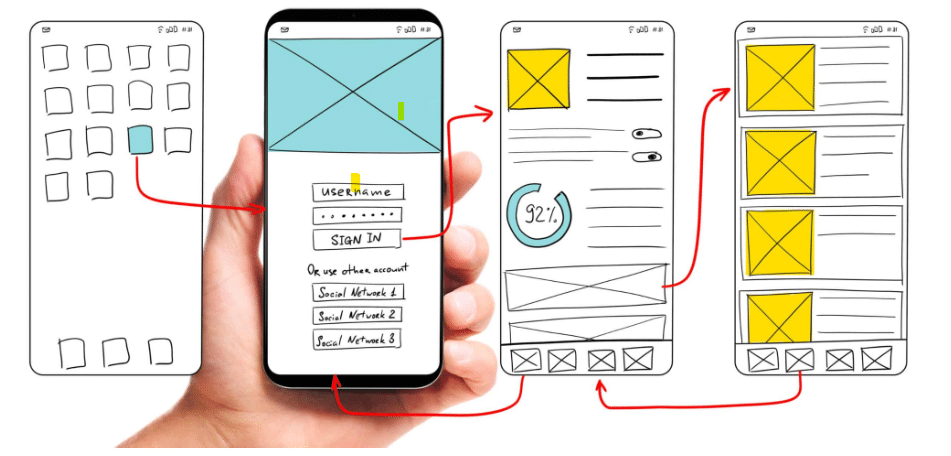
Understanding the AI–UX–SEO Triangle
To understand the impact, it’s important to see how these three elements work together:
- UX (User Experience): Focuses on usability, accessibility, and satisfaction
- SEO (Search Engine Optimization): Ensures visibility in search results
- AI (Artificial Intelligence): Analyzes data and automates optimization
AI bridges the gap by continuously analyzing user behavior and refining UX elements in real time. The result is a website that adapts dynamically to user needs while aligning with search engine algorithms.
Why UX Signals Are Critical for SEO Today
Search engines increasingly rely on behavioral metrics to determine ranking quality. These include:
- Time spent on page
- Bounce rate
- Pages per session
- Interaction depth
If users leave quickly or struggle to navigate your site, search engines interpret this as poor quality—even if your content is strong.
AI-powered UX design helps solve this by identifying friction points and improving usability before it impacts rankings.
Core AI-Powered UX Strategies That Boost SEO
1. Real-Time Personalization
AI allows websites to adapt content based on user behavior, demographics, and intent.
For example:
- Returning users may see tailored recommendations
- First-time visitors may receive simplified navigation
- Different regions may see localized content
SEO impact:
Personalized experiences increase engagement, which signals relevance to search engines and improves rankings.
2. Smart Navigation Optimization
AI tools analyze how users move through your site and identify bottlenecks.
Improvements include:
- Restructuring menus
- Highlighting high-value pages
- Reducing unnecessary clicks
SEO benefit:
Better navigation leads to deeper sessions and improved crawlability, both of which enhance rankings.
3. AI-Enhanced Page Speed Optimization
Page speed is a direct ranking factor, especially with Core Web Vitals.
AI helps optimize:
- Image sizes
- Lazy loading
- Script execution
- Server response times
Result:
Faster websites improve user satisfaction and reduce abandonment rates, which positively affects SEO.
4. Predictive Content Delivery
AI can anticipate what users want next based on behavior patterns.
Examples:
- Suggesting related articles
- Auto-loading relevant sections
- Highlighting trending topics
SEO advantage:
Users stay longer and explore more pages, increasing dwell time and session depth.
5. Automated UX Testing and Iteration
AI enables continuous testing without manual effort.
Instead of traditional A/B testing, AI can:
- Test multiple layouts simultaneously
- Optimize in real time
- Adapt to changing user behavior
SEO impact:
Continuous improvement ensures your site always performs at its best, maintaining strong engagement signals.
6. Voice Search and Natural Language UX
AI has transformed how users search, especially with voice assistants.
UX design now includes:
- Conversational interfaces
- Natural language content
- Question-based navigation
SEO benefits:
- Higher chances of ranking for long-tail queries
- Better alignment with voice search trends
- Increased visibility in featured snippets
7. AI Chatbots for User Retention
AI chatbots act as real-time assistants, guiding users through your website.
Benefits:
- Instant query resolution
- Reduced bounce rates
- Improved user satisfaction
SEO impact:
Engaged users are more likely to stay longer and interact more, boosting ranking signals.
8. Visual Hierarchy Optimization Using AI
AI tools analyze how users scan pages and adjust layouts accordingly.
Enhancements include:
- Better placement of headlines
- Improved spacing and readability
- Strategic CTA positioning
SEO advantage:
Clear structure improves readability and keeps users engaged, which positively impacts rankings.
9. Accessibility Improvements Through AI
AI ensures websites are accessible to all users by:
- Generating alt text for images
- Improving contrast and readability
- Supporting assistive technologies
SEO benefit:
Accessible websites are easier for search engines to crawl and index, improving visibility.
10. Behavioral Analytics and Heatmap Insights
AI-powered analytics tools provide deep insights into user behavior.
They track:
- Click patterns
- Scroll behavior
- Exit points
Actionable outcomes:
- Fix confusing layouts
- Improve high-drop pages
- Enhance user flow
SEO impact:
Optimizing these elements leads to better engagement metrics and stronger rankings.
Key Metrics to Track for AI-Driven UX Success
To measure the effectiveness of your strategies, focus on:
- Bounce Rate: Lower is better
- Dwell Time: Higher indicates engagement
- Core Web Vitals: Performance benchmarks
- Conversion Rate: Indicates UX effectiveness
- Organic Traffic Growth: Reflects SEO improvement
AI tools can monitor these metrics in real time and suggest improvements automatically.
Common Mistakes to Avoid
Even with AI, poor implementation can hurt performance. Avoid:
- Over-personalization that confuses users
- Ignoring mobile UX
- Relying entirely on automation without human oversight
- Neglecting content quality
AI should enhance UX—not replace thoughtful design.
The Future of AI in UX and SEO
AI will continue to push UX toward hyper-personalization and automation. Future trends include:
- Fully adaptive websites that change in real time
- Predictive search experiences
- Emotion-aware interfaces
- Deeper integration with search engine algorithms
As search engines become more sophisticated, the line between UX and SEO will continue to blur.
Final Thoughts
AI-powered UX design is transforming how websites perform in search rankings. By focusing on user behavior, personalization, and continuous optimization, businesses can create experiences that satisfy both users and search engines.
Success in modern SEO depends on delivering value quickly, efficiently, and intuitively. AI makes this possible at scale.