

Your pitch is the first deciding factor in whether you earn a meeting, a quote, or a story. If the pitch is generic or not personalized to the recipient, it’ll likely end up in the spam folder or be ignored, even in your inbox.
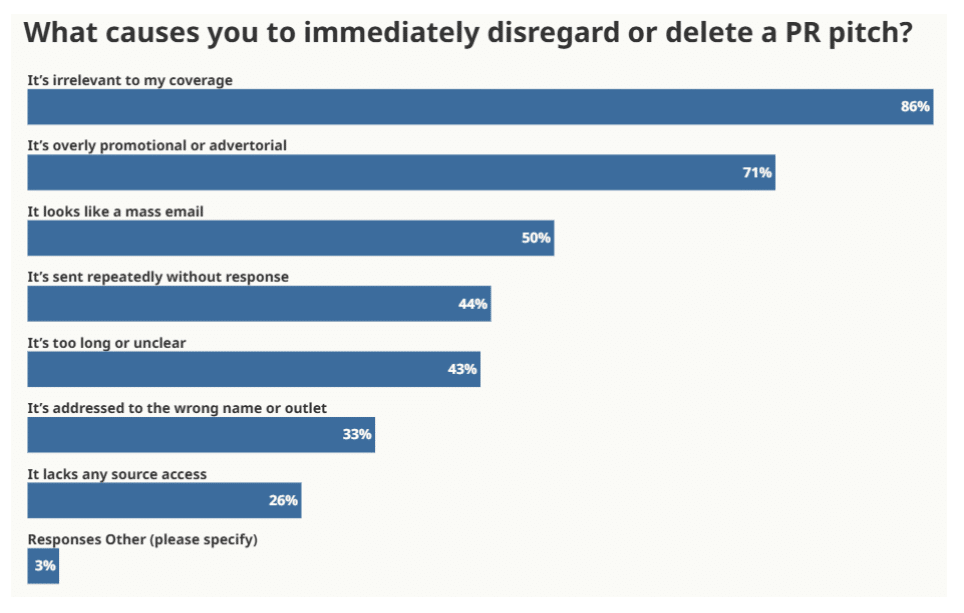
Don’t just take our words for it. According to recent research, 86% of journalists will outright neglect a pitch that’s irrelevant to them. And it’s not just them. An average recruiter and a business owner will filter your pitches the same way.
On the other hand, if you take your time perfecting the pitch and tailoring it, it’s more likely to get a positive response. Maybe a lifetime deal, a big contract, or an opportunity to show yourself out there.
In this article, we’ll share the five things that separate great pitches that get a response from those that die in the inbox and how to implement them.
1. Know who you’re talking to
Ryan Walton, Program Ambassador of The Anonymous Project, where he coordinates outreach to potential partners, says, “Before you draft a single sentence, you need to understand who’s on the other side. That’s because journalists, editors, analysts, and brand partners all have different pressures and priorities. If your message doesn’t speak to what they care about, it won’t move.”
Here’s what changes things before hitting the send button:
- Spend a good time reviewing their latest bylines, press releases, podcast episodes, or investor notes
- Create a pitch relevant to what the data says about them
- Reference something specific, like recent investments or addresses specific challenges they’ve publicly discussed
For instance, if your target business owner is in the tech industry and they recently announced a funding round, reference it directly and connect your pitch to how they plan to deploy that capital.
“I saw your recent funding announcement and your focus on expanding customer acquisition in North America. You mentioned that CAC efficiency is a priority this quarter. The angle I am proposing highlights how your onboarding flow reduced time to value by 40%, which directly supports that growth story.”
The goal is to show you’re following up and whatever you have to offer is relevant to their growth or needs.
2. Your subject line is your front door
Ryan Beattie, Director of Business Development at UK SARMs, says, “Your subject line is the first thing people see when you send them an email pitch. If it’s confusing or generic, people keep walking. If it’s specific and helpful, they step in.”
For a pitch, it needs to pass the message with a good hook even before your recipient clicks.
And here’s how Ryan suggests doing that:
- Make your subject line short. 40 to 50 characters is enough. On mobile screens, it gets cut off if it’s longer
- Add numbers or statistics of your work done, and how that relates to the person you’re pitching
- Ask questions wherever possible. It nudges your recipients to mentally complete it or open the email to find the answer
- Add precision and curiosity to land a click
Let’s say your recipient is a lifestyle journalist, your subject line can look like this:
Subject: “We surveyed 1200 people over 6 months”
Then your first line of text, which appears almost instantly after the subject line, can be: New 2026 lifestyle data for your column
3. Keep the body tight
Adrian Iorga, Founder & President at Stairhopper Movers, shares his experience pitching clients seeking relocation or property-moving services. Adrian says, “Your pitch needs to sustain momentum and maintain the existing flow to ensure your recipients stay engaged until the end.”
“For instance, let’s say the subject line is a summary of your report, the email body should start with how you gathered the data, and why, or vice versa. Straightforward messages are more preferred to long, diluted pitches.”
- In some cases, you can make the first line personal and relevant, then get to your point immediately
- Think in short blocks, not walls of text. For cold outreach, 125–175 words is about right
- Hit your key points without burying them in a preamble. Bulleting in this case helps well
Then close with a call to action that’s easy to say yes to. Instead of “Do you have time for a 45-minute discovery call?” try “Would a quick 10-minute call next week work?”
You can also apply the same approach if you’re pitching through social platforms like Discord, Slack, or LinkedIn.
4. Back it up with proof
According to Backlinko’s report, after analyzing 12 million outreach emails, the average reply rate hovers around 8.5%. If you want yours to stay above that baseline, you need results.
- Show how you’ve solved similar problems for comparable organizations
- Share one relevant data point, one short case study, or one crisp credential
- Add statistics and testimonials, so long as they’re specific to the person reading your pitch. Supporting materials such as case studies, one-pagers, or other types of marketing collateral can also help recipients quickly understand the value behind your pitch and validate your claims.
For instance, a single-sentence summary of a result, such as “I helped X brand reduce media response times by 28% in six weeks,” can capture quick attention and prompt action from the other party.
On the other hand, a generic social proof reads like filler and makes it easy for your pitch to land in the bin. Muck Rack’s report showing 26% of journalists will reject a pitch without any source proves this.
5. Avoid ambiguity and follow up softly
If your pitch reads like internal slide deck material, it’s likely to get tossed.
Jeffrey Zhou, CEO and Founder of Fig Loans, suggests “using plain language, cutting acronyms, and being specific. Typos happen, but they’re easy to catch if you sleep over each pitch before sending. Also, break clunky paragraphs into sections for readability.”
Tools that can help minimize errors include Grammarly and Hemingway Editor.
And when it comes to following up, Andrew Bates, COO at Bates Electric, says there’s no hard and fast rule concerning the timing.
“But the optimal window is 3 to 5 business days after your initial pitch. Your follow-up should offer additional value, such as a relevant industry report or a new insight into their business. This approach positions you as a resource rather than just another vendor seeking attention.”
If you can’t add something new to the conversation, wait until you can. Fresh data, a related news hook, or a short case study can all justify the “ping.”
Anything to ensure you don’t end up irking your recipients.
Conclusion
Good pitches aren’t longer or louder. They’re more relevant. They earn attention with a sharp subject line, open with empathy, back up claims with evidence, and make the next step clear and easy.
To create one, first find out who you’re talking to. Follow up on their industry releases or achievements, then craft a persona that aligns with their work. Write a personalized subject line to catch their attention and build momentum with a tight email body.
Lastly, back up your pitch with evidence, avoid ambiguity, and follow up gently when needed.