
High-quality, customer-centric content is one of the best investments you can make for business growth. And this is especially true in today’s world, where the average global internet user spends over 33 hours per week consuming digital media.
Even if you account for the fact that consumers can engage with multiple media formats at once, producing and distributing engaging content remains the best way to reach your target audience.
But despite its effectiveness at building brand awareness, earning customer trust, and driving purchase intent, content isn’t all-powerful. And it can definitely fail to produce results if your content marketing strategy has weak spots.
So, what are the biggest content strategy mistakes brands keep repeating? And what should you do to avoid (or fix) them in your organization’s online presence? Read on for actionable tips on maximizing content marketing ROI along with a few examples of brands you can draw inspiration from.
Ignoring Authenticity and Humanity
In 2026, practically all content marketing teams use AI. And it’s a great investment. It can deliver significant productivity gains. It can make production and distribution easier (especially on a large scale). And it can provide a fresh perspective on how to engage consumers — especially for business owners and small content marketing teams looking to remain current.
But the truth about AI is that it also has its dark side. In terms of building customer relationships (an essential prerequisite of a successful content strategy), it can fall short. In fact, 63% of marketers say that the widespread use of artificial intelligence has left them needing more unique, human-centered content to stand out.
So, while using AI (or any other) tools to speed up content production and optimize your strategy is an excellent idea, your priority remains presenting your target audience with authentic, human-centric resources for building brand-customer relationships.
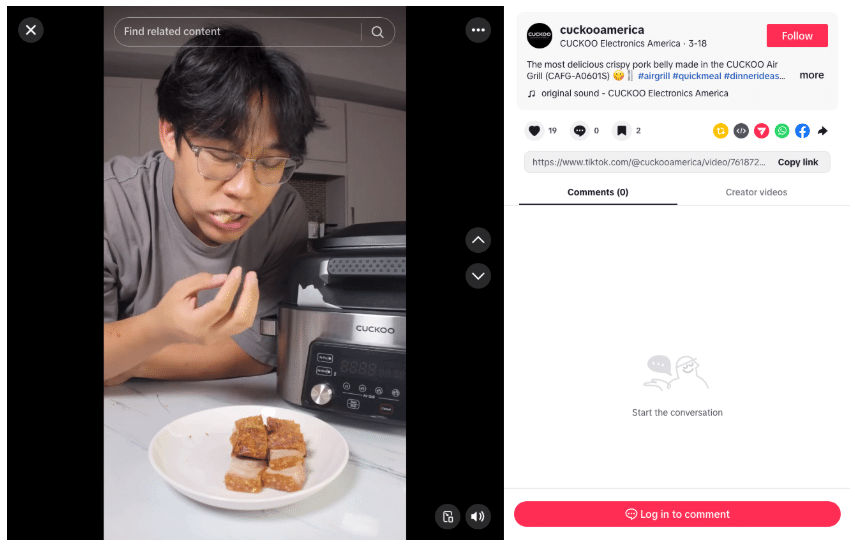
The easiest way to implement this tactic is, naturally, to feature real and relatable voices in your content marketing strategy. Cukoo, for instance, populates its TikTok with creator-made recipe videos that feel authentic, attainable, and (most importantly) delicious. Note how the recipe below barely mentions the brand’s product. That’s not an oversight. It’s a conscious choice, where Cukoo actively opts to keep the content feeling human and authentic instead of leaning into sales messaging that doesn’t work for building customer relationships.
Source: tiktok.com
Only Featuring a Single POV
What’s the primary role of content marketing in your brand’s sales funnel? For most businesses, it’s building brand and product awareness, engaging qualified leads, guiding them through the buyer’s journey, establishing brand credibility, and gently nudging prospects toward a conversion decision.
But while high-quality content — especially when it’s strategically distributed across multiple channels — can do a great deal for your conversion rates, it’s not necessarily going to be effective at earning customer trust. And that’s a huge gap you have to make up for — not least because 88% of shoppers need to trust a business to consider buying from it.
Of course, there are numerous methods to build brand credibility. But if you look at some of the latest research on whom consumers trust, you’ll discover that brands (and branded content) don’t rank too high on that list. Research suggests that people who are not paid by the brand have a much stronger trust-building influence than anything your brand says about itself.
So, if your aim with content marketing includes establishing a credible and dependable brand reputation, don’t only feature your company’s point of view in the resources you publish. Showcase the voices of unpaid brand ambassadors, established industry experts, or even independent organizations relevant in your niche.
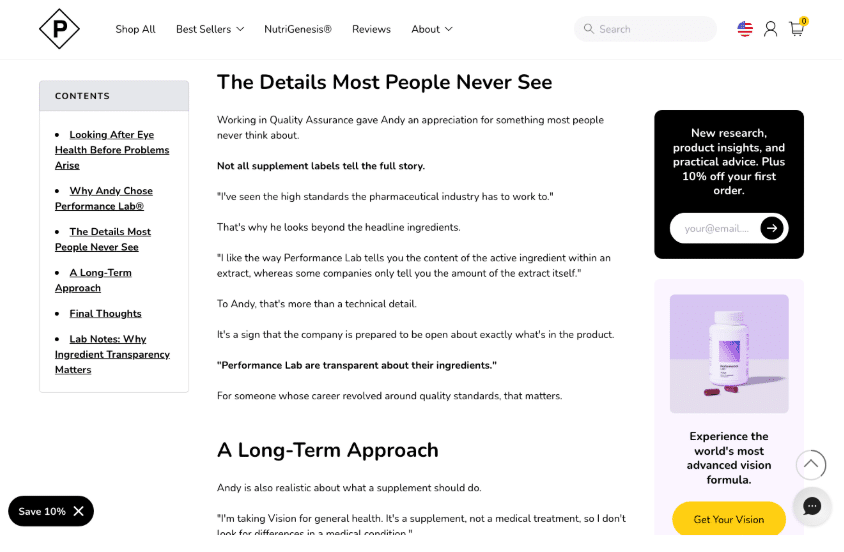
Performance Lab’s Case Studies series is an excellent example of what this can look like for your business. Because it comprehends the value of social proof and independent expert opinions, this brand regularly interviews its customers about why they use its products. In the example below, the answer is quite convincing. The interviewee (a former Quality Assurance specialist in the pharma industry) shares the specific qualities about Performance Lab’s products and marketing tactics that won him over, including the brand’s formulations and its commitment to ingredient transparency — both hugely important factors in the otherwise low-trust supplements industry.
Source: performancelab.com
Selling But Not Teaching
It’s no secret that educational content delivers results. Studies have shown that it can elevate purchase intent by 131%. And considering that over 60% of people use the internet to find information, it should come as very little surprise that presenting leads with informative content drives traffic, builds product awareness, boosts product understanding, and supports conversions.
Yet, if you look at most companies’ content marketing strategies, you’ll find that many of them make the mistake of ignoring the potential of educational content for the sake of conversion-oriented resources.
Yes, high-ROI content should sell. But it should also present leads with educational value. And there are two reasons this is true.
On the one hand, content with an educational focus has tremendous potential for reaching your target audience. It can be an exceptionally valuable awareness-stage resource for generating website traffic. And it can begin nurturing leads into customers by gently guiding them toward a positive conversion decision.
On the other hand, educational content also plays a role in earning customer trust. Because it provides consumer value for free (and without too much conversion pressure), it’s an amazing reflection of your brand’s dedication to customer satisfaction. Plus, educational resources often highlight your team’s expertise, another significant aspect of brand credibility.
With this in mind, one of the most essential content strategy mistakes you need to avoid is publishing sales-oriented content too often. Instead, explore opportunities to teach your target audience new things about your niche, present them with valuable educational and informational resources they can use to resolve their pain points, or find ways to empower them to make smarter, less risky buying decisions.
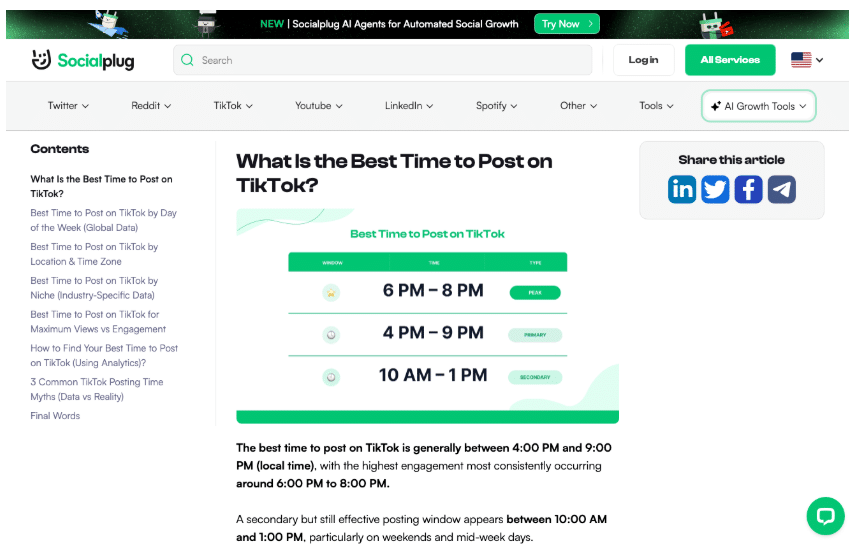
If you check out Socialplug’s data-backed guide about the best times to post on TikTok, you’ll find that it’s chock-full of helpful, well-researched information that the brand’s target audience won’t easily find anywhere else. It presents prospects with tons of actionable value. But where it really shines (especially in driving conversion outcomes) is (gently) building awareness of what Socialplug does and encouraging leads to consider using the brand’s services for elevated social media growth.
Source: socialplug.io
Failing to Include Conversion Elements in Blog Posts
So far, we’ve established that high-value, customer-centric, educational content works far better than sales pressure — at least in terms of engaging consumers and drawing prospects into your sales funnel.
But the thing is, not encouraging potential customers to convert is just as big a mistake as forcing them toward a purchase decision.
If you look at how consumers behave throughout the buyer’s journey, you’ll find that they move through several distinct phases. Producing and publishing great content is an effective way to grab their attention by addressing their momentary needs. However, if you don’t nudge them toward a clear next step within their buyer’s journey, then you’re making one of the biggest content strategy mistakes out there.
Of course, blog post conversion elements shouldn’t be limited to a CTA at the bottom of your article (though those work marvelously for capturing leads). Instead, think about ways you can insert natural incentives for sales cycle progression — ideally ones that align with your target audience’s wants, needs, and goals.
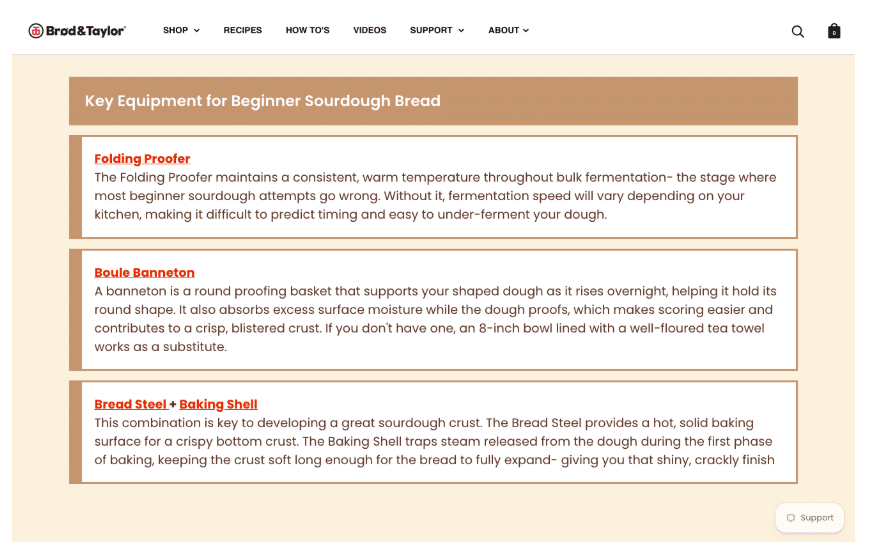
In practice, this can look like many different things. For instance, the Brod & Taylor blog includes a prominent ‘Key Equipment’ section in its recipes, with integrated product links for each mentioned baking tool. This works because it gives readers instant access to all of these products, should they decide they need them. However, what’s even more commendable about this brand’s approach to using conversion elements in its blog posts is that it removes practically all sales pressure from its resources. Yes, it mentions that a folding proofer, for example, is a piece of tech that can make sourdough baking easier. But it doesn’t say it’s a ‘required’ piece of equipment — a choice that prevents website abandonment and that keeps even awareness-stage readers engaged thanks to the minimal sales pressure.
Source: brodandtaylor.com
Not Distributing Content Where It Matters
On-site content plays an essential role in determining the outcomes of a buyer’s journey. Marketplaces, retail websites, and brand websites are all popular product discovery channels that consumers use to find and research potential solutions to their pain points.
However, if you look at the research on where (in the digital sphere) your target audience is most likely to learn about your offer, it’s got to be social media, with 52% of consumers using it for product discovery.
With this in mind, one of the biggest content strategy mistakes is failing to use the right distribution channels.
Naturally, the best place to engage your ideal customers will hugely depend on their behavior and preferences. However, a proper target audience analysis will quickly inform you where to distribute your content to achieve the highest likelihood of reaching and engaging the right prospects.
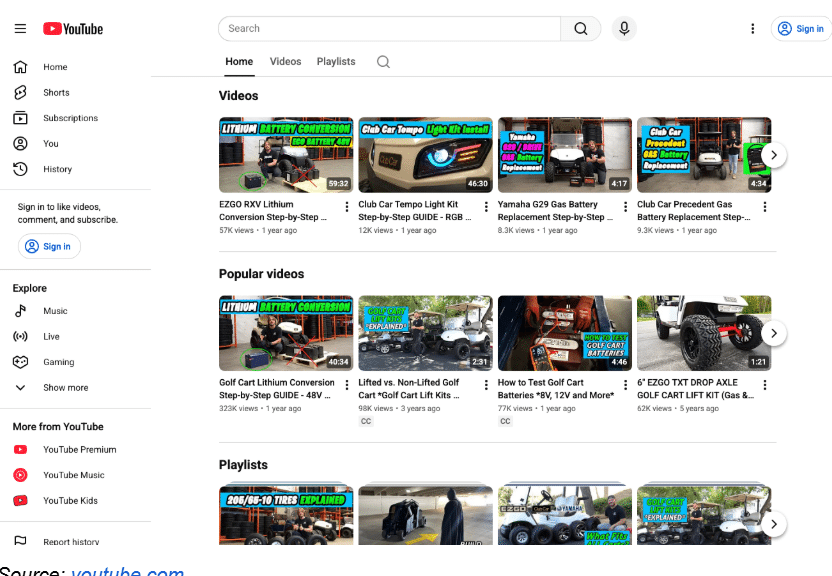
For example, if you consider that YouTube is one of the most commonly used social networks across a large demographic, it comes as no surprise that brands like Golf Cart Tire Supply use it to distribute educational content meant to build brand awareness. This company’s resources aren’t just popular among golf cart users (acquiring several hundred thousand views). They’re exceptionally effective at earning customer trust, building brand confidence, guiding leads through the sales funnel, and promoting product understanding — all on a platform that shoppers organically use while researching solutions and collecting information on ways to solve their pain points.
Source: youtube.com
Failing to Prioritize Content Readability and Accessibility
Finally, when it comes to ensuring your content strategy actually yields results, it’s important to remember that the only way to deliver value to your target audience is to do it in a format that they can easily extract information from.
Now, if you look at people’s online reading habits, you’ll find that they’re practically nonexistent — as almost 80% of internet users prefer to skim content pages rather than reading word-for-word. But what’s even more fascinating is that when they do read, most people prefer simplicity over eloquence.
In fact, research from Unbounce found that using difficult words in content decreased conversion rates by 24.3%. And long reading times and large word counts had similar effects. A 5th- to 7th-grade readability level, on the other hand, achieved double the conversion rates of professional-level written resources.
These findings support the idea that producing content that engages and converts requires a commitment to keeping your resources user-friendly. Obviously, this means optimizing for readability and adhering to commonplace accessibility standards. But to avoid making your web visitors feel frustrated because they can’t grasp what you’re trying to say, it’s also a good idea to explore additional opportunities for boosting content understanding.
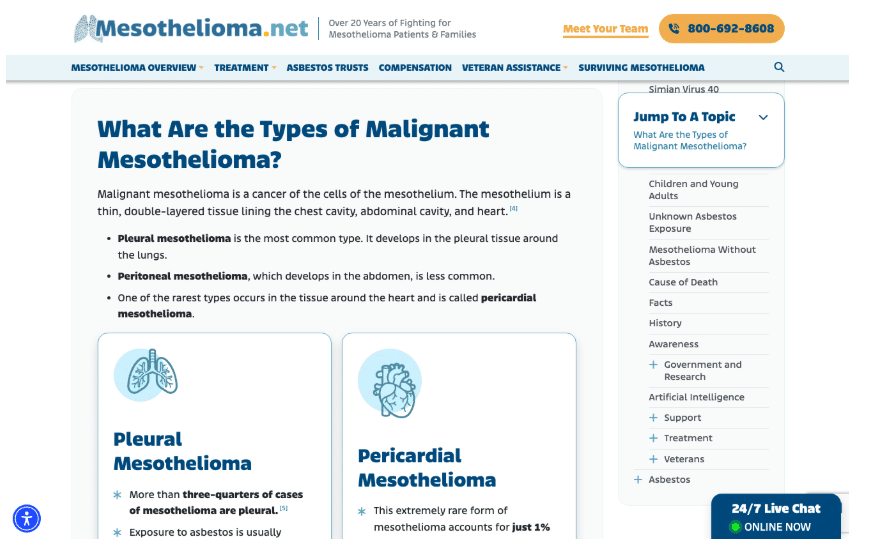
Mesothelioma.net, for example, understands that its content covers the extremely complex health diagnosis of mesothelioma. To make it easier for web visitors to extract value, this brand employs a variety of design techniques to boost readability. The brand uses visuals to illustrate specific health issues. It employs formatting and layout-optimization tactics to reduce cognitive load. Finally, it keeps the overall language largely accessible to web visitors, regardless of their reading comprehension level.
Source: mesothelioma.net
Final Thoughts
There are numerous content marketing strategy mistakes that a business can make. And all of them have the potential to harm engagement or even conversion rates.
However, while you can’t entirely avoid making any mistakes in your digital marketing activities, you can do your best to avoid some of the more common content oversights.
The errors listed in this guide are all good places to start to ensure the maximum effectiveness of your content marketing efforts. But, of course, to guarantee you get the best possible ROI from producing and distributing content, you need to regularly track performance. That way, you can identify the activities harming your KPIs and make adjustments that align with your ideal audience’s preferences.