
Performance marketers are hitting a wall. Costs keep climbing, CTRs are sliding, and creative fatigue is everywhere.
Meanwhile, people scroll past polished ads without a second look, but stop for short videos shot by someone who actually tried the product.
That’s what UGC does. It earns attention with context and not production value. It sells with relevance, not repetition.
And the results speak for themselves: 66% of brands say creator content drives more ROI than traditional digital ads.
Agencies that scale with UGC treat it like a system: creators, briefs, modular edits, paid media, and clean testing loops. Fast, repeatable, and built to grow with spend.
Here’s exactly how they do it, and how you can too.

Which UGC Formats Actually Drive Growth?
Not every piece of visual content drives results. Format is what sets high-performing UGC apart. These formats include short videos, static posts, carousels, and social proof assets.
What Is User Generated Content (UGC) & How to Use It
Let’s break down how they work and where:
Short Videos Drive Traffic?
First impressions are won (or lost) fast. That’s why short-form UGC built for scroll-stopping is non-negotiable for top-of-funnel reach.
These formats pull:
- Hooks-first TikToks, Instagram Reels, and YouTube Shorts that grab attention in under 3 seconds.
- “I tried X for 7 days” experiments that show payoff over time.
- Duets or stitches that piggyback on trending content.
- Quick problem–solution demos with a clear outcome.
The key? It needs to feel like someone sharing a real take. Gen Z in particular leans into this style; 80% of them say UGC influences their buying decisions, with a strong preference for video over text.
Static Posts and Carousels Still Win?
Short videos get clicks, and static gets details. These formats work best for warm traffic and retargeting:
- Before-and-after visuals that showcase results.
- Step-by-step carousels walk through how the product works.
- Social-proof compilations with screenshots, DMs, or review snippets.
They load fast, look native in feed, and make great assets for email and PDP reuse too.
Social Proof Assets That Push People Over the Line
Some people just need a final nudge. These UGC formats close:
- Direct testimonials from real customers (especially niche creators).
- Unboxing or “first impression” reactions.
- Real-world comparisons (e.g., brand vs. brand).
- Snippets from Q&A or comment threads that handle common objections.
Social proof works best when it’s specific. Not “I love it,” but “I swapped it with [X], and here’s what changed.”
How Do Agencies Source and Vet Creators Without Slowing Down?
You can’t scale UGC without creators, but finding the right ones can eat up weeks if your pipeline isn’t tight. Agencies that do this well treat creator sourcing like a repeatable process and not just a creative hunt.
Let’s see why:
Clear ICP for Creators and Audience
It’s not enough that a creator reaches your target audience; they have to feel like part of it. Agencies vet creators for more than follower count. They look at:
- Alignment with brand values.
- Content style that matches product use cases.
- Purchase behavior that mirrors the shopper journey.
If you’re selling supplements, for instance, you don’t want a generic lifestyle creator. You want someone whose followers actually care about wellness routines and trust their advice on what to buy.
Fast Pipelines
No one has time for drawn-out approvals or over-complicated outreach. Speed wins here.
Agencies build creator databases and segment them by vertical. They use batch briefs, rolling calendars, and shortlists that refresh monthly. Outreach happens in waves, not one by one.
And the best ones have pre-drafted deliverable templates ready to go, so creators don’t need to wait to start shooting.
Incentives That Keep Quality High
High volume doesn’t mean low quality. But it does mean you need to make the math work.
That’s why hybrid models (flat fee plus performance bonuses) are common. Add in clear briefs, fast approvals, and minimal back-and-forth, and you’ll keep top creators coming back without inflating costs. Streamlining UGC creator payments alongside clear briefs, fast approvals, and minimal back-and-forth can also help agencies keep top creators coming back without inflating costs.
What Makes a UGC Brief That Produces Repeatable Winners?
Most weak UGC comes from vague briefs. “Just be natural” is not a strategy. The best agencies write for performance, not just personality.
Non-Negotiables
Every UGC brief needs three things locked in:
- One product hero (no clutter).
- One clear CTA.
- One core claim supported by real proof.
Add a social-proof beat, and you’ve got a structure that lets the creator riff while still hitting the key points that drive action.
Guardrails Without Killing Authenticity
UGC only works if it feels real. But “real” doesn’t mean “random.”
Briefs include approved phrases, banned claims (especially for regulated industries), and visual dos and don’ts.
Creators can move freely inside it, but they don’t wander off-brand.
Hook Libraries and Angle Banks
Hooks are battle-tested. Agencies keep internal libraries with tested opening lines:
- Problem-led (“This kept me up at night until…”).
- Status-led (“No one talks about this, but…”).
- Skepticism-led (“I thought this was a scam, but…”).
- Offer-led (“$30 off, but only if you…”).
The same goes for angles. When you match the right hook to the right claim, you get creatives that grab and keep attention.
How Do Agencies Turn UGC Into a Performance Creative System?
Most brands shoot content, test one or two versions, and hope for results. Agencies that scale don’t work like that. They built a creative machine that turns every raw UGC clip into dozens of variants, with structure behind every edit.
Let’s see how:
Modular Production
One creator, one shoot, but not just one ad.
Modular production means slicing the footage into swappable blocks: different hooks, body sections, and CTAs. You can test new intros without touching the rest of the creative. Same footage, new angles.
This speeds up iteration, keeps costs down, and extends the life of every asset. You’re not reshooting, you’re remixing.
Variant Trees
A single piece of UGC can turn into 20+ creatives. The key is mapping out combinations ahead of time:
- Different hooks (problem, testimonial, urgency).
- Multiple angles (value, status, pain relief).
- Varying offers (discount, bundle, trial).
- Formats (9:16 for TikTok, 1:1 for Meta, 16:9 for YouTube).
Each piece plugs into a testing structure so you know exactly what’s working and what needs to be cut. It’s operationalized creatively.
Cross-Channel Reuse
Once the UGC performs, you don’t leave it stuck in ads.
Top agencies recycle high-performing clips across:
- Product detail pages (PDPs).
- Emails and SMS flows.
- Landing pages.
- Retail partner assets.
- Influencer affiliate pages.
You already paid for the asset; make it work harder across the funnel.
Where Does Paid Amplification Multiply the Impact?
UGC needs paid support to scale, but not every clip earns that push.
Start with creator whitelisting. Running ads from a creator’s handle adds credibility and keeps content feeling organic. Just make sure usage rights are locked, the audience fits, and the hook performs.
Next: match the creative to the funnel stage. Cold audiences need scroll-stopping pain points. Warm traffic responds better to testimonials. Retargeting thrives on offers and urgency. One video won’t cover all three.
Then comes budget control. Agencies test small-scale what hits, and cut fast:
- Hook rate strong? Spend moves.
- CTR weak after a few thousand impressions? Kill it.
- New creatives drop every 10–14 days to avoid fatigue.
Paid media doesn’t fix bad content, but multiplies what’s already working.
How Do Agencies Test UGC Creatives?
Testing moves fast when the rules are clear.
Each round focuses on one variable (hook, CTA, angle), so results are clean and easy to read. This avoids mixed signals and shortens the feedback loop.
How to Find + Hire The Best UGC Creators in 2026
Agencies track just a few core metrics:
- Thumbstop rate for initial attention.
- CTR to check message clarity.
- Cost per add-to-cart and ROAS for conversion.
Weak performers don’t get second chances. Once the data confirms it’s underdelivering, it’s removed from rotation, without any tweaks or extra spend.
Every creative gets logged. Tags, notes, and performance results are reviewed weekly. The best ideas go back into briefs. Mistakes get flagged with context, so they don’t happen again.
Over time, this builds a clear record of what works, grounded in actual performance, not creative opinions.
What Metrics Tie UGC to Real Revenue?
Views and likes don’t mean much if they don’t move the numbers that matter. Agencies focused on growth track UGC performance through metrics that tie directly to business outcomes.
Creative-Level Signals
These show how the content performs in-platform:
- Thumbstop rate shows if the opening grabs attention.
- Hold rate reveals if the story keeps interest.
- CPC reflects efficiency in attracting clicks.
- CVR confirms how well traffic turns into action.
These signals guide which creatives stay live and which ones get shelved.
Business-Level Signals
To tie creative to revenue, agencies zoom out:
- MER for overall return on spend.
- Contribution margin to check if the content supports profit, not just sales.
- LTV by creative source to track which content brings better customers.
- Blended CPA to measure cost efficiency across channels.
This connects creative output to actual business performance, not just media efficiency.
Incrementality Checks
Some campaigns need a deeper read. Agencies that have the tools run:
- Geo holdouts.
- PSA testing.
- Clean-room attribution.
These methods isolate the actual lift from UGC, especially when multiple channels overlap. Even without advanced tools, smart campaign structuring can show directional impact.
How Agencies Keep UGC Production Running Smoothly
A high volume of UGC means nothing if it can’t be organized, approved, and activated on time. That’s where process beats improvisation. But let’s see why:
Structured Calendars That Don’t Collapse Under Pressure
Agencies build rolling content calendars tied to product drops, promo cycles, and seasonal shifts. Each slot has a purpose; without filler shots and vague concepts.
The idea is to keep the right kind of content flowing, when and where it’s needed.
Asset Systems That Scale With Output
Once production ramps up, chaos kicks in, unless there’s a plan.
Teams manage this with:
- File names that follow strict naming rules.
- Metadata that tags usage rights, creator ID, and platform format.
- Shared libraries that stay updated and searchable.
- Version tracking to prevent wrong edits from going live.
Instead of dumping everything in a Drive folder, they turn content into inventory: clean, usable, and fast to deploy.
Where Agencies Repurpose UGC Beyond Ads to Lift Conversion
The best-performing UGC gets deployed across the funnel to reinforce trust and nudge action.
- Product pages: Short clips, social proof carousels, and real-user routines help turn browsers into buyers.
- Email and SMS: Micro-videos, GIFs, and first-impression quotes break monotony and drive clicks.
- Retail and affiliates: Creators help build PDP assets and bundles that convert outside your own store.
Once a creative proves it works, it gets more jobs. Simple as that.
Agency Examples: Who Actually Runs UGC This Way?
Plenty of agencies talk about UGC, but a few build real systems around it. These three do it at scale and fast:
inBeat
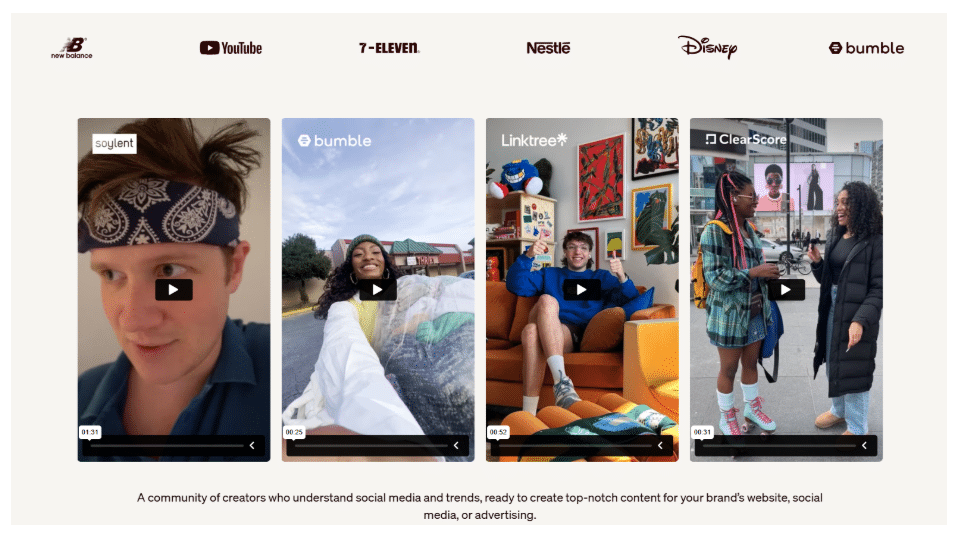
inBeat focuses on high-volume UGC that actually fits a paid strategy. They connect brands with creators and help to build repeatable pipelines. Their internal UGC marketplace gives brands direct access to vetted micro- and nano-influencers, cutting delays and middle layers.
They’ve worked with names like New Balance, Linktree, and Hopper across DTC, apps, and retail, proving that niche content from small creators can outperform big-budget assets.
The UGC Agency
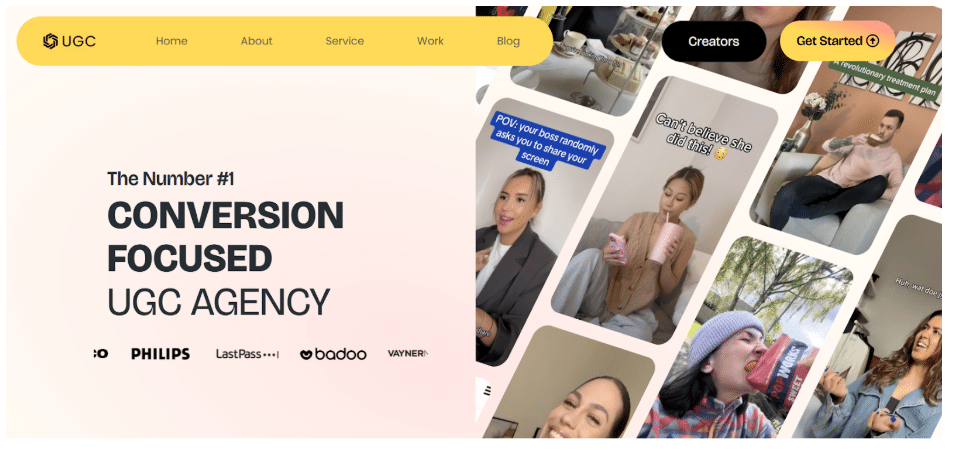
This team is all-in on ROI. The UGC Agency has a workflow that leans into data-led UGC testing, tight sourcing, and fast iteration. They offer just creator-first content structured to drive sales.
They’re known for their work in finance, tech, and ecommerce, helping brands turn UGC into a lead-gen and sales engine.
ne/ads
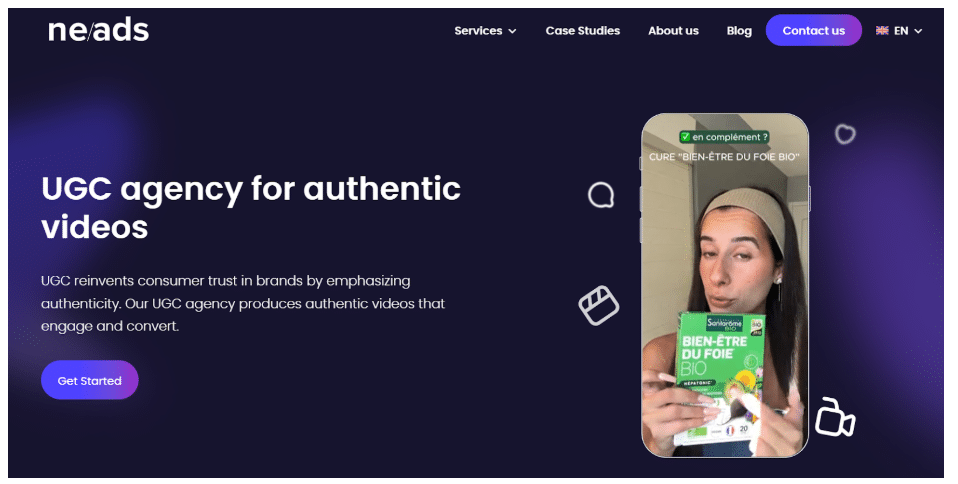
ne/ads blends creative direction with performance. Briefs are precise, execution is tight, and turnaround times are fast. The focus on film shoots, motion design, and UGC means the content is built to perform in paid and not just live on organic feeds.
They stand out in fashion, beauty, and travel sectors where strong visuals and clear storytelling carry real weight.
What Pitfalls Kill Brand Growth with UGC, and How to Avoid Them
Some campaigns stall not because of bad content, but because of avoidable breakdowns in execution. These are the ones agencies flag most:
- Flat hooks that blend in with everything else on the feed. Start with tension or clarity, no soft intros.
- Unclear rights or missing raw files that block paid use. Set usage terms and file delivery expectations before production.
- Unstructured testing makes it hard to see what worked. One change per round, tracked properly, with clear thresholds for what stays and what gets cut.
Most of these issues come down to gaps in process, not talent or ideas.
Let This Be the Starting Point for Real Brand Growth
Brands pushing for growth need more than a few viral clips. They need a repeatable way to source, produce, test, and scale UGC that actually converts.
The agencies doing this right don’t rely on luck; they run structured systems, keep creative output tied to revenue, and move fast without skipping the fundamentals.
With the right setup, even lean teams can get high-performing UGC into rotation within a month, and keep it running without stalling out.
If you’re ready to apply this model inside your brand, Agility PR can help you make it happen.
FAQs
What is User-Generated Content (UGC)?
UGC is authentic content created by your customers, not your brand. This includes customer reviews, testimonial videos, Instagram Stories, TikTok videos, and other visual content that shows real product experiences.
What Are the Benefits of Using UGC in Digital Marketing?
There are many benefits in UGC, including building brand awareness, improving engagement rates, and strengthening customer loyalty. Brands also see better conversion rates because people trust customer testimonials and social posts more than branded ads.
How is UGC Different from Influencer or Branded Content?
Branded content is produced and approved by the brand. Meanwhile, UGC is more organic; it comes from real users or brand advocates. Influencer content can fall somewhere in between, especially when micro influencers act as brand ambassadors.
Can I Use UGC in Ad Campaigns or Across Digital Channels?
Yes, if you have usage rights. UGC performs well across digital marketing efforts like Instagram Reels, product seeding campaigns, content marketing, and even search engine rankings when added to your site.
Do We Need a UGC Creator Platform or Tool to Manage Content?
It helps. Agencies use platforms like a Media Uploader, UGC Factory, or Content Library to organize and tag assets across campaigns. It streamlines content creation and makes re-use easier across paid and organic channels.
How Many Creators Should Brands Work with Each Month?
It depends on your spend and how fast you test creatives, but most brands partner with 10–20 micro influencers monthly to keep the community engagement high and the website traffic healthy.