

Most PR advice is written for calm days. Calm days don’t need advice.
The real test of a communications function is the week nobody planned for. A product recall, a breach notification, a screenshot going around faster than legal can review a statement.
What happens in those first hours has almost nothing to do with talent and almost everything to do with systems and relationships built beforehand. Spin doesn’t survive contact with a real crisis. Preparation does.
What a PR Crisis Actually Is
Strip the jargon and a crisis is simple: an event that threatens to redefine your organization in the public’s mind before you get a say.
The incident is rarely the whole problem. The story people tell about it while you’re silent is the problem.
They come in flavors. Product safety failures. Security breaches. Executive misconduct. A supply chain collapse. One viral customer post that catches you flat-footed on a Friday afternoon.
The costs are not abstract. According to IBM’s 2023 Cost of a Data Breach Report, the global average cost of a breach reached $4.45 million, and that figure doesn’t capture the slower bleed of brand trust that follows for years afterward.
Ryan Beattie, Director of Business Development at UK SARMs, works in a category where regulatory scrutiny and public skepticism are constant background conditions rather than rare events.
He said, “In our space, trust is the entire business model. Customers are already cautious before they ever reach your site, so a single mishandled incident can undo years of careful positioning. The companies that survive scrutiny are the ones that answer hard questions before anyone forces them to.”
Add social channels and citizen journalism, and the window between incident and public judgment shrinks to minutes. Waiting is usually the worst available move.
The Components That Show Up in Every Good Response
There’s no universal playbook. But when you look at responses that worked, the same ingredients keep appearing, and they’re worth breaking down one at a time.
Preparation
The worst time to write a crisis plan is during the crisis. Map your likely scenarios. Pre-approve spokespeople. Rehearse. A plan drafted in calm conditions buys you the one thing you cannot manufacture in the moment: composure.
Speed and decisiveness
Silence is a statement. Usually the wrong one. If you’re not present in the first hours, media and social channels write the story for you, and once a narrative hardens, it’s brutally expensive to move. Speed doesn’t mean recklessness. It means showing up before judgment sets.
Transparency
People don’t expect perfection from a brand. They expect honesty. Admit what you know, acknowledge what you don’t, and never get caught shading the truth. Audiences forgive mistakes. They don’t forgive cover-ups.
Consistent messaging
The moment your press release says one thing and your CEO says another, critics have a second story to run with. Every statement, post, and internal memo has to align. Mixed messages can do as much damage as the original incident.
Stakeholder engagement
A crisis is managed through relationships, not just statements. Employees are the most overlooked audience in almost every crisis plan, and they talk. When your own team understands and believes the response, they become your most persuasive advocates in their own circles.
For a lighter modern example: KFC UK’s 2018 chicken shortage. A supply chain failure shut hundreds of stores. Their mix of fast, clear updates and a cheeky full-page apology turned a genuine operational disaster into a moment of human relatability.
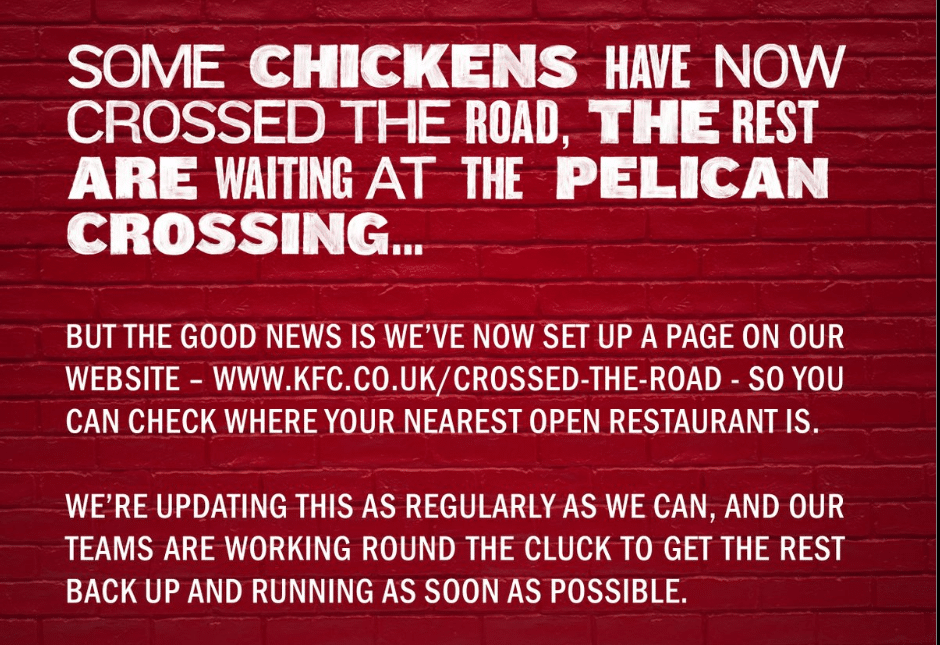
The shortage was covered widely by The Guardian, and the “FCK” ad has been shown in classrooms ever since.
The Tylenol Case, Properly Dissected
In 1982, seven people in the Chicago area died after taking cyanide-laced Tylenol capsules. Johnson & Johnson wasn’t at fault. The tampering happened after the product left their facilities. Didn’t matter. Every headline carried their brand name.
What they did next is why the case is still taught, and it breaks into five moves.
Fast assessment, safety first
Within days, J&J halted advertising and warned the public not to consume certain Tylenol products. No dodging, no delay. The sequence of decisions is laid out in Britannica’s summary and the Wikipedia timeline.
Visible leadership
Then-CEO James Burke fronted the response personally, backed by legal, operations, quality, and communications teams aligned internally so every function knew its job. That internal alignment is what keeps messaging steady when headlines change hour by hour.
A simple, human public statement
Consumer safety above all. What we know, what we don’t, what we’re doing next. Nothing clever. Clever is a liability in week one of a crisis.
Action over messaging
J&J recalled 31 million bottles, an extraordinary move at the time, and worked with retailers, regulators, and media to keep people safe. Hotlines went up. Press briefings ran constantly. Employees understood the reasoning behind the hard calls and could explain it themselves.
Adaptation that outlasted the news cycle
The company worked with regulators and packaging experts to introduce tamper-evident packaging and a triple-seal system for OTC medications. That changed industry practice permanently. The FDA’s tamper-evident packaging requirements that followed are codified in regulation today (eCFR).
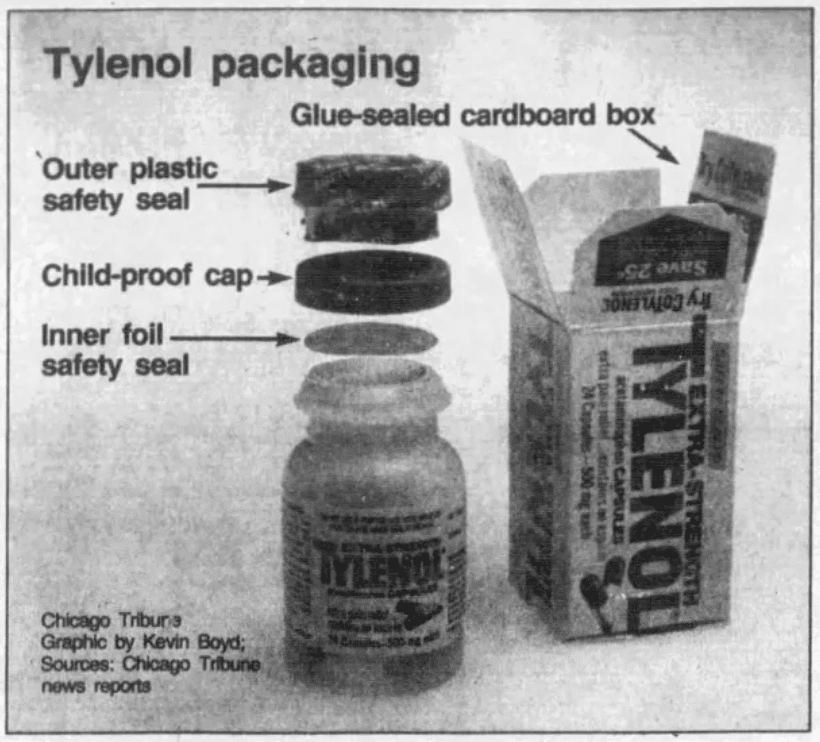
Tylenol came back. Trust recovered. Not because everything was perfect, but because the big decisions were anchored in values, executed fast, and backed with visible change.
What This Means for How You Operate
The lessons are portable, even if your worst-case scenario looks nothing like a poisoning.
Act like a public steward first and a brand second. When lives or livelihoods are at stake, the audience isn’t a market. It’s a community, and it can tell the difference.
Own the narrative early without overreaching. Say what you know. Update as you learn. Leave a vacuum, and someone else fills it, guaranteed.
Align every channel and every leader, because one off-script remark from the top can unravel a hundred good decisions underneath it.
And learn in public. The companies that recover strongest treat the crisis as a lesson rather than an embarrassment to bury. Debrief honestly, document what broke, fix the systems that let it happen. A crisis you learn nothing from is a crisis you’ve scheduled a rerun of.
Gregor Emmian, Deputy Chief Digital Growth Officer at Rise, has watched this dynamic play out repeatedly in financial services, where a single misstep can trigger both customer flight and regulatory attention on the same day.
He said, “In finance, your reputation is audited in real time. The firms that hold client confidence through a rough patch are the ones that communicated their standards long before anything went wrong. You cannot introduce yourself to your customers for the first time during a crisis and expect them to believe you.”
Tools Worth Having Before You Need Them
You can’t manage what you can’t see, and most teams discover their monitoring gaps at the worst possible moment. The category breaks down roughly like this:
- Media monitoring and social listening: Agility PR Solutions, Meltwater, Cision, Brandwatch, Talkwalker
- Frameworks and research: the CDC’s Crisis and Emergency Risk Communication Manual (CERC) and the Institute for Public Relations crisis research hub (IPR)
- Sentiment and preparedness benchmarks: the Edelman Trust Barometer and PwC’s Global Crisis and Resilience Survey
- Dedicated crisis consultancies: Brunswick Group, FTI Consulting, Edelman, Kekst CNC
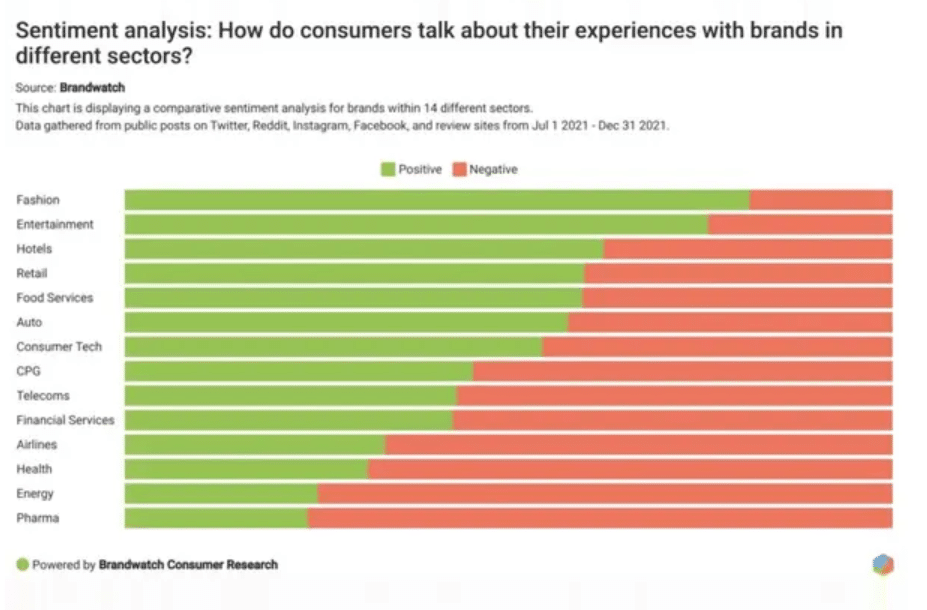
Pick tools for your actual risk profile, not because they’re shiny. Then run drills with them. A dashboard nobody has opened before the crisis is decoration.
Where This Is Heading
The fundamentals haven’t moved since 1982. What’s changed is the pace.
The gap between an event and public judgment has collapsed to nearly nothing, and it’s still shrinking. The job is drifting from reactive defense toward proactive reputation-building as the whole discipline, not a slice of it.
Crisis communications is the result of everything you built on calm days. Do the drills. Map the scenarios. Keep your values close enough that they show up in decisions made under pressure, not just in the deck.
For more insights, research, and practical guides, visit Agility PR News and subscribe to updates.