
Building a strong marketing presence for your SaaS brand isn’t just about being active on one platform; it’s about creating the right mix of channels that work together.
Your potential customers don’t stay in one place; they search, scroll, compare, and learn across many platforms before making a decision. That’s why having a well-planned multi-channel strategy helps you stay visible and consistent at every step of their journey.
In this guide, you’ll learn how to build a practical, focused multi-channel marketing strategy — from choosing the right platforms and creating specific messages to studying what top SaaS brands do well and avoiding the mistakes that slow most companies down.
Understanding multi-channel marketing strategy—and why SaaS needs it
A multi-channel marketing strategy is about showing up wherever your SaaS buyers already spend their time. Instead of depending on a single platform, you create touchpoints across search, social, email, communities, and review sites, making it easier for people to discover your product naturally.
This matters because SaaS buyers rarely convert after one interaction. They need repeated exposure, reassurance, and education before they take action. A multi-channel approach gives them that steady guidance through touchpoints like:
- Reading a blog post while researching a problem
- Seeing your LinkedIn insights
- Receiving a helpful email sequence
- Getting retargeted with a case study
- Finding reviews or community recommendations
These interactions compound over time. In fact, about 73% of consumers engage with multiple channels before making a decision, and brands that use multi- or omni-channel strategies often see 250%+ higher conversion rates compared to single-channel efforts.
How to build a multi-channel marketing strategy for your SaaS brand
1 Know your ICP and buyer journey deeply
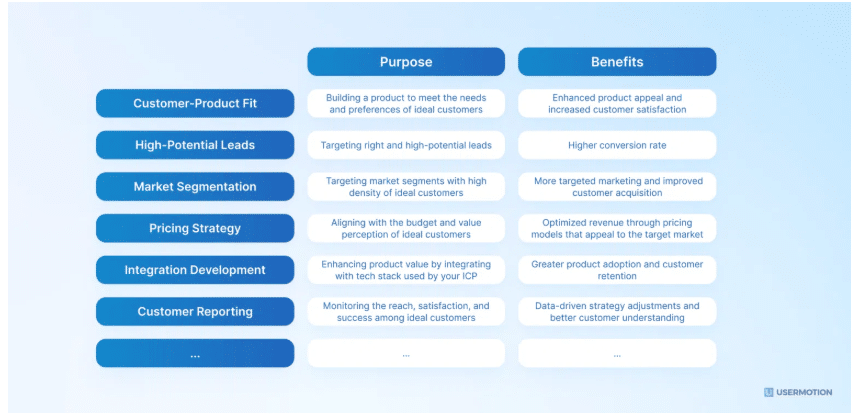
Before you choose a single channel or create a piece of content, you need to understand who you’re trying to reach. Start by defining your ideal customer profile (ICP) and mapping out their complete journey—from the moment they first discover your SaaS to the point they become loyal users.
Ask yourself:
- Who are the decision-makers and who influences them?
- What problems are they actively trying to solve?
- Where do they go to research solutions?
When you get this clarity, you’ll know exactly what type of content to create, what objections to address, and which channels deserve your attention.
(Source)
Creating buyer persona sheets and documenting journey stages will help you stay aligned as you scale your marketing.
2 Pick the right channels (not too many)
You don’t need to show up on every platform; you just need to show up where your potential customers already spend their time. Start by looking closely at your ICP’s online behavior: where they research new tools, which creators they follow, what content formats they prefer, and how they typically evaluate SaaS products. This helps you focus your effort instead of guessing.
For example:
- If your audience searches for answers on Google, a strong SEO and blog strategy becomes non-negotiable.
- If your buyers engage heavily with founders and experts on LinkedIn, that’s where your POV content and product stories will resonate the most.
- If your product performs well through visual explanation, platforms like YouTube or webinars will give you a higher return than static posts.
Being selective is the real advantage here. When you limit yourself to a small set of high-impact channels, you can show up consistently, create better content, and learn faster. Once you start seeing traction, you can gradually layer in additional channels, without pressuring your team or weakening your message.
3 Craft channel-specific messaging
Each channel has a different approach, and your messaging needs to adapt without losing your brand’s voice. While your core value proposition should stay consistent, the way you communicate it should feel natural to each platform. This helps your brand sound human and trustworthy rather than repetitive.
For example:
- On LinkedIn, your tone should be conversational and insight-driven. Share founder perspectives, customer stories, or lessons from your SaaS journey.
- On your blog, focus on education and SEO intent—think detailed guides, comparison posts, and industry insights that answer real user questions.
- In an email, make your message personal and action-oriented. Speak directly to the reader’s stage in their journey, whether they’re a new signup or a loyal customer.
- On YouTube or social video, simplify complex topics visually—product demos, feature breakdowns, or customer use cases work best here.
4 Build a unified content engine
To effectively run a multi-channel strategy, you need a unified content engine. This means creating a structured system that helps you plan topics, repurpose them efficiently, and distribute everything in a coordinated way.
Instead of treating each channel as a separate project, start with one strong piece of core content, such as a long-form blog post or a customer story, supported by a clear SEO content brief that keeps messaging consistent across channels.
From there, you break it down into multiple formats, such as:
- a LinkedIn carousel highlighting key insights,
- a short talking-head video for YouTube or social,
- an email sequence that nurtures leads using the same ideas,
- a simple visual or infographic to share inside communities or newsletters.
When all your content originates from a central source, you maintain consistency across every platform while reducing the workload on your team.
5 Create a cross-channel distribution plan
Creating great content isn’t enough—you need to push it across the right places at the right times. Your distribution plan should outline how each piece of content moves from primary format (like a blog) to supporting formats across other channels.
For example, once you publish a blog post, you might:
- Share a summary on LinkedIn,
- Create short video snippets for YouTube or social media,
- Turn key insights into ads or remarketing creatives,
- Include it in your weekly email newsletter.

6 Use automation + personalization
You can’t manually manage every touchpoint across multiple channels; automation helps you scale. Set up email nurture sequences, onboarding flows, retargeting campaigns, and triggered product messages that meet users where they are.
At the same time, use personalization to make these interactions feel human.
When your messaging changes based on behavior—like sign-up activity, content consumed, or product usage—you create a more relevant experience that guides users closer toward activation and retention.
7 Establish consistent KPIs for each channel
Each channel should have clear goals so you can actually measure what’s working. Instead of tracking everything, focus on the metrics that align with your buyer journey.
For awareness, you might track:
- website traffic,
- social reach,
- or impressions.
For consideration, you might look at:
- demo requests,
- organic rankings,
- webinar sign-ups.
And for activation or retention:
- activation rate,
- churn,
- user engagement.
When you monitor these consistently, you can quickly identify which channels deserve more investment and which need adjustment.
8 Test, optimize, and scale what works
A multi-channel strategy needs continuous improvement. As you run campaigns across different platforms, you should regularly experiment with variations in messaging, creative angles, and content formats to see what your audience responds to most. Often, the channels you expect to perform well may not be the ones that ultimately deliver the strongest results.
By consistently reviewing your data, you see which efforts are actually moving the performance needle. From there, you can double down on the channels that are producing reliable engagement, while slowly reducing investment in those that underperform.
Best practices from top SaaS brands
When you look at successful SaaS companies, you’ll see that they approach multi-channel marketing with a clear purpose. They don’t just publish random content across different platforms; they make sure every touchpoint supports the buyer’s journey consistently.
1/ Notion focuses heavily on educating users. They create simple tutorials, share real examples from their community, and publish helpful content on YouTube and blogs. Their SEO strategy brings in people who are searching for productivity solutions, while community-created templates help new users see the value quickly. None of their content feels pushy — it’s built to help people understand how to get more organized, which naturally draws users toward the product.
2/ HubSpot puts learning at the center of everything. Their blog, academy courses, newsletters, webinars, and podcasts all work together to guide users step by step. Whether someone is new to marketing or already experienced, HubSpot provides content that meets them where they are. Their email flows and automation keep prospects engaged over time, making it easier for people to move from learning to trying the product.
3/ Slack keeps its message simple across all channels. Whether you see a Slack ad, visit their website, or explore the product, the benefits are clear: faster communication, fewer emails, and more organized teamwork. Their customer stories show how different teams use Slack, and their integrations help people understand how Slack fits into their daily tools.
What these brands do right:
- Keep their messaging clear and consistent across every platform
- Reuse strong content instead of creating new assets for every channel
- Help users first through tutorials, guides, and examples
- Build trust by focusing on education instead of constant promotion
- Encourage communities and user groups that create their own content
- Align marketing and product so the user experience feels easy from start to finish
Common mistakes SaaS brands make in multi-channel marketing

1/ Not aligning product and marketing
This is one of the most common and costly mistakes SaaS companies make. When your marketing sets certain expectations, but the product doesn’t match those promises, users immediately feel disappointed.
For example, you might promote your software as “the fastest way to onboard customers,” or highlight capabilities like your Invoicing API or AI recruitment software features, but if the actual onboarding inside the product is confusing or takes too long, new users will quickly realize the gap.
The same thing happens in the web hosting industry, when ads highlight features that don’t work as smoothly, or your website messaging oversells outcomes that the product can’t deliver yet.
2/ Inconsistent messaging
Inconsistent messaging is a quiet growth blocker because it confuses potential customers before they ever try your product. When your website says one thing, your ads promise something else, and your social posts focus on a different angle, people struggle to understand what your product actually does and why they should care.
Here’s how inconsistency shows up in real life:
- Your website talks about ease of use, but your ads focus on advanced features
- Social media posts highlight one audience segment, while landing pages target another
- Email campaigns promise outcomes your homepage doesn’t clearly support
- Your product screenshots or visuals look different across channels
Even small gaps like these can cause prospects to second-guess your brand. Studies on B2B buyer behavior show that consistent messaging helps people trust a product faster and reduces confusion during evaluation.
3/ Overinvesting in too many channels too soon
A lot of SaaS companies make the mistake of trying to be everywhere from day one—SEO, YouTube, LinkedIn, Twitter, paid ads, communities, webinars, partnerships, and more. It often comes from good intentions: you want visibility, growth, and momentum. But spreading your efforts across too many channels usually leads to weak execution and disappointing results.
This mistake shows up in several ways:
- Your team creates content for multiple platforms, but nothing gains traction
- Ad budgets get split so thin that no campaign reaches proper testing levels
- Community participation becomes inconsistent and doesn’t build trust
- SEO starts, but never matures because there isn’t enough output
- Your social content feels unorganized instead of clear and strategic
Many SaaS founders get frustrated at this stage because they’re doing “everything,” but nothing is actually generating leads. In reality, the strategy isn’t wrong — the focus is.
4/ Poor attribution setup
Poor attribution is one of those problems you don’t notice at first, but it affects almost every decision you make. When you don’t track where your sign-ups, demos, or paid conversions are coming from, you’re left guessing which channels are working and which ones are wasting money.
In SaaS, where every channel has a different role in the funnel, guesswork leads to bad budgeting and slow growth. This issue usually appears when tracking is set up too late, or when teams only rely on surface-level metrics like clicks or impressions. Without proper attribution, you might think a channel is underperforming when in reality it’s contributing earlier in the journey.
5/ Ignoring retention
Many SaaS companies get so focused on bringing in new users that they overlook the people already using the product. This is a costly mistake because retention affects your growth more than almost anything else. When existing customers stay longer, adopt more features, or upgrade over time, your revenue grows without needing constant acquisition pressure.
Retention usually drops when new users don’t see value fast enough, don’t understand key features, or don’t get the support they need during onboarding. Even a strong product can struggle if users feel lost or unsure about what to do next. And in SaaS, where subscription revenue is everything, losing customers early makes it difficult to grow sustainably.
Conclusion
Building a multi-channel marketing strategy doesn’t mean doing everything at once — it means choosing the right channels, staying consistent, and giving your audience a clear path to learn about your product. When you understand your buyers, adjust your message to each platform, and keep your content connected, you make it easier for people to trust your brand and take the next step.
The SaaS companies that grow the fastest aren’t the ones using the most channels. They’re the ones that stay focused, test often, and double down on what works. If you follow the same approach and avoid the common mistakes many teams make, you’ll build a system that brings in steady demand and supports your product long term.