
Many brands assume that increasing ad budgets will automatically improve results. It sounds logical. Spend more money, reach more people, and generate more sales. Yet, real-world campaigns often prove the opposite.
A company can pour millions into advertising and still struggle with weak conversions, low engagement, or poor return on ad spend. Meanwhile, smaller brands with tighter budgets sometimes outperform larger competitors because they focus on targeting, creative quality, customer intent, and measurement accuracy.
This gap between spending and performance has become even more visible in 2025 and 2026 as advertising platforms rely heavily on automation and AI-driven bidding systems. While automation improves efficiency in many cases, it can also amplify waste when campaigns are poorly structured.
Global digital ad spend is expected to reach around $740 billion in 2026, yet marketers continue to report major losses tied to invalid traffic, weak attribution models, and ineffective targeting.
More Spending Often Leads to Diminishing Returns
One of the biggest reasons large ad budgets fail is diminishing returns.
At the beginning of a campaign, ads usually reach the most relevant audience segments first. These users are already interested in the product or service. As spending increases, platforms begin expanding reach to broader audiences that may have weaker buying intent.
This creates a problem. The additional money spent may generate impressions and clicks, but not meaningful conversions.
Research in marketing mix modeling continues to highlight saturation effects where ad performance drops after a certain spending threshold. Advanced marketing mix modeling frameworks published in 2025 and 2026 specifically address nonlinear saturation curves because traditional models often fail to measure diminishing returns accurately.
A famous example often discussed in advertising circles involves ride-sharing companies reducing ad budgets without seeing major drops in installs because many conversions would have happened organically anyway.
The lesson is simple. More visibility does not always create more demand.
Weak Creative Can Destroy Large Budgets
A high budget cannot fix weak messaging.
If an ad fails to connect emotionally with the audience, increasing spend simply exposes more people to ineffective content.
Many advertisers focus heavily on audience targeting while ignoring creative fatigue. Consumers see thousands of ads every day. Generic visuals and repetitive copy rarely stand out anymore.
Strong campaigns often succeed because they understand customer pain points deeply. They tell relatable stories, present clear value, and create trust quickly.In many cases, businesses also benefit from working with an expert web design company that can create landing pages optimized for user experience, faster loading times, and higher conversion rates.
A small business with excellent creative strategy can outperform a larger competitor that relies only on aggressive spending.
Bad Targeting Wastes Money Fast
Ad platforms have become smarter, but targeting mistakes still happen constantly.
A business selling enterprise software may accidentally target broad audiences with low purchase intent. A fashion brand may advertise globally when most conversions come from only a few regions.
When targeting lacks precision, rising budgets simply increase wasted impressions.
This issue becomes even more serious with automated bidding systems, especially when businesses rely on weak PPC bidding strategy decisions without proper conversion tracking or audience segmentation. Many platforms optimize for clicks or engagement signals rather than real business outcomes unless conversion tracking is configured properly.
In 2026, algorithm-managed advertising is expected to account for over 70% of global ad spend. That means advertisers who provide poor data signals risk training algorithms incorrectly.
Ad Fraud Continues to Drain Budgets
One of the harsh realities of digital advertising is that not every click comes from a real human.
Ad fraud remains a massive issue across display advertising, programmatic campaigns, and some social platforms.
Reports published in 2025 and 2026 estimate global ad fraud losses between $32.6 billion and $63 billion annually.
Fraudulent clicks, fake impressions, and bot traffic can distort campaign performance metrics. A campaign may appear successful on paper while generating little actual business value.
Some reports also show that fraudulent traffic has become harder to detect because bots increasingly mimic human behavior patterns.
This creates a dangerous situation where brands keep increasing budgets based on misleading performance data.
Poor Attribution Creates False Confidence
Many companies misunderstand which channels actually drive conversions.
A customer might first discover a brand through organic search, later see a social media ad, and finally convert after an email campaign. Yet the final ad interaction often receives full credit.
This creates inflated performance numbers for paid campaigns.
Without accurate attribution models, marketers may continue scaling campaigns that are not truly responsible for revenue growth.
That is why many advanced marketers now rely on marketing mix modeling and incrementality testing instead of depending entirely on platform-reported metrics.
Audience Fatigue Reduces Performance
Even excellent ads lose effectiveness over time.
When audiences repeatedly see the same creative, engagement rates decline. Click-through rates drop, and acquisition costs rise.
Large budgets often accelerate this issue because ads are shown more frequently to the same users.
Brands that refresh creatives regularly usually maintain stronger long-term performance compared to advertisers who endlessly scale the same campaign.
The Importance of Strategy Over Budget
Successful advertising depends on alignment between audience intent, messaging, creative quality, timing, and analytics.
For B2B teams, this is also where paid media connects with broader go-to-market planning. Strong GTM agencies can help align targeting, messaging, and channel strategy before more budget is added.
A smaller but highly optimized campaign often performs better than a massive campaign with weak strategic foundations.
Brands that succeed consistently tend to focus on:
- Customer research
- Strong creative testing
- Conversion optimization
- Accurate attribution
- Audience segmentation
- Landing page quality
- Fraud prevention
- Performance analysis
The budget matters, but strategy matters more.
Tools That Help Improve Ad Efficiency
Triple Whale
Triple Whale helps ecommerce brands track attribution and understand where conversions truly come from. The platform combines marketing data from multiple channels into one dashboard, making it easier to identify which campaigns are driving actual revenue instead of vanity metrics.
Many marketers use it to reduce wasted spend because it provides deeper visibility into customer journeys. It is especially useful for brands running campaigns across Meta, Google, TikTok, and email channels simultaneously.
The platform also includes forecasting and profit tracking features that help advertisers focus on profitability rather than just traffic volume.
Pros
- Strong attribution tracking
- Useful profit analytics
- Multi-channel reporting
Cons
- Better suited for ecommerce brands
- Can become expensive for scaling businesses
Pricing
- Custom pricing based on business size and usage
Lunio
Lunio focuses on click fraud prevention and invalid traffic detection. It helps advertisers block fake clicks and suspicious traffic before ad budgets get wasted.
The software monitors paid traffic across major advertising platforms and identifies patterns linked to bots, competitor clicks, and fraudulent activity. This becomes especially important for businesses spending heavily on PPC campaigns.
As invalid traffic continues to grow across digital advertising ecosystems, fraud protection tools are becoming essential rather than optional.
Pros
- Strong fraud detection capabilities
- Helps improve campaign accuracy
- Works across multiple ad platforms
Cons
- Requires setup and monitoring
- May be expensive for small businesses
Pricing
- Custom enterprise pricing
HubSpot
HubSpot Marketing Hub helps marketers connect advertising campaigns with CRM and customer lifecycle data. Instead of measuring only clicks and impressions, businesses can track how ads contribute to lead quality and customer acquisition.
The platform is especially valuable for B2B companies that need better visibility into long sales cycles. It also helps marketers identify whether paid campaigns generate qualified leads or just superficial engagement.
Integrated reporting allows businesses to improve campaign targeting based on actual customer behavior.
Pros
- Strong CRM integration
- Excellent lead tracking
- Helpful automation features
Cons
- Advanced features can be costly
- Learning curve for beginners
Pricing
- Free plan available
- Paid plans start around $20 per month and scale significantly for advanced features
Google’s Google Analytics 4
Google Analytics 4 remains one of the most widely used analytics tools for measuring ad performance and user behavior. It helps businesses understand how visitors interact with websites after clicking ads.
The platform provides event-based tracking, audience analysis, and conversion insights that help advertisers optimize campaigns more effectively.
When configured properly, it can help businesses identify weak landing pages, audience drop-off points, and underperforming traffic sources.
Pros
- Free to use
- Strong behavioral analytics
- Integrates with Google Ads
Cons
- Complex setup for advanced tracking
- Reporting interface can feel confusing
Pricing
- Free standard version
- Enterprise pricing available through Analytics 360
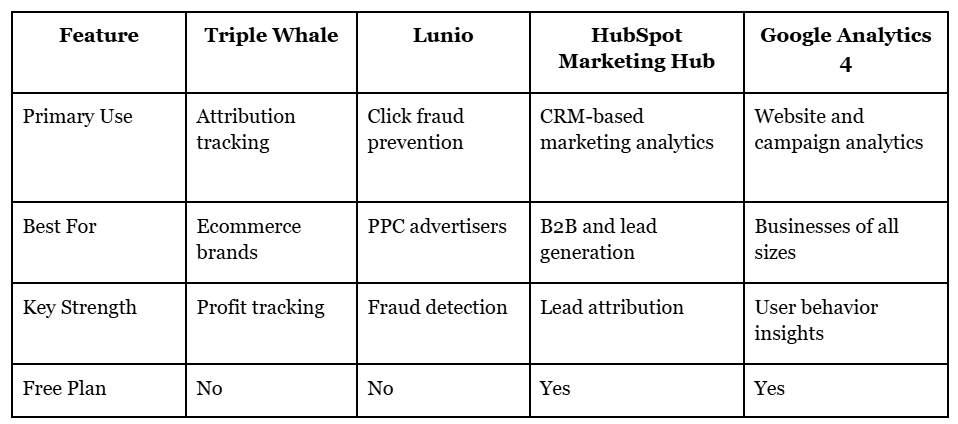
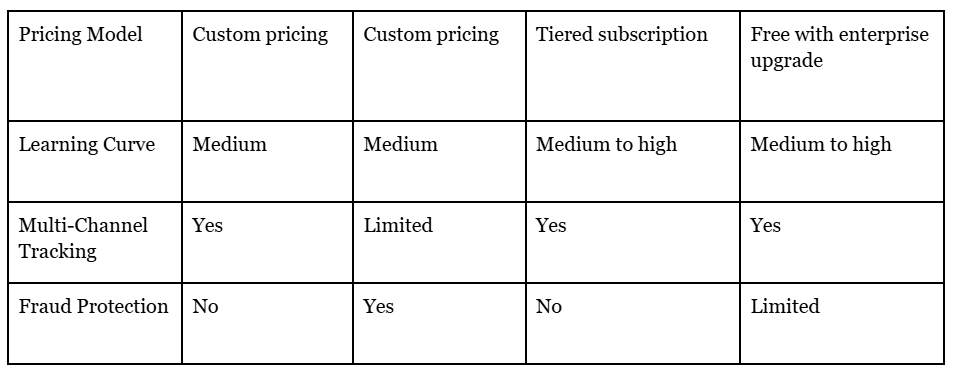
Tool Comparison Table
Final Thoughts
Advertising success has never been about spending alone.
Large budgets can increase reach, but they can also amplify weak targeting, poor creatives, bad attribution models, and fraudulent traffic. Businesses that focus only on scaling spend often miss the deeper issues hurting campaign performance.
The strongest advertisers treat budget as one part of a larger system. They test relentlessly, analyze customer behavior carefully, improve creatives consistently, and track real business outcomes instead of vanity metrics.
In many cases, improving strategy produces better results than increasing spend.
As advertising ecosystems become more automated in 2026, marketers who understand efficiency will likely outperform those who rely only on bigger budgets.