

Digital platforms rarely stand still. Search engines refine how they rank information, while social networks continually adjust what users see in their feeds. These algorithm changes can dramatically affect a brand’s online visibility, often reducing reach even when content quality remains the same. As a result, many organisations find themselves constantly adapting to new platform rules instead of focusing on long-term communication goals. Although keeping pace with updates is important, relying too heavily on algorithms creates an unstable foundation for brand awareness.
This is why enduring PR strategies continue to deliver value. Public relations is built on credibility, meaningful relationships, and stories that resonate with both journalists and audiences. A well-earned media mention, an executive recognised as a trusted expert, or a reputation shaped by consistent messaging is not easily diminished by a platform update. These assets continue to generate attention across multiple channels because they are rooted in trust rather than temporary visibility. Brands that prioritise reputation over short-term reach are often better equipped to navigate changing digital landscapes, maintaining influence even as algorithms evolve and audience behaviours shift.
Why Algorithm Changes Keep Disrupting Marketing
Digital platforms evolve because user expectations, technology, and online behaviour never remain static. Search engines refine their ranking systems to surface more relevant, authoritative information, while social platforms regularly adjust their recommendation models to encourage meaningful interactions and reduce low-value or repetitive content. Artificial intelligence has accelerated this shift, enabling platforms to personalise feeds based on individual interests rather than simply displaying content in chronological order. As these systems become more sophisticated, predicting what will perform well becomes increasingly difficult.
For brands, this creates a constant cycle of adaptation. A strategy that generates strong organic reach today may produce very different results after the next platform update. Growing competition, the rapid increase in digital content, and changing audience preferences make it harder for businesses to rely on a single channel for consistent visibility. Even organisations that publish high-quality content can experience fluctuations in traffic or engagement when distribution algorithms change.
This uncertainty highlights an important reality: platform rules are temporary, but credibility is far more durable. While marketing teams should monitor updates and refine their tactics, sustainable growth depends on assets that are not controlled by an algorithm. Strong media relationships, compelling stories, and a trusted reputation continue to create opportunities for visibility regardless of how search engines or social platforms choose to rank and recommend content.
PR Is Built on Credibility, Not Algorithms
Algorithms can influence how content is distributed, but they cannot determine whether a brand is genuinely trusted. A post may gain thousands of impressions because it aligns with a platform’s current preferences, yet that visibility can disappear after the next update. Credibility, on the other hand, is earned gradually through consistent communication, reliable expertise, and meaningful interactions with audiences. It becomes a long-term asset that continues to support a brand even when digital trends shift.
This distinction separates short-term exposure from lasting reputation. Temporary visibility often depends on timing, platform mechanics, or trending formats, whereas a respected organisation earns recognition because people view it as a dependable source of information. Journalists are more likely to return to companies that consistently provide accurate insights and thoughtful commentary than those focused solely on maximising engagement metrics. Likewise, customers are more inclined to trust brands whose messaging remains authentic and consistent across every touchpoint.
This is where earned media becomes especially valuable. Coverage secured through editorial merit carries a level of authority that paid promotion or algorithm-driven exposure cannot easily replicate. Combined with clear messaging and a strong commitment to delivering value, it strengthens a brand’s reputation over time. While algorithms will continue to evolve, trust, authority, and consistency remain qualities that neither search engines nor social platforms can replace, making them the foundation of resilient public relations.
Strategy 1 — Invest in Media Relationships Before You Need Coverage
The strongest media connections are rarely built during a product launch or a reputational challenge. They develop over time through consistent, professional interactions that demonstrate respect for a journalist’s work and audience. Brands that wait until they need publicity often discover that meaningful relationships cannot be created overnight. Instead, successful organisations treat journalists as long-term partners rather than one-time distribution channels.
Effective media relations begin with understanding what each journalist covers and why it matters to their readers. Pitching relevant stories, offering credible experts for interviews, and responding promptly to requests all help establish reliability. It is equally important to respect editorial deadlines, avoid overly promotional messaging, and follow up thoughtfully rather than persistently. These habits show that a brand values the journalist’s role instead of simply seeking exposure.
Over time, dependable communication creates familiarity and trust. When reporters know they can rely on a company for accurate information, timely responses, or informed commentary, they are more likely to reach out when covering industry developments. This transforms the relationship from occasional outreach into an ongoing professional connection.
Unlike platform visibility, these relationships are not reset by algorithm updates. A trusted source remains valuable regardless of how search engines rank pages or how social networks distribute posts. By investing in genuine relationships before coverage is needed, brands create a sustainable advantage that continues to generate opportunities long after digital trends have changed.
Strategy 2 — Create Stories Worth Covering, Not Just Content Worth Posting
Publishing content consistently is important, but frequency alone rarely earns meaningful attention. Social posts, promotional updates, and product announcements often compete with thousands of similar messages each day, making it difficult to stand out. Journalists, however, are not simply looking for more content—they are looking for stories that provide new information, fresh perspectives, or genuine value to their audiences.
The most compelling stories usually begin with substance rather than promotion. Original research can reveal emerging industry trends, while customer success stories demonstrate real-world impact beyond marketing claims. Company milestones, innovative partnerships, community initiatives, and expert commentary on developing issues can also provide timely angles that make a story relevant to newsrooms. When organisations contribute insights instead of advertisements, they become more valuable sources for the media.
Strong storytelling also has a longer lifespan than a typical social post. A well-researched report may inspire multiple articles, spark industry discussions, and support future speaking opportunities. Likewise, an insightful case study can continue attracting attention long after its initial publication because it addresses a meaningful challenge or shares a lesson others can apply.
Brands that consistently create newsworthy narratives are less dependent on platform visibility. Valuable stories naturally encourage conversations, attract editorial interest, and continue generating recognition across multiple channels, even as digital trends and distribution algorithms continue to evolve.
Strategy 3 — Build Thought Leadership That Exists Beyond Social Media
Social platforms can help experts reach wider audiences, but they should not be the only place where industry knowledge is shared. A professional reputation built solely on social engagement is vulnerable to changing algorithms and shifting audience behaviours. By contrast, expertise demonstrated across multiple respected channels continues to build influence regardless of how individual platforms evolve.
One of the most effective ways to establish thought leadership is by consistently contributing valuable insights to industry conversations. Guest articles, expert interviews, podcast appearances, conference presentations, and commentary on emerging trends allow executives to share practical knowledge with audiences that actively seek credible information. Publishing original perspectives on complex issues also helps distinguish a brand from competitors that focus primarily on promotional messaging.
Consistency plays an equally important role. A single interview may increase visibility temporarily, but regularly offering informed analysis and evidence-based opinions reinforces credibility over time. As professionals become recognised for their expertise, journalists, event organisers, and industry publications are more likely to invite them to contribute to future discussions, creating a cycle of ongoing exposure that is not tied to social media performance.
When expertise becomes part of a brand’s identity, it continues to generate opportunities even during periods of declining organic reach. Rather than relying on algorithms to amplify every message, organisations with established authority earn attention because audiences and media outlets actively seek their insights, making their influence more resilient and sustainable.
Strategy 4 — Diversify Your Visibility Across Multiple Channels
Depending on a single platform for visibility is a risky strategy. Whether it is search traffic, one social network, or a specific content format, any significant change in distribution can quickly reduce audience reach. Diversifying communication channels helps brands maintain consistent exposure by ensuring that one algorithm update does not disrupt their entire marketing and PR efforts.
A balanced approach starts with owned channels such as a company website, blog, and email newsletter. These platforms give organisations greater control over how information is published and shared. Alongside these assets, earned opportunities—including media features, podcast interviews, and guest contributions—help extend reach while adding third-party credibility. Shared channels like social media remain valuable for engagement and community building, but they work best when they support a broader communication strategy rather than serving as its foundation.
Brands should also explore industry forums, professional communities, webinars, conferences, and networking events where meaningful conversations take place. These spaces often create direct connections with customers, journalists, and industry peers without relying entirely on platform-driven visibility. Each channel contributes a different type of audience engagement, making the overall strategy more resilient.
When visibility is spread across multiple touchpoints, the impact of any single platform update becomes far less significant. Instead of reacting to every change, organisations can continue building awareness through a diverse communication ecosystem that supports long-term growth and strengthens their reputation across both digital and offline environments.
Strategy 5 — Build a Reputation That Others Reinforce
The most trusted brands are not those that speak the loudest about their achievements but those whose credibility is confirmed by others. Independent recognition carries greater weight because it comes from customers, industry experts, partners, and media outlets rather than the organisation itself. This third-party validation strengthens public confidence and creates a reputation that is far more resilient than self-promotion alone.
Customer reviews and testimonials offer direct evidence of positive experiences, while industry awards and professional certifications demonstrate recognised standards of excellence. Strategic partnerships, client success stories, and mentions from respected organisations further reinforce credibility by showing that others are willing to associate their own reputation with the brand. Independent media coverage adds another layer of trust because it reflects editorial judgment rather than paid promotion.
This external validation also creates a compounding effect. Positive recognition in one area often leads to new opportunities elsewhere, whether through speaking invitations, partnership requests, or additional media interest. As more credible sources acknowledge a brand’s expertise and contributions, its reputation becomes increasingly difficult to ignore.
Unlike engagement metrics that may fluctuate with platform updates, third-party endorsements continue to influence how audiences perceive an organisation. People are naturally more confident in businesses whose value has been recognised by independent voices. By consistently delivering quality experiences and encouraging authentic advocacy, brands build a reputation that remains strong regardless of changing digital trends or distribution algorithms.
Strategy 6 — Use Data to Support Every PR Narrative
Strong stories become even more persuasive when they are supported by credible evidence. While opinions and predictions can spark discussion, journalists and industry audiences are far more likely to engage with narratives that include verifiable data. Statistics, research findings, and measurable outcomes help transform a general claim into a story that is informative, trustworthy, and relevant.
There are many ways organisations can strengthen their PR narratives with evidence. Original surveys can reveal emerging customer behaviours, while internal performance data may highlight meaningful trends within a particular market. Industry reports, benchmark studies, and carefully analysed customer insights also provide valuable context that helps explain why a story matters. Even simple metrics, when presented accurately, can give journalists a stronger reason to explore a topic further.
Data also encourages deeper conversations. Rather than promoting products or services, brands can contribute useful information that helps audiences understand changing market conditions or solve common challenges. This approach positions the organisation as a knowledgeable source instead of another company seeking attention.
Accuracy and transparency are essential throughout the process. Data should be collected responsibly, interpreted carefully, and presented with enough context to avoid misleading conclusions. When evidence supports every major claim, PR stories become more credible, more shareable, and more likely to earn lasting attention. As algorithms continue to evolve, fact-based storytelling remains one of the most reliable ways to build authority and attract meaningful media interest.
Strategy 7 — Prepare for Reputation Challenges Before They Trend
A reputation is often tested during moments of uncertainty rather than periods of success. Negative conversations can spread rapidly across digital platforms, and once an issue gains momentum, organisations have very little time to respond effectively. Preparing in advance allows brands to communicate with clarity instead of reacting under pressure, reducing confusion and protecting long-term credibility.
An effective crisis communication plan begins with clearly defined responsibilities. Organisations should identify authorised spokespersons, establish internal approval processes, and prepare response frameworks for different types of situations. Regularly monitoring media coverage, online discussions, and customer feedback also helps communication teams identify emerging concerns before they develop into larger reputational issues.
Preparation extends beyond written plans. Teams should periodically review response procedures, update contact lists, and ensure that key decision-makers understand their roles during a crisis. Consistent messaging across every communication channel is equally important, as conflicting statements can quickly undermine public confidence. Transparency, timely updates, and factual information help audiences feel informed, even when every answer is not immediately available.
No organisation can prevent every reputational challenge, but every organisation can improve its readiness. Brands that invest in preparation respond more confidently, maintain stronger stakeholder trust, and recover more effectively from unexpected events. While digital platforms may continue to evolve, a thoughtful and well-executed response remains one of the most valuable assets in protecting a lasting reputation.
What Successful Brands Do Differently (170–240 words)
Brands that achieve lasting recognition rarely build their communication strategies around the latest platform update. Instead, they focus on practices that continue creating value regardless of how digital channels evolve. While many organisations spend significant time reacting to declining reach or changing content formats, resilient brands invest in relationships, credibility, and consistent messaging that remain effective over the long term.
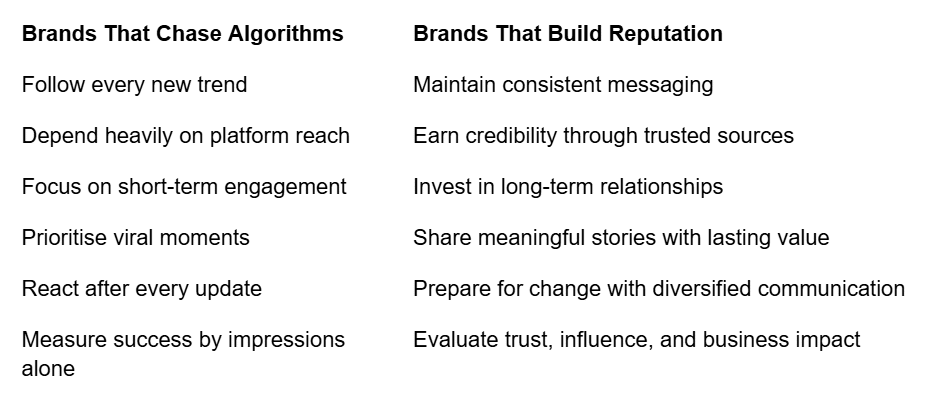
The difference between these approaches becomes more noticeable over time. Brands that constantly pursue platform-specific tactics often experience unpredictable results whenever distribution systems change. By contrast, organisations that consistently earn trust through valuable insights, reliable communication, and strong professional relationships continue attracting attention from audiences, journalists, and industry peers.
Rather than treating every algorithm update as a major setback, successful brands recognise that credibility is an asset that grows with consistency. Their visibility is supported by reputation instead of temporary platform preferences, allowing them to remain relevant and influential even as the digital landscape continues to evolve.
Measuring PR Success Beyond Platform Metrics
Measuring the success of public relations requires looking beyond likes, impressions, and follower counts. While these metrics can indicate short-term visibility, they rarely show whether communication efforts are strengthening trust or contributing to meaningful business outcomes. A campaign may generate impressive engagement numbers yet have little impact on brand credibility or long-term growth.
A more balanced evaluation focuses on indicators that reflect influence and reputation over time. High-quality media coverage demonstrates that a brand’s stories are considered newsworthy by independent publications. Share of voice reveals how frequently an organisation appears in industry conversations compared with competitors, while brand sentiment helps assess whether public perception is improving or declining. Referral traffic from reputable publications can also show whether earned coverage is attracting genuinely interested audiences.
Additional indicators provide further insight into PR performance. Mentions of company executives, invitations to speak at industry events, growth in newsletter subscribers, improvements in website authority, and an increase in branded searches all suggest that recognition is extending beyond individual campaigns. Monitoring lead quality rather than lead volume can also reveal whether PR is attracting audiences with stronger purchase intent or partnership potential.
Taken together, these measurements provide a clearer picture of long-term impact. Instead of focusing only on fluctuating platform metrics, organisations can evaluate whether their communication efforts are building authority, strengthening relationships, and creating sustained visibility that continues to deliver value regardless of future changes in digital platforms.
Conclusion
Digital platforms will continue to evolve, and no organisation can predict every update that shapes online visibility. Search engines will refine ranking systems, social networks will adjust recommendation models, and new technologies will continue changing how audiences discover information. While adapting to these developments is necessary, building an entire communication strategy around them creates unnecessary uncertainty.
The brands that remain visible through these shifts are those that invest in lasting foundations rather than temporary tactics. Strong PR strategies emphasise credibility, valuable storytelling, trusted relationships, and consistent communication that extends across multiple channels. These qualities cannot be replaced by algorithmic preferences because they are earned through sustained effort and genuine expertise.
Similarly, meaningful media relations continue to provide opportunities that are independent of platform fluctuations. Journalists seek reliable sources, audiences value authentic voices, and third-party recognition strengthens trust in ways that paid reach or viral content alone cannot achieve. Organisations that prioritise these long-term assets are better positioned to maintain influence, adapt with confidence, and continue earning attention as the digital landscape changes. In an environment where algorithms are constantly rewritten, reputation remains one of the few competitive advantages that continues to grow over time.