

In the modern business world, retailers operate in a strictly fast-moving environment shaped by consumer protection laws, data privacy regulations, security standards, and product safety rules. All of these aspects are categorized under retail compliance in their respective industries.
Now if a business makes even a small operational mistake, then everything can escalate into regulatory or reputational problems, which ultimately can lead to managerial issues. To help you identify the key regulations that affect retail compliance, we are going to highlight the most common risks retailers face in the modern industry and how to face them.
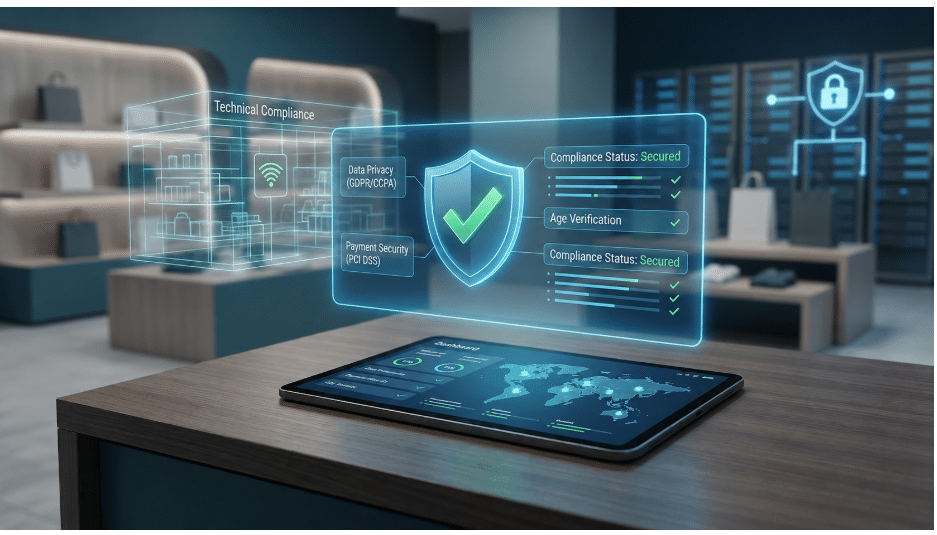
What is Meant by Technical Compliance in the Retail Industry?
Retail compliance refers to the process of how an organization adheres to the regulatory landscape in the retail industry. The purpose of maintaining regulatory compliance is to ensure that business operation is conducted under ethical, lawful, and efficient processes.
What is the Goal of Technical Compliance Management?
The idea of implementing technical compliance in a retail business environment is to safeguard the interests of consumers, employees, and the company itself. This multitenant framework includes occupational health and safety, consumer protection, labor laws, data privacy and security, and environmental preservation.
What is the Benefit of Maintaining Regulatory Compliance?
Despite the challenges that companies might face, maintaining technical compliance can offer the following benefits:
- Consumer Rights Safety: Enforcing the relevant laws to ensure that patrons and targeted customers are treated fairly without facing any loss.
- Improved Workplace Safety: Labor laws and safety rules are targeted to uphold workers’ well-being. Activities such as providing basic training and PPE, and installing ergonomic workstations can prevent accidents and improve employee satisfaction.
- Reduced Supply Chain Disruptions: Remaining updated with the regulatory compliance regulations can help companies to become more proactive even with the existing potential threats, risks, and uncertainties.
- Lower chances of penalties and fines: By following all the retail rules and regulations, the possibility of facing a legal lawsuit becomes slim to none. As a result, you can strengthen the company’s public image and self-esteem.
- Better Brand Reputation: Customers are becoming more conscious about ethical and sustainable practices. This is why it is important for brands to comply with certain laws to gain customer trust who might spread the positive word-of-mouth and give favorable reviews under the media coverage.
How to Manage Technical Compliance in High-Risk Retail?
Managing technical compliance in a high-risk retail environment requires a continuous and more proactive approach towards data security, supply chain traceability, and regulatory updates. More effectively, the programs rely on regular risk assessment, automated policy enforcement, third-party vendor management, and unified digital governance, risk, and compliance (GRC) platforms.
Let’s talk about some of the practices that you can follow in order to maintain technical compliance in high-risk retailing environments:
Performing Continuous Risk Assessment
- Identify Vulnerabilities: It’s preferable to document all the exposure points around the digital and physical assets. These points may include point of sales systems, eCommerce platforms, and customer data as well.
- Prioritize Risks: Evaluate the risk factors strictly on their chances of occurrence or how they might impact the business. By doing so, we can make sure that the compliance budgets are not stretched too thin so that the resources are spent evenly across the high and low risk areas.
Implement a Structured Compliance Framework
- Standardized Policy: Implement the technical requirements clearly across the enterprise and define SOPs properly so all the store locations and online platforms adhere to those policies properly.
- Define Clear Ownership: State-specific departments and define their accountability for making policies as per their domain.
Implementing Latest Technology and Automation
- Regulatory Horizon Scanning: Leverage compliance management softwares that includes regulatory updates to track the latest laws and automatic updates of the internal policies.
- Cybersecurity and Privacy: Make sure to maintain the privacy of sensitive customer data by deploying encryption tools, multi-factor authentication, and data security systems to avoid breaches and non-compliant fines.
- Incident Reporting: Utilize centralized management dashboards for better incident tracking and near-miss reporting that immediately addresses product recalls, breaches, and fraud tactics.
Apply Strict Vendor and Supply Chain Management
- Third Party Risk Control: Implement strict vendor management protocols to mitigate supplier disruptions and product compliance issues.
- Transparent Supply Chain: Design and audit multiple tiers of suppliers to ensure they meet your legal, ethical, and regulatory standards.
Apply Regular Audits and Training
- Compliance Audits: Perform regular (bi-annual or annual) digital audits and inspections across all retail locations. Combine these with third-party external audits to highlight internal weaknesses.
- Employee Training: Provide role-based training programs that are engaging for employees to ensure staff understand how to handle data securely and recognize safety from technical hazards.
For implementing a more resilient strategy, implement structured data solutions to track policy acknowledgement. Also map weaknesses and improve controls. You can also explore options for a centralized framework utilizing operational tools or supply chain platforms.
Common Challenges for Implementing Technical Compliance and How to Overcome
The number of laws and regulations that one might have to implement may seem overwhelming. Moreover, these laws often go through constant changes and updates. This is where you might have to navigate through the following challenges and implement the solutions to overcome them:
- Managing Multiple Locations: Most of the retail businesses have more than one geographical location in regions or countries. Therefore, it is difficult to implement a consistent legal policy as it may vary depending on the location. To overcome this challenge, companies can perform regular retain compliance audits and track compliance performance business-wide.
- Handling Emerging Tech-Related Risks: The exposure of eCommerce and digital payments has exposed retailers more to cybersecurity threats. This is where adopting strong cybersecurity policies that align with current data protection laws is the most suitable way to avoid scams.
- Aligning With the Changing Regulations: Although it is an inherent challenge, keep in mind that governments update laws and regulations to protect the general public. This is where partnering with the right technical partner, like High Stack Solutions, can help to stay compliant in your respective industry while staying updated with the changes in rules and regulations.
Conclusion
Managing technical compliance in high-risk retail businesses can be difficult yet rewarding in the long run at the same time. For most businesses, managing risky retail operations becomes overwhelming when they are not careful with the restrictions, changes, and updates over time. But with the right technical partner, you can always stay relevant yet competitive in the market to keep your business up and running online without facing any legal violations.