

Artificial intelligence (AI) isn’t a side project in communications anymore. It’s how brands listen and speak. Think of auto-drafted emails. Chatbots answering questions at 3 a.m. Personalization engines that remember your preferences.
AI sits in the middle of customer moments that matter. Which means trust matters more than ever. If people don’t feel safe, respected, valued, and informed, the message won’t land no matter how clever the copy is.
This piece lays out a practical playbook for ethical brand communication with AI by 2026. The tech should serve the relationship, not the other way around. Read on.
Understanding AI-powered Communication with Trust and Transparency
The current landscape of AI in communication
Most comms teams now rely on AI for three big jobs:
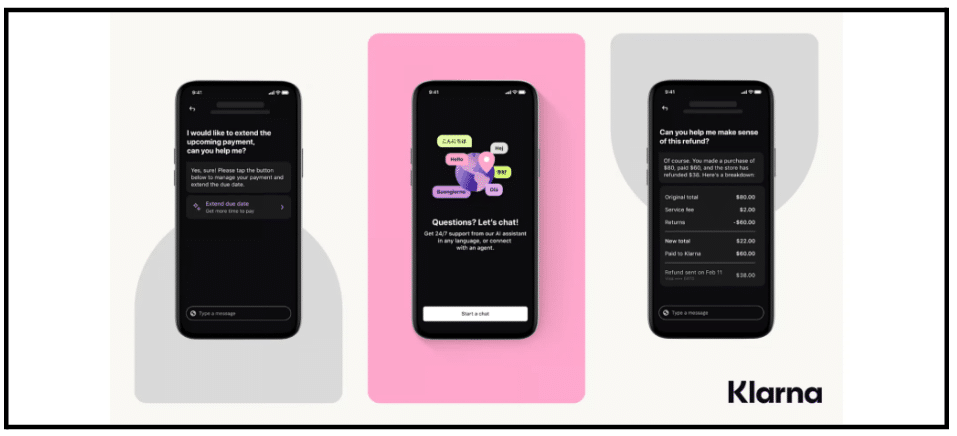
- Customer interaction comes first. Chatbots and virtual agents resolve routine questions. They triage complex ones and personalize offers in real time. Klarna shared that its AI assistant handled the equivalent work of 700 full-time agents in year one while lifting customer satisfaction. A sign of what’s possible when automation is done right and measured carefully.
- Data analysis is the second use case. AI tools surface patterns in feedback, social sentiment, and purchase behavior faster than any analyst could.
- Content creation rounds out the list. Drafting, summarizing, translating, and tailoring messages at scale has shifted from miracle to routine.
The real benefits? Speed. Consistency. Reach. AI tech uplifts the power of corporate communications in the age of noise.
The possible drawbacks? Uneven quality. Bias risks. And the trust gap that appears when people don’t know what’s human and what’s machine. These communication problems slow down modern businesses.
The 2024 Edelman Trust Barometer found: while business remains more trusted than government overall, people are worried about how companies deploy AI and expect responsible guardrails.
Pew Research also reports: a majority of Americans feel more concerned than excited about AI’s growing role in daily life and want greater transparency and control. Move fast, but bring people with you.
The importance of trust and transparency
Let’s set the record straight first:
- Trust is the belief that your brand will do the right thing when no one’s watching.
- Transparency is showing people, in clear language, how decisions are made, when automation is involved, and what happens to their data.
- AI ethics is the set of principles and practices that respect people’s rights and align technology with your values.
Take it from Greg McRoberts, Founder of Verde Fulfillment USA. With experience in e-commerce fulfillment and logistics with technology-driven operations, he understands how important visibility and accountability are when businesses rely on automated systems.
McRoberts says, “In fulfillment, trust comes from knowing where an order is and who is accountable when something goes wrong. AI should work the same way. Customers and partners need visibility into how automation affects their experience…along with a clear path to a real person when they need help.
He concludes, “Transparency isn’t just about explaining the technology. It’s about giving people confidence that the system is working in their best interest.”
By 2026, consumer expectations are shifting from nice-to-have disclosure to baseline requirements. Global rules are tightening, too:
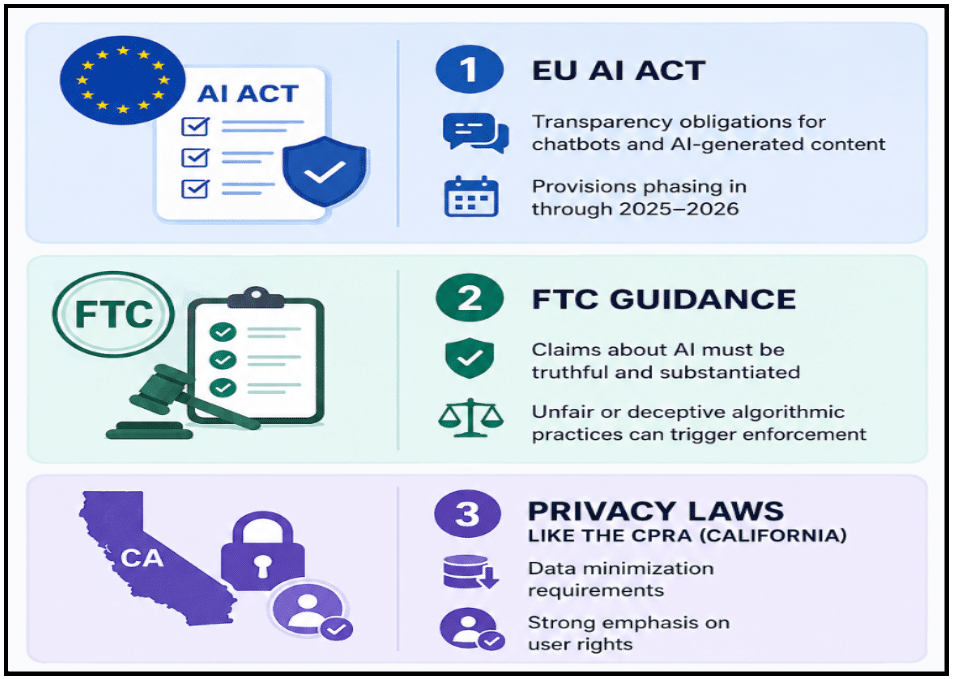
Image source: Generated by the author via ChatGPT
- The EU’s AI Act sets transparency obligations for chatbots and AI-generated content, with provisions phasing in through 2025–2026.
- The FTC guidance keeps reminding marketers that claims about AI must be truthful and substantiated, and that unfair or deceptive algorithmic practices can trigger enforcement.
- Privacy laws like the CPRA in California continue to stress data minimization and user rights.
What does this look like in practice?
- Trust – confidence earned through behavior over time
- Transparency – clear, proactive disclosure about AI use and data practices
- AI ethics – a value-driven framework for preventing harm and enabling fairness, accountability, respect for people’s choices
Consumer expectations in 2026 involve clear labels on AI-generated content and chat experiences. These include easy opt-outs from automated decisions and fast access to a human when it matters. People also want provenance for images and videos, given the rise of deepfakes.
Two case studies show the stakes:
- Associated Press publicly shared its AP guidance on generative AI in journalism and set boundaries on use, a move that built credibility with readers and partners.
- Sports Illustrated went the other direction. When reports suggested it published AI-generated articles under fake author profiles, trust took a very public hit.
Ultimately, disclosure and accountability travel farther than shortcuts.
How To Develop the 2026 Brand Playbook
A playbook only works when it starts with clearly defined values. To develop your 2026 brand playbook, follow the key steps below.
1. Define your AI values and principles
Start with your core values and ethical principles. Write your AI communication values in one page. In plain English.
Make sure to include fairness, privacy-by-default, explainability, and accountability. Then map values to behaviors.
For example: “We label AI-generated content prominently and offer a human handoff within two clicks.”
2. Make AI use transparent
AI visibility and transparency mean labeling AI-generated copies (even images and videos) with consistent language and placement.
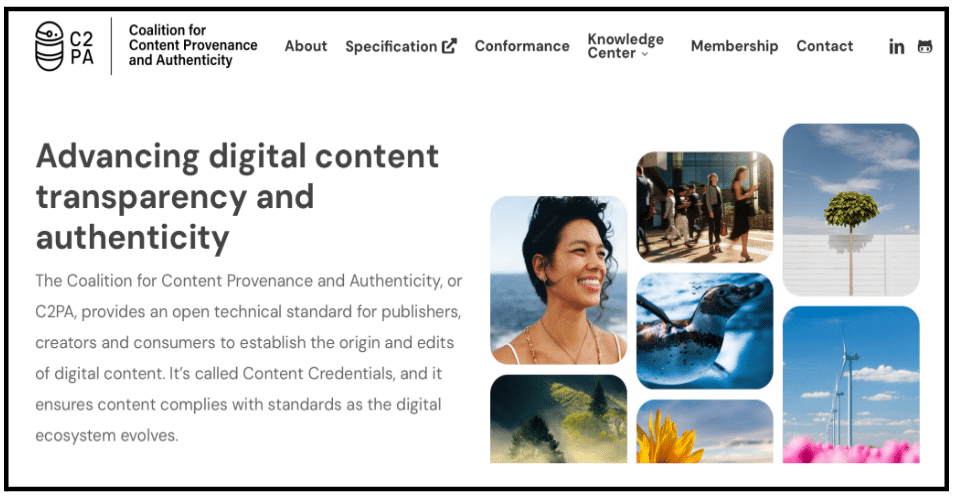
Content provenance tech like C2PA helps attach tamper-evident credentials to media.
Provide short disclosures that explain what the AI did. Not to mention what data it used and how customers can control it. Skip the legalese.
3. Build accountability and human escalation
Building trust through clear communication and accountability requires an escalation path for sensitive interactions.
A human should take over in moments that affect health, money, safety, or legal rights.
Publish an incident response plan for AI mishaps. Own the mistake. Explain the fix. And close the loop with those affected.
4. Audit, measure, and improve regularly
Assessment and adaptation can’t be one-and-done. To start, run quarterly “AI comms audits” to review samples of automated outputs, bias tests, escalation logs, and customer feedback.
Likewise, track a trust score that pairs CSAT with measures (like disclosure recall and comfort with automation). Iterate based on what people actually say and do.
The abovementioned steps mirror best practices in high-stakes fields like electrical services. Consider how electrical contractors already document safety protocols and escalation procedures. A model AI teams should adopt.
This is exemplified by Andrew Bates, COO at Bates Electric, whose experience managing electrical operations shows how clear processes and accountability matter as technology enters daily operations.
Bates shares, “A brand playbook should begin with your values written down in plain language. In an industry where safety and reliability, as well as customer trust matter every day, those values should also guide how you use AI and automation.”
He suggests, “Document who is accountable…how you’ll disclose automation…and how you’ll respond when something goes wrong. Whether AI is helping with customer communication or internal operations, clarity on paper creates consistency in practice.”
Ultimately, the strongest 2026 brand playbooks make AI part of a clear system of values, transparency, accountability, and continuous improvement.
Case Studies and Examples
The brands getting this right label their AI-generated content openly. They also give customers an easy path to reach a real person. What worked for them was treating disclosure as a feature customers appreciate. The lesson is simple: honesty scales better than spin.
- Klarna’s AI assistant claims strong resolution rates and satisfaction while being positioned as a helper. Not a replacement. And with paths to human agents.
- News organizations like AP have published their generative AI policies. Signaling boundaries and editorial oversight.
- Content provenance is embedding secure “content credentials” in visuals so customers can see when media is AI-generated and how it was made.

- Other brands use retrieval-augmented generation, so chat answers cite their sources, building a habit of evidence-backed communication.
The pitfalls are real, however: Chatbots that improvise policies can create real liability.
- In 2024, Air Canada was held responsible in a tribunal after its chatbot gave misleading guidance about refunds. A reminder that automation doesn’t absolve accountability.
Hidden automation erodes trust fast. If AI writes or edits content, say so, and show the quality checks in place.
AI Tools and Tech for Ethical Communication
The new generation of tools is designed to keep communication both efficient and accountable.
The tools emerging now can flag biased language. They track how content was generated. And they log every automated decision for review. However, automation should always leave room for human judgment at the moments that matter most. The goal is technology that supports oversight instead of replacing it.
- NIST’s AI Risk Management Framework gives a practical structure for mapping and measuring, as well as managing AI risks across the lifecycle.
- ISO/IEC 42001 sets requirements for an AI management system. This helps organizations formalize roles and continual improvement.
- C2PA-backed credentials attach verifiable histories to media assets. Bias and safety scanners flag toxic or biased language before publication. Paired with human review.
- Model and system cards offer public summaries of capabilities, limits, data use, and intended contexts of use.

When you’re ready to implement, start with a narrow pilot:
- Pick one communication flow. Add labeling and escalation. And measure how customers respond.
- Build a cross-functional review. Where comms, legal, privacy, security, and customer support co-own the AI playbook.
- Keep a decision log. That should track what the AI changed, who approved it, and why the change is necessary. It makes audits easier and accountability real.
Some areas need more than automation. For instance, financial advice, medical guidance, and policy interpretations should get human sign-off. Train frontline teams on when to step in, especially for crisis communication. A clear rubric beats guesswork when a conversation turns sensitive.
Final Words
AI can make brand communication faster and more personal. But only if people feel informed and respected.
The 2026 playbook is simple in spirit and disciplined in practice: write down your values, disclose clearly, keep humans in the loop, learn out loud when things go wrong.
If you build trust into the system, the technology will amplify your relationship with customers rather than hollow it out.
Looking to deliver smarter, faster, better, and more impactful communications? Agility PR Solutions can help using its AI-powered platform. Book a demo to speak with an expert today!