

Jessie Chambers is a travel writer with bylines across the British national press. Her face is AI-generated. Her articles are AI-generated. Her employer, the company Global Work and Travel, told Press Gazette in February 2026 that she does not exist. The spokesperson’s explanation is more revealing than the admission. Jessie Chambers, the company said, “is an editorial byline and representative voice used across our owned content and external PR activity, …a consistent, attributable point of reference for our travel insights and industry commentary.” In plain English: a fictional person built so a real journalist would have someone to quote.
Press Gazette’s running investigation has identified dozens of such manufactured experts placed across The Sun, the Daily Mail, the Daily Mirror, the Daily Express and the Daily Star through PR pipelines that no longer treat source verification as part of the work. The story underneath this story is about the judgement step PR has always sold, now quietly outsourced.
Daniel Kahneman gave us the vocabulary fifteen years ago. System 1, the fast and automatic mind, reads the headshot and the bio and the polished quote and approves them as plausible. System 2, the slow and effortful mind, checks whether the person exists. PR work at its best is System 2 made fluent enough to look like System 1. That is the craft. That is also what AI is quietly making optional.
The judgement step that used to be the job
The capabilities the PR profession trades on, curiosity about the unstated angle, creative framing, critical judgement under deadline, communication that earns trust, and collaboration that survives crisis, are the structural source of PR’s value, not a category of soft skills. They are also the capabilities most exposed to quiet erosion when AI fluency arrives in a profession trained to move fast under pressure.
The behavioral science behind this is decades old. Herbert Simon described how humans lean on whatever environmental shortcut reduces effort. Wharton researchers Steven Shaw and Gideon Nave report the same pattern in experimental form: participants consulting an AI tool that happened to be wrong scored 15 percentage points below peers with no AI access at all, with confidence inflated either way. In PR terms, that fifteen-point gap is the difference between catching a shaky claim in draft and amplifying it into a headline. Shaw and Nave give the pattern a useful label, cognitive surrender. The label is new. The pattern is not. The PR profession can act on it without waiting for a third paper.
What Jessie Chambers reveals is the operational consequence. A PR pipeline that treats source verification as optional. A journalist’s filter that treats a confident-looking bio as sufficient. An audience that treats the byline as authoritative. Each step in the chain is performing fluency rather than judgement. Each step would catch the failure if any one of them treated the work the way it used to be treated.
When the surrender is sold as best practice
The harder version of this problem is now appearing in this publication. A recent Agility piece argued that since journalists use AI to filter their inboxes, PR should abandon human-emotional pitching at the top of the funnel and write structured, machine-readable data instead. The advice is internally coherent, and it correctly recognizes that algorithmic filters now sit between most reporters and their inbox. Every recommendation in that piece, the formulaic subject line, the anti-fluff summary block, the entity-matched body, follows the same logic: optimize away the human discipline that used to sit between intention and output. Jessie Chambers is what that logic looks like when nobody asks whether the expert exists.
In education we call it critical thinking, and in the age of algorithms we risk forgetting how to practice it. The piece concedes its own failure mode in passing, noting that a pitch fully optimized for the bot reads to the human reporter as “unbearably dry and robotic.” The resolution is a refusal to treat producer-side judgement as a variable to be ignored. When the receiving end of communication is also instrumented, the discipline at the producing end becomes more important. A profession that writes for the machine first will, within two campaign cycles, find that the machine has adapted, the journalists have stopped reading any of it, and the audiences have lost the cues that distinguished trusted commentary from synthetic filler.
Four questions for Monday morning
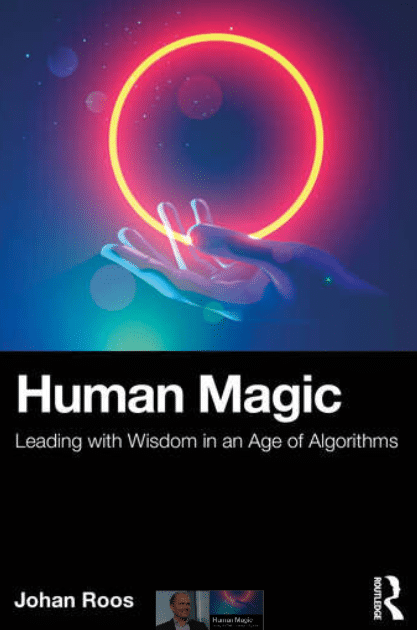
The discipline that counters cognitive surrender is what I call practical wisdom: the integrating capability that asks, of any decision, four operative questions.
- What matters? When the AI summary of this morning’s media landscape lands on your desk, are you still reading the underlying coverage, or has the summary become the brief? The day you cannot describe the story without the AI’s framing of it is the day the AI is doing your perceptual work.
- What is right? When the professional-looking AI draft contradicts your hunch of what is honest, do you still override it? The hardest PR moments are not when the client is wrong and you can see it. They are when the client is wrong and the AI has produced a defensible-sounding paragraph that hides it.
- What resonates? Are you using AI to test how the message will land, or to replace your own ear for the room? Sentiment analysis is useful. Sentiment outsourcing is the start of a profession-wide deafness.
- What works? When the team’s instinct says hold and the AI’s recommendation says publish, who decides? Courage in PR is most often the courage to say less, later, or not at all.
The machine can help with two. The other two only you can answer. What is lost if you stop answering the right and works questions is the part of the work that earns the seat at the table: the willingness to tell the client they are wrong, and the judgement to act in proportion. Jessie Chambers exists because nobody in the pipeline answered the right question.
The PR profession was built on the discipline of asking one more question before the statement leaves the building. That discipline has been described by behavioral scientists for decades. AI raises the cost of forgetting it. It does not abolish it. Every professional now chooses, daily, whether to use AI to amplify the judgement that gives the work its value, or to let it quietly erode that judgement under cover of speed and fluency. The choice will define which PR shops are still trusted in a few years, and which have become indistinguishable from the synthetic experts they once placed.