

Your podcast can have amazing stories and guests.
But without strategic podcast marketing strategies in place, it’s likely that few people will tune in.
Many great shows stay hidden because hosts rely only on word-of-mouth marketing or random social media posts. But you need a consistent content marketing plan to get noticed.
(I was invited to speak on three podcasts this past summer. The following content marketing ideas are what helped these episodes get the most traction.)
Keep reading to learn how you can build brand awareness, increase engagement, and boost your conversion rate. In this article, I’m sharing 10 social media marketing ideas you can implement to help your podcast get seen.
1. Create a content extraction workflow to pull valuable content
Use timestamps during the podcast editing process, so you can quickly find content to extract later.
Each episode holds golden nuggets you can repurpose into various content formats. (Pull stories, insights, interesting or funny takes, you name it). After recording, mark around three to five clips or quotes that stand out to you.
For example, if a podcast guest shares an unexpected career lesson, clip that into a 20-second segment for Instagram Reels or YouTube Shorts. And turn a quote from that clip into a graphic. (Use that on LinkedIn or X.)
Leverage a speech-to-text tool to instantly transcribe your podcast episodes into readable content. Then repurpose into engaging social media posts, captions, and quote graphics.
This approach can easily help you turn one episode into weeks’ worth of social media content without extra work.
You can also review the podcast transcript and turn it into an insightful blog post for your website. But make sure your website has reliable hosting so it loads quickly and keeps visitors engaged.
*Pro-Tip: Embed your podcast player on your website so users can stream episodes directly from there. This is great for driving consistent traffic since your podcast social media promos will all point back to a central, branded space.
2. Build a guest promo package
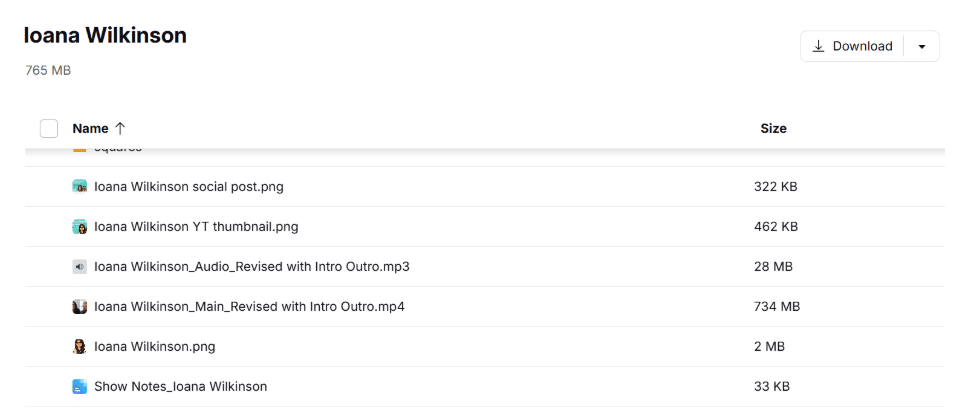
After an episode goes live, send guests a quick media kit.
Include short clips, a quote card featuring their words, and a caption they can copy for Instagram or LinkedIn. (Your guests are your best promoters.)
Here’s an example of a media kit that a podcast host sent me after our episode together:
(Image provided by Ioana Wilkinson)
When guests share your content, you reach their audiences too. It’s a simple way to increase visibility and boost organic social media content without spending on Google or Facebook ads.
You can also personalize each package with the guest’s favorite quote or moment. Ask for their input so they’ll feel excited to share your content.
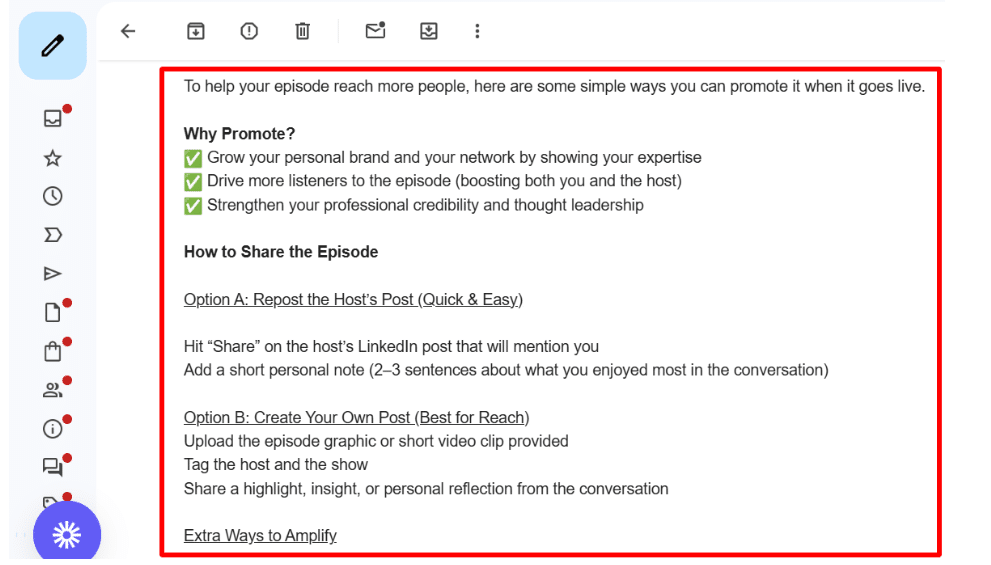
Another great tip: Give guests specific ways they can reshare the podcast episode.
Here are some tips I received:
(Image provided by Ioana Wilkinson)
3. Produce platform-specific versions
Tailor each post to fit where you share it.
Each platform has its own rhythm. A clip that performs well on TikTok might flop on LinkedIn.
For Reels or TikTok, use vertical videos under 60 seconds and short captions. On LinkedIn, post a short insight with a landscape thumbnail. Or break down a few top takeaways from their story and comment on the URL under the post. On X (formerly Twitter), turn quotes into threads or audiograms.
Think of it like translating your message for different rooms. The story stays the same, but how you tell it changes.
This is how you’ll boost engagement metrics and reach your ideal buyer personas across different social media marketing channels.
4. Design a visual system
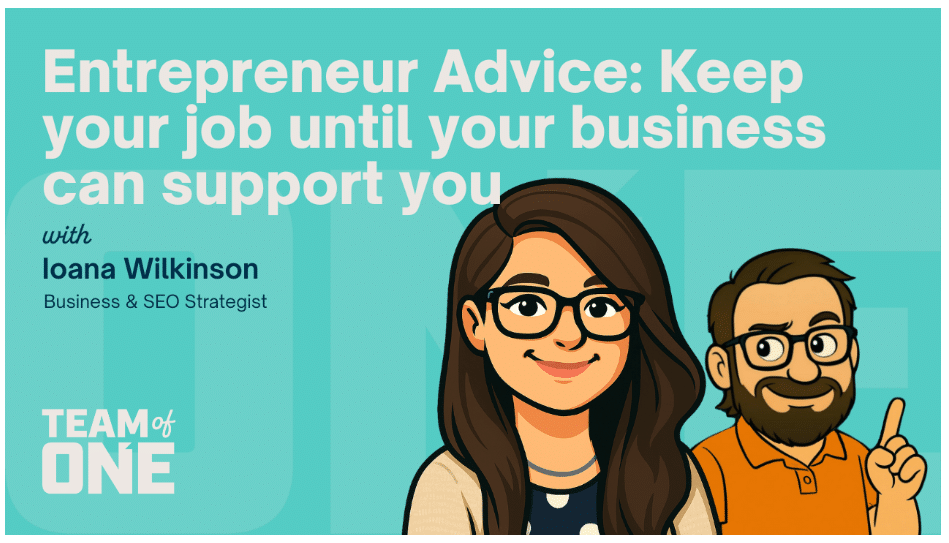
Create a few templates for audiograms, quote cards, and new episode announcements. Stick to the same fonts, colors, and logo placement so your brand is more recognizable over time.
Tools like Canva make this easy to manage. Having a reliable set of the best content marketing tools for design, transcription, and scheduling is essential for maintaining this consistency without spending all day on it. Over time, your podcast audience will instantly notice your posts — even before reading them. For example, use a bold headline, your logo in the corner, and a consistent background color.
Here’s an example of a graphic style Moe Choice, from Team of One, uses for all episode announcements:
(Image provided by Ioana Wilkinson)
5. Use captions and hook text in all social media video clips
Add hook text and captions when editing your videos for better accessibility and for people who watch videos on mute. (You can also use the speech-to-text tool I referenced earlier for this.)
The first three seconds matter most. Start with a hook that grabs attention — something surprising, emotional, or intriguing. For instance: “She leapt into the unknown, and against all odds, it worked.”
Pair that with strong audio quality and clear visuals, and you’ll keep people watching longer.
6. Schedule evergreen reposts
Build a content calendar to reshare your high-performing episodes with new captions or framing.
If an episode about content marketing trends did well six months ago, post it again with an updated angle. Mention recent industry news or stats. This keeps your social media content fresh while saving time on new content creation.
Use scheduling tools like Ordinal, Buffer or Planable to track what’s been shared and when, so you can easily repurpose your evergreen posts.
7. Use SEO-optimized show notes and transcripts
Upload each episode with SEO-friendly show notes. Include a headline, three to five key takeaways, and a full transcript edited for clarity. Plus keywords at the end!
Here’s an example from another podcast I was a guest on:
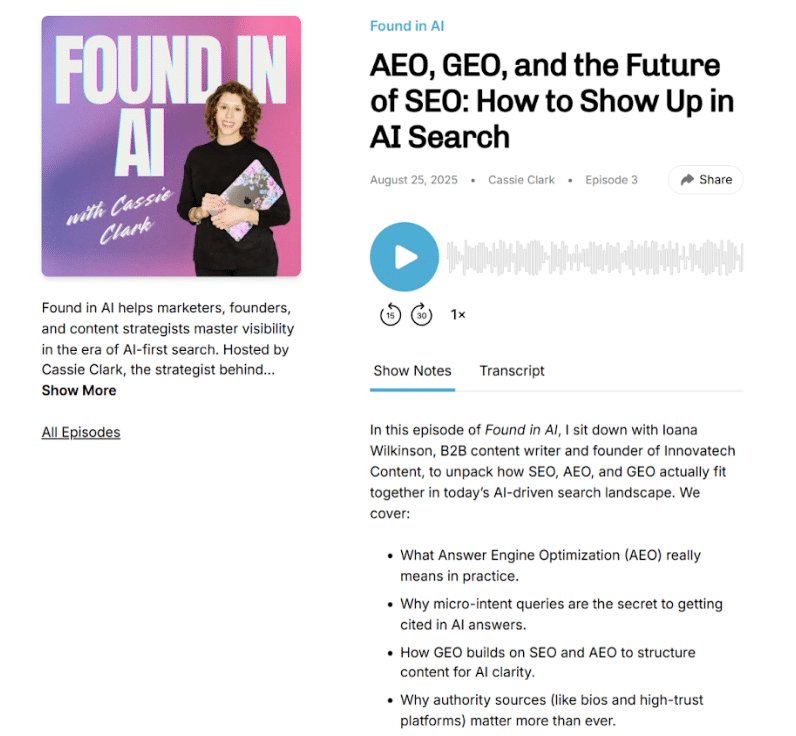
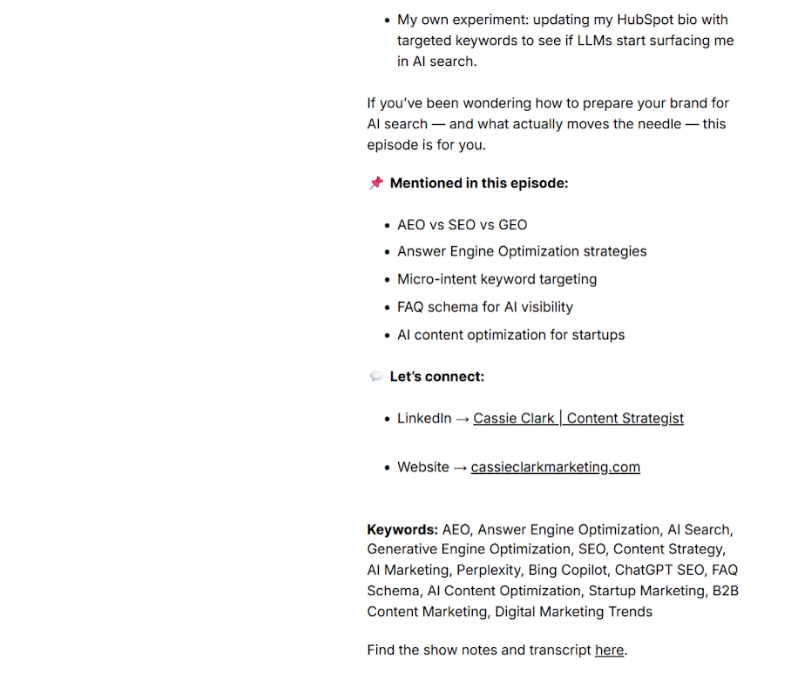
Search engines can’t “hear” your podcast, but they can read transcripts. That’s why this step improves search engine optimization and visibility for podcast discovery apps. (Again, you can use audio-to-text conversion tools to speed up the process.)
The page above was made using Buzzsprout, a podcast discovery app that helps creators host, promote, and track their podcasts.
*Pro-Tip: Link to other related episodes or downloadable resources to improve conversion rate optimization.
8. Run controlled A/B tests on hook styles
Experiment with your social media headlines and post intros. Try two different hooks and track which one performs better.
For example:
“You won’t believe what she said about burnout.”
Or:
“Here’s how top founders avoid burnout (in 60 seconds).”
The second version might get more engagement on LinkedIn, while the first might perform better on Instagram. Test, measure, and refine. Micro adjustments can lead to big jumps in conversion rates.
9. Add call-to-actions (CTAs) in every asset
End your captions or videos with a clear next step.
Every post should guide your audience somewhere.
Use phrases like “Watch the full episode through our link in bio,” or “Subscribe for weekly founder stories.” You can also invite engagement with prompts like, “What would you have done in this situation?” Or “Take our quiz to uncover your next move.”
CTAs help you move listeners along the content marketing funnel, from awareness to action. Even a simple question can increase engagement metrics and increase email sign-ups.
10. Consolidate analytics across platforms
Collect your data in one place.
Track engagement per asset, listens per episode, and which social channels send the most traffic to your podcast hosting platforms.
When you see what’s working, double down on it. (Maybe your YouTube Shorts drive the most clicks, or maybe your Instagram Reels bring new subscribers. This is how you make smarter decisions that grow your audience.)
Wrap up
With a clear content strategy and a consistent workflow, you can turn each podcast episode into a steady stream of valuable content that attracts and converts listeners.
If you want expert help tracking results and improving media visibility, check out Agility PR Solutions’s media monitoring tools. They can help you measure brand awareness and understand which marketing channels deliver the most impact.
To your success!