

Brands are exposed on social media, where they are prone to judgment and perceptions of almost every move.
A pricing revision sparks debate over fairness, while a public statement by the CEO may draw the LinkedIn community either flak or appreciation.
The first step in managing your brand reputation is to clearly define what your brand stands for. And then back it up with actions and decisions that shape positive judgments and perceptions amongst your target audience.
A good starting point is the ethical considerations, where you set an internal standard for your brand that governs decision-making.
This defines the brand’s ethics, and managing its reputation in the public eye means conveying that the brand’s values are non-negotiable.
To effectively manage your brand reputation, these are the five key considerations.
5 Ethical Considerations Every Brand Should Follow When Managing Reputation
1. Remaining Truthful in Communication
Communication is a bridge between a company’s internal operations and its public identity.
A report by Edelman states that 61% of people believe business leaders deliberately mislead the public by saying things they know are gross exaggerations or false.
Now that’s the baseline skepticism your communication starts against. Which means the brand that commits to factual, accurate communication can occupy a position most competitors have voluntarily left open.
Oliver Baker, serial entrepreneur and the co-founder of AI Development Agency, QuantumXL, says, “In a service business, reputation travels faster than any campaign you run. At QuantumXL, I keep our communication simple: we say exactly what we can deliver, how long it will take, and where the risks sit. Early on, I learn that being honest about limits wins more trust than promising perfection. Clients may pause when they hear the constraints, but they stay because the work matches what we say. Over time, that consistency becomes the reputation itself.”
Buffer reveals each employee’s pay rate by name, from co-founder and CEO Joel Gascoigne to engineers, making the business’s internal workings visible to anyone who looks.
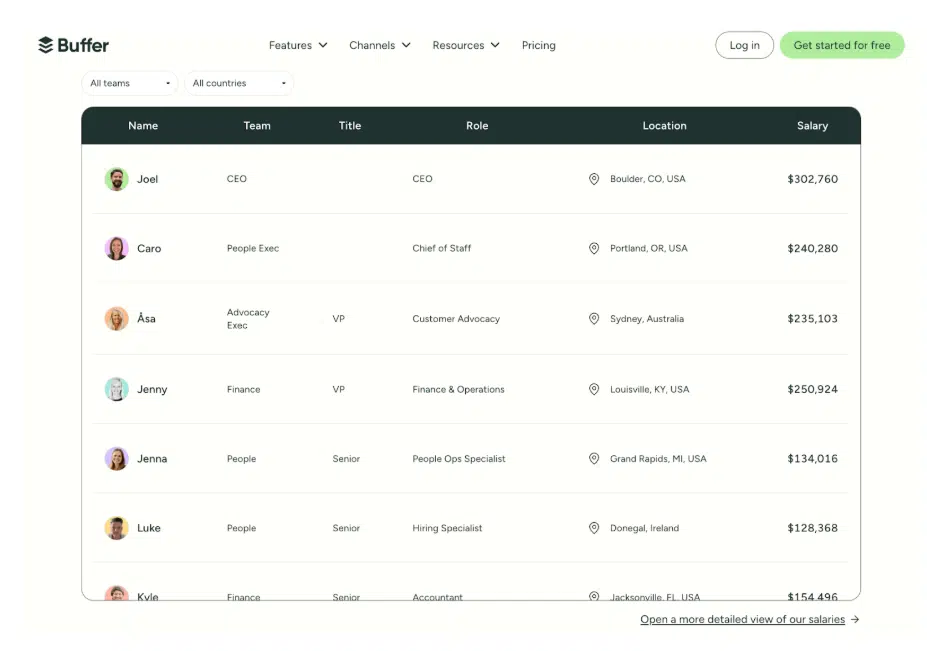
Here’s how to put truthful communication into practice —
- Put numbers, not claims: Every claim a brand puts out publicly is a promise the audience will hold it to. If your business cannot back it up operationally, avoid communicating it.
- Audit those numbers before they go public: Every marketing asset, whether ad copy or case-study metrics, should undergo a factual review before reaching the audience. One inflated statistic that gets called out publicly tends to reopen every claim the brand has ever made.
- Set an internal language standard that flags vague superlatives: Words like best-in-class or unmatched should not go out unless the brand can back them with data. This is not just an editorial policy but a cultural one, signalling that your brand values the truth.
2. Disclosing Influencer & Co-Branded Endorsement
When an audience realizes a recommendation was paid for but presented as genuine, they start questioning every recommendation the brand has ever made.
A report by BBB Programs shows that 64% of people cite failure to disclose brand relationships as a trust-damaging behavior, and 80% point to lack of authenticity and transparency.
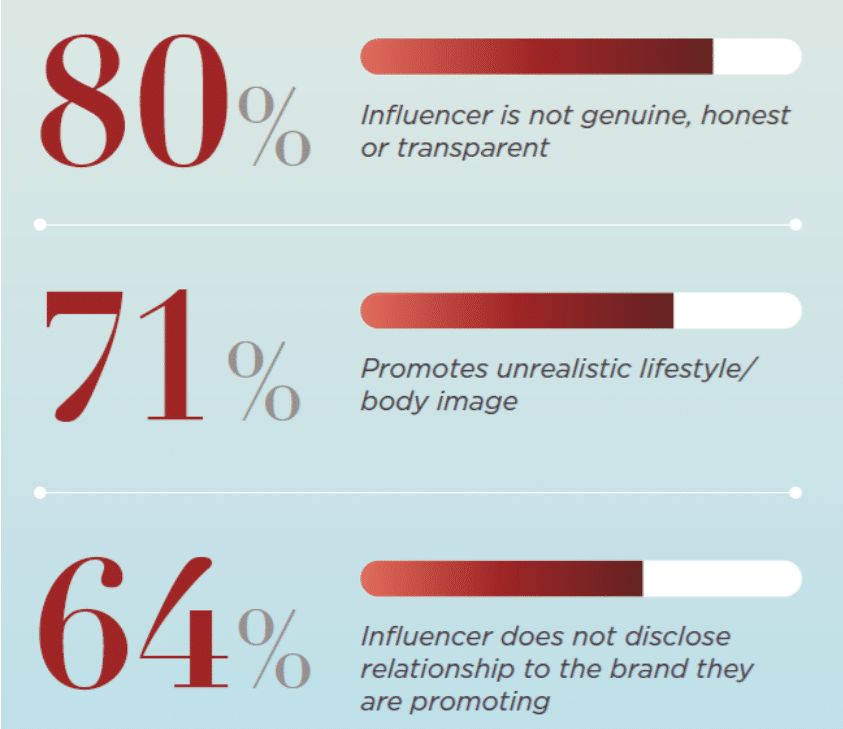
The reason for such disclosure is also about what the influencers stand for and whether their philosophy aligns with the brand ethos.
That’s why upfront disclosure ensures the brand’s reputation is not collateral damage in an influencer’s controversy.
Quick tips to implement such honest endorsements:
- Enforce standardized labeling: Ensure every partner uses clear text at the start of each video or post. Facebook and Instagram both have a native ‘Paid Partnership’ label built into the post creation flow. Using it should be a non-negotiable requirement in every influencer brief the brand sends out.
- Prioritize long-term partners over one-off ads: Try working with people who already use your services. A paid post from a long-term user feels more honest than a cold script read by a stranger, even when the paid partnership tag is visible.
- Embed a content approval checkpoint: Apart from the creative approvals, add a dedicated step that reviews only for compliance with disclosure standards. A standalone checkpoint indicates that the brand treats such endorsement notes with the same seriousness as the creative itself.
When an influencer partnership is transparently disclosed, audiences gain clarity and feel more confident engaging as part of both the creator’s and the brand’s community.
3. Maintaining AI Transparency
Everyone knows that AI is part of how businesses operate. But it’s an ethical concern if users later discover they were engaged with information created by a bot rather than a human.
According to Sprout Social, 52% of users are concerned about brands using AI without disclosing it. That concern indicates an expectation, not a concern about AI use. What they reject is AI acting as a human.
As brands increasingly rely on multimedia communication to explain complex systems, transparency must extend across every format. Even when companies use structured storytelling — including explainer video services — to clarify how AI supports their operations, the ethical responsibility remains the same: clearly disclose where automation begins, and human oversight takes over.
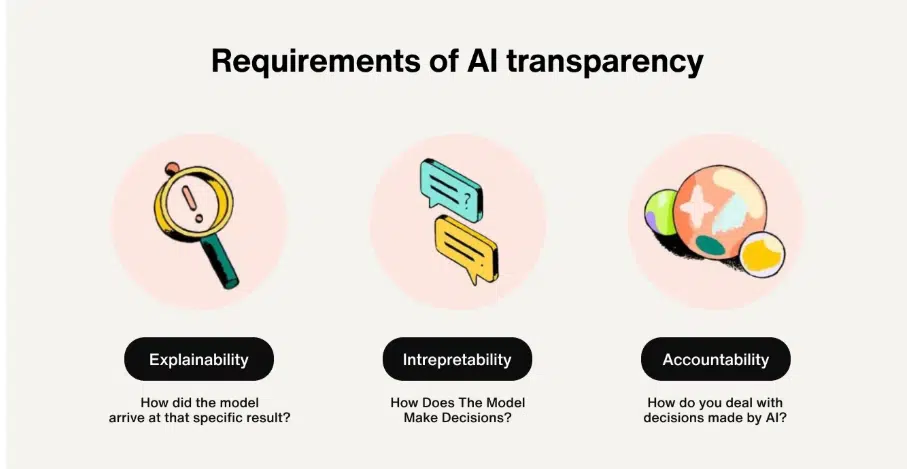
Sports Illustrated was caught publishing articles by authors who did not exist. The journalists had AI-generated headshots and fabricated biographies. The backlash damaged their brand image, ultimately leading to the CEO’s firing.
To maintain the AI transparency as a part of managing the brand reputation:
- Label AI-generated or AI-assisted content at the point of consumption: Anytime the user is consuming your brand’s content (blog post, images on Instagram that allow ‘created with AI’ label, etc.), just mention right there that it is AI-assisted to demonstrate your brand’s honesty.
- Create an AI usage policy page: Create and share a document explaining exactly where and why you use automation. List specific tasks handled by AI and the steps your human staff takes to double-check those results for accuracy.
- Include a lead-to-human route: Make sure the user-facing chatbot includes a button that lets users connect to a real human to prove you are using AI to help them move faster, not to build a wall that hides your team from them.
4. Authenticity in Brand Messaging
People can really see these days whether the brand stands up to the ethos it communicates. A brand that communicates values it does not operationalize may face backlash on ethical grounds.
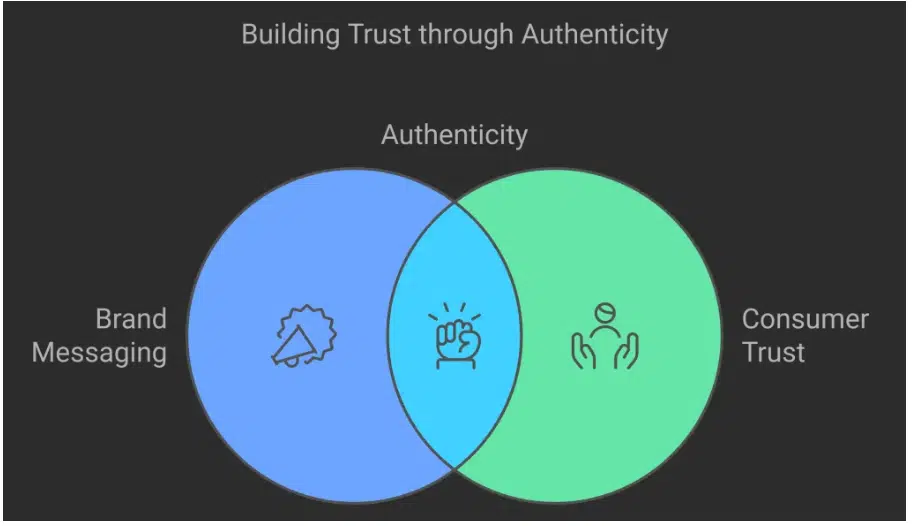
H&M is a case study in brand messaging and authenticity. Reports suggested that up to 96% of the brand’s sustainability claims were misleading. It negatively impacted their reputation, and the brand faced lawsuits in the USA for deceptive marketing.
What you’re doing is effectively borrowing credibility from a value the business has not earned the right to claim.
The IPSOS Consumer Tracker reports that 69% of buyers actively purchase from brands that reflect their personal values, which means that when a brand co-opts a value as a marketing position, it directly influences purchase decisions made in good faith.
This dynamic is especially amplified across enterprise ecommerce platforms, where customers compare brands side by side, and a purchase is just a click away — making authenticity a direct factor in whether they complete checkout or abandon their cart.
To make sure your brand messaging is aligned with what it represents:
Conduct a Value-to-Action Audit: List every value your brand claims in its marketing, such as sustainability or fair wages. For each claim, find one internal document, such as a receipt, a contract, or a certification that proves it is true. If you cannot find the proof, stop using the claim until the operational change is made.
Let the internal culture generate the external narrative: If the team genuinely operates a certain way, that story told from the inside out carries far more weight than a value statement written by an agency. Whether you’re drafting updates manually or using a social media post maker, consider including customer stories or employee perspectives to show that your brand makes decisions.
Align leadership behavior with public slogans: Ensure that executive decisions and internal policies reflect the brand’s public messages. If the brand promotes work-life balance to customers, the company must show it does not expect employees to answer emails at midnight.
5. Honoring Privacy and Data Stewardship
Tell users what happens to their data once they share it with your brand because personal information is a borrowed asset. This transparency should also extend to how companies structure their pricing and billing practices, especially in digital products where usage can change frequently. Clear documentation around usage-based billing models helps customers understand exactly how charges are calculated and builds long-term trust.
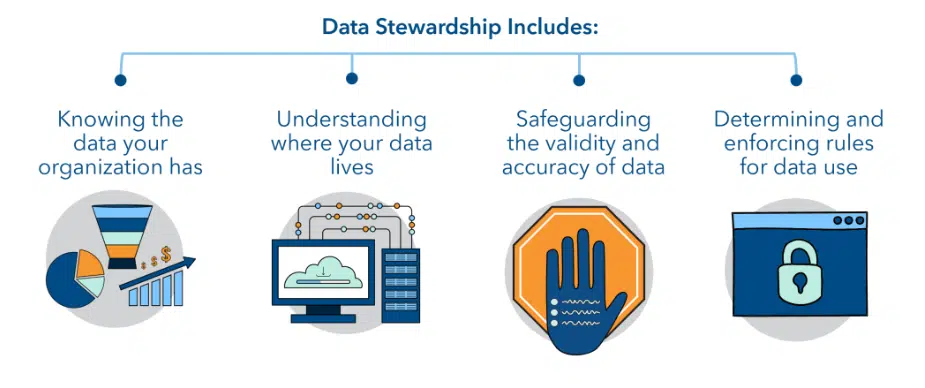
This is also why 66% of users judge a brand based on how honest it is about how it uses their data. In such a business environment, data usage goes beyond being a legal checkbox and becomes a driver of competitive edge.
True stewardship involves transparency regarding the entire lifecycle of information, including the security and resilience of the data center infrastructure where that “borrowed asset” is processed and stored.
To implement data stewardship:
Practice Data Minimalism: Only collect the specific information you need for a task. If a customer is signing up for a newsletter, do not ask for their physical address or birthdate. Whenever you create an online form or survey, make sure each field serves a clear purpose and collects only the data you actually need.
It does two things: reduces the damage of a potential breach and shows the customer you aren’t hoarding their information for secondary profit.
Provide an ‘Opt-Out’ Dashboard: Give users a central place to see all the data you have on them and a single button to delete it. Allowing users to reclaim their data easily shows that you respect their ownership of their personal identity.
Regularly audit your third-party data sharing: Strong internal data practices mean nothing if a poorly vetted third-party integration still exposes user data. Every tool or partner that touches your data needs regular review, because what happens downstream remains your responsibility in the eyes of the audience. For brands using cloud-native applications, implementing rigorous container security scanning is an essential part of this audit process, ensuring that the software containers handling customer information are free from vulnerabilities and unauthorized access points.
The same standard applies to HR tech—ensure assessment and interview vendors follow clear data retention, access controls, and security practices (for example, when using platforms like Testlify).
Conclusion
We’re in a time where brand reputation is no longer a part of marketing results. Instead, it shifts to how a company conducts its day-to-day operations and the amount of truthfulness it carries every time it faces the general public.
As a business, you make every strategic choice visible and verifiable. This removes the risk of public backlash and positions your brand as trustworthy.