

Google’s algorithm changes used to be the main thing keeping marketers up at night. Now we’ve got ChatGPT, Gemini, and Claude deciding what information reaches people.
Three in four businesses say their AI investments have met or beaten expectations, which means these tools aren’t going anywhere.
Today’s reality is that your reputation doesn’t live in one place anymore. Someone might read a review on Google, ask an AI chatbot about your company, then check your social media before deciding whether to work with you. Each channel pulls from different sources and weighs information differently.
This article will show you how to use AI to enhance, not erase, your real-world reputation. We will cover practical steps to make your website more visible and trustworthy to both people and the machines that help them find you.

Source: depositphotos.com
Create Headers That Match Intent and Drive Action
A strong header sets the tone for everything that follows. It tells both the reader and the algorithm what to expect. In the age of AI-driven discovery, that single line can decide whether your content is surfaced, clicked, or ignored.
Well-structured headers help search engines understand your value while showing users you understand theirs. That combination builds trust, keeps people on your page longer, and signals relevance to generative models.
To do this right:
- Use AI tools to identify the language your audience actually uses. Analyze search intent, questions, and phrasing patterns.
- Then, write headers that speak directly to those needs.
- Keep them short, specific, and outcome-focused.
- Instead of stuffing in keywords, focus on clarity and precision. Use words that explain what the reader gains.
- You can also use AI to A/B test variations, measuring engagement and click-through rates. Over time, this process reveals what structure and tone perform best for your niche.
Many successful businesses use this strategy. For instance, DialMyCalls, a service that provides mass text messaging solutions, applies this approach on a landing page for their mass notification system.
They’ve created a header that’s clear, audience-focused, and likely built with AI support. It immediately identifies the product’s purpose, aligns with search intent, and includes key calls to action (CTAs) that guide visitors to act.
The supporting visual reinforces what the text promises, building both trust and relevance. It’s all deliberate to serve a specific purpose.

Source: dialmycalls.com
This kind of AI-assisted optimization works because it connects human clarity with machine logic. It helps your business show up in the right results and builds a credible first impression.
When your headers match user intent and platform expectations, you’re communicating value in a way that both people and algorithms recognize instantly.
Streamline Customer Support Without Losing the Human Touch
Customer support shapes how people perceive your business long after they’ve made a purchase. Fast, reliable responses show professionalism and care. These are qualities that algorithms and users both reward through higher engagement and trust.
Yet, many businesses still struggle with long response times. 43% of consumers say slow replies are one of the most frustrating parts of interacting with a company.
AI offers a direct way to fix that without overwhelming your team or sacrificing authenticity.
To do it right:
- Start by mapping your most common customer questions and service issues.
- Use AI-driven chat tools to handle routine requests such as account updates, troubleshooting steps, or payment issues.
- Train your chatbot to recognize when a conversation needs a human handoff, especially for sensitive or high-value interactions.
- Keep response templates short, polite, and personalized where possible.
- Regularly review conversation data to improve accuracy and tone. The goal isn’t to automate everything but to make human support more effective by removing repetitive tasks.
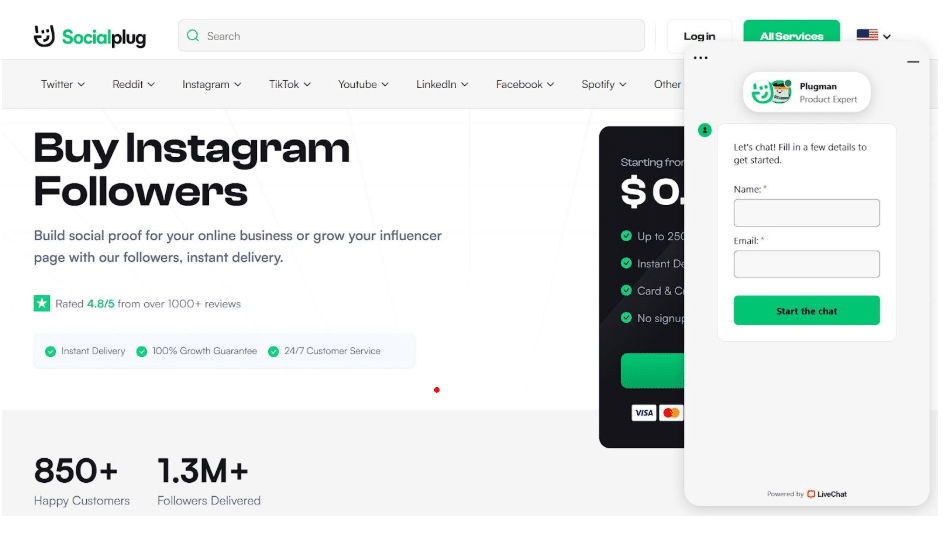
Socialplug, a platform that sells social media engagement services like followers, likes, and comments, runs this approach with precision. Their website includes a live chat available around the clock that combines AI automation with human assistance.
The chatbot manages cancellations, technical questions, and platform guidance instantly. When a query involves service customization or purchase decisions, it routes users to a live agent who adds context and builds rapport.
This mix of machine speed and human understanding keeps customers engaged without long delays.
Source: socialplug.io
The outcome is a system that feels both personal and efficient. AI ensures users get help immediately, while human agents focus on what matters most – connection and clarity. It’s a structure that builds loyalty, reduces friction, and strengthens your business reputation online.
Personalize the User Experience with Data-Driven Insights
Relevance drives attention. When visitors see content, products, or listings that align with their needs, they stay longer and interact more.
Personalization turns browsing into engagement, and AI makes it practical at scale.
By analyzing user behavior, preferences, and location, AI helps businesses tailor what people see, improving both satisfaction and conversion rates. It’s an approach that rewards transparency and trust, while signaling to search algorithms that your site delivers meaningful, user-focused experiences.
To personalize effectively:
- Start by collecting clear, consent-based data.
- Use browsing patterns, previous interactions, and session activity to guide what you show each visitor.
- AI tools can segment users automatically and reorder content to highlight the most relevant results.
- Make sure to update recommendations in real time so that returning users see fresh, context-aware suggestions.
- Avoid overpersonalization that feels intrusive. Users should feel understood, not tracked.
- Clear privacy settings and simple explanations help build confidence in how you use their data.
Business For Sale, an Australian platform specializing in business listings, can easily apply this strategy to their listings pages.
For instance, their Adelaide page displays businesses for sale in that region, but AI can reorder those listings based on each visitor’s browsing history and stored preferences. Someone who previously viewed hospitality listings, for example, might see cafes and restaurants at the top.
This smart use of cookies and behavioral data ensures that users quickly find what’s most relevant to them.

Source: businessforsale.com.au
This balance between automation and user control strengthens both engagement and reputation. Visitors appreciate the efficiency, and search engines recognize the improved interaction metrics.
By letting AI guide personalization responsibly, your business delivers experiences that feel both efficient and human – helpful for the user and rewarding for the algorithm.
Simplify Complex Offers Into Clear Steps
People make faster decisions when they understand what they’re signing up for.
Long, technical explanations often lose readers before they reach the call to action. Clear, structured communication builds confidence and reduces hesitation. That’s a major factor in conversion and trust.
AI can help by turning complicated workflows into short, logical sequences that anyone can follow. It’s an effective strategy because clarity not only helps users but also signals relevance and accessibility to search algorithms that prioritize helpful content.
To execute this well:
- Break down your process into core stages.
- Use AI tools to summarize lengthy text, identify redundant points, and refine instructions into concise, actionable steps.
- Avoid jargon, focus on outcomes, and match each step with supportive visuals or short descriptions.
- Visual aids, whether icons or short animations, guide attention and reinforce understanding.
- AI design tools can assist in generating graphics that align with your tone and simplify complex ideas.
- Test your process walkthroughs with users to ensure the message lands cleanly. You want to achieve brevity without confusion.
Uproas, a company offering premium agency ad accounts for Meta, Google, and TikTok, uses this tactic effectively. On their landing page for Facebook Agency Ad Accounts, they explain the entire rental process in just three straightforward steps. Each step is supported by intuitive visuals that highlight key details without clutter.
The clarity of their messaging shows how AI could’ve been used to summarize, structure, and design the content for maximum comprehension.

Source: uproas.io
This way, the page feels effortless to navigate and easy to trust. Visitors instantly grasp what’s involved, why it matters, and how to proceed.
Simplified processes backed by AI improve user understanding and strengthen brand credibility. Those are the two essentials for standing out in a competitive digital space.
Scale Your Content Output Without Sacrificing Quality
Creating valuable content consistently is one of the biggest challenges for growing businesses. Audiences expect fresh, relevant information, and search engines reward brands that deliver it.
That demand has made AI an essential part of modern content operations. 83% of content marketers now use AI to boost their output and performance.
When done right, AI helps teams produce detailed, optimized articles that rank well, attract engagement, and maintain authenticity.
To use AI for content creation:
- Start with strong data inputs. Use AI tools to research trending topics, analyze search intent, and identify content gaps.
- Let the technology handle repetitive tasks like outlining, keyword clustering, or initial drafts, but always refine the results with human review to ensure accuracy and tone. The goal is efficiency without losing quality.
- AI can also evaluate existing content performance, suggesting updates or structure changes that improve SEO, GEO, and user retention.
- Schedule regular content audits to refresh older posts with new insights and updated phrasing.
Unita, a platform that curates online communities for entrepreneurs and business professionals, demonstrates how this works in practice. Their article “Community Building Best Practices Every Brand Should Know” is an example of how AI can assist in creating long-form, topic-rich content.
The piece covers every angle of community building while staying optimized for search visibility. AI likely supported research, structure, and keyword integration, helping the writers focus on clarity and depth.

Source: unita.co
The balance between automation and expertise is what keeps content trustworthy. AI ensures coverage, consistency, and optimization, while human oversight adds nuance and credibility.
When your team learns to collaborate with AI this way, content production scales naturally. That way, your brand stays visible, relevant, and dependable in an algorithm-driven environment.
Verify Every Claim with Authoritative Sources
Accuracy is the foundation of online trust. When users read your content, they expect information they can rely on, especially in industries where decisions carry financial or legal weight.
Misinformation can harm your reputation and undermine user confidence and search visibility.
AI tools now make it easier to verify facts, cross-check data, and ensure that your content consistently reflects credible, up-to-date information. Maintaining that accuracy shows both your audience and algorithms that your site is dependable and authoritative.
To employ AI in this regard:
- Use it to scan reputable databases, government sites, and academic resources while collecting supporting evidence.
- Prioritize primary sources and always cite them clearly.
- Build internal review workflows where AI assists in identifying outdated statistics or inconsistencies across pages.
- You can also automate source tracking, ensuring that data points link back to their origin.
- Before publishing, use fact-checking AI tools alongside human editors to confirm context, precision, and relevance. This hybrid approach prevents errors while saving time.
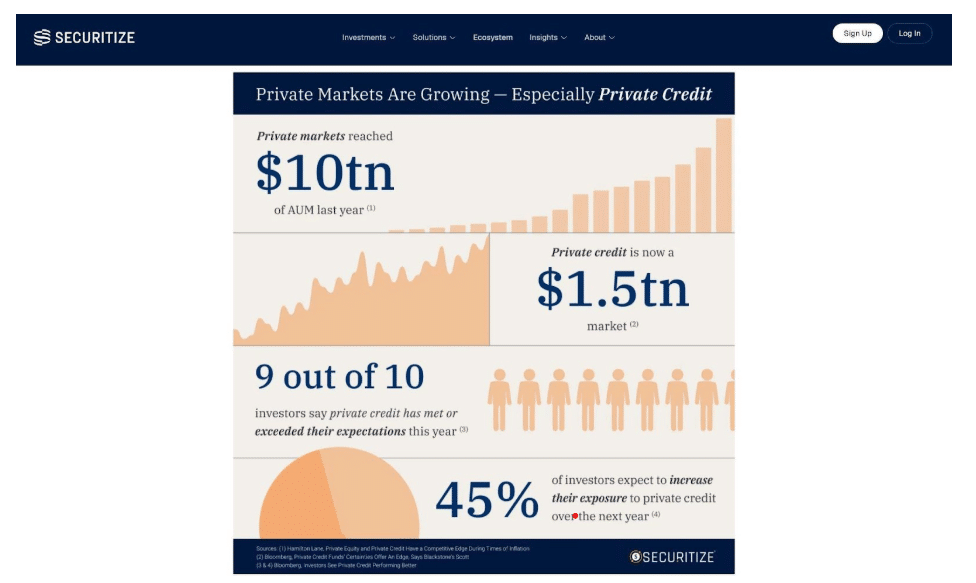
Securitize, an investing platform that helps users participate in digital securities and private markets, applies this strategy well. Their article “What Is Private Credit?” provides in-depth explanations for investors exploring the topic.
The content includes verified data, sourced infographics, and references to authoritative studies. Each statistic is linked to its origin, showing transparency and diligence. These are qualities that are essential in finance.
AI could have supported their process by gathering verified sources and ensuring factual consistency across the article and visuals.
Source: securitize.io
By integrating AI into fact-checking, your business can maintain the highest standards of reliability without slowing production.
Every accurate statement adds weight to your authority. Over time, that accuracy compounds into something search engines and readers both reward – credibility that lasts.
Final Thoughts
Your online reputation is now a partnership between your human expertise and the power of algorithms. Trying to build it without modern tools means working harder, not smarter.
The tactics we’ve discussed show that AI is not a threat to your authenticity but a tool that helps you express it on a larger scale.
You can now provide faster support, create more relevant content, and offer a more personal experience to every visitor. These are the very things that build stronger, more trusting relationships with your audience.
The goal is to start small. Pick one area and apply these principles. Use AI to handle the repetitive tasks, freeing you to focus on the strategic and creative work that only you can do. Begin blending optimization with your unique voice, and start building a reputation that both people and algorithms will reward.