

Every minute, hundreds of hours of video hit YouTube. TikTok, Instagram, newsletters, podcasts, streaming platforms, each one pushing more material into the same finite day.
The supply of content has exploded. Our time hasn’t.
You see the impact in the numbers. Impressions without recall. Views without depth. Clicks that end thirty seconds later.
The stories didn’t suddenly get worse. But the environment got crowded.
News avoidance is rising too. Nearly four in ten people globally say they sometimes or often avoid the news, according to the Reuters Institute’s 2024 Digital News Report.
Some of that is emotional fatigue. Some of it is simply overload.
And the way stories reach people has changed. Algorithms slice narratives into clips, captions, and highlight moments. What used to unfold as a beginning, middle, and end now arrives as fragments in a scrolling feed.
So every story becomes a stack of moments, competing with the next swipe.
This article looks at what’s actually driving that shift, and what people who rely on storytelling can do about it.
The Evolution of Content Consumption
Storytelling has always followed the technology people use to consume it.
Oral tradition became print.
Print gave way to radio and television.
The web reshaped everything again.
But the last fifteen years changed the mechanics of attention more than most people expected.
Appointment television once meant you showed up at a certain time or missed the episode. DVRs loosened that constraint. Streaming removed it entirely. Now, audiences expect access on demand.
Then, social platforms were layered on top of that.
People don’t just consume stories anymore. They react, remix, clip, quote, argue, and distribute them. In many cases, the audience shapes the story’s life cycle as much as the creator does.
Mobile pushed the shift even further.
Most stories today are discovered, consumed, and discussed on the same device, usually within the same session.
A person might start with a TikTok clip, search for more context, open a news article, and then jump into comments or a Reddit thread. All within minutes.
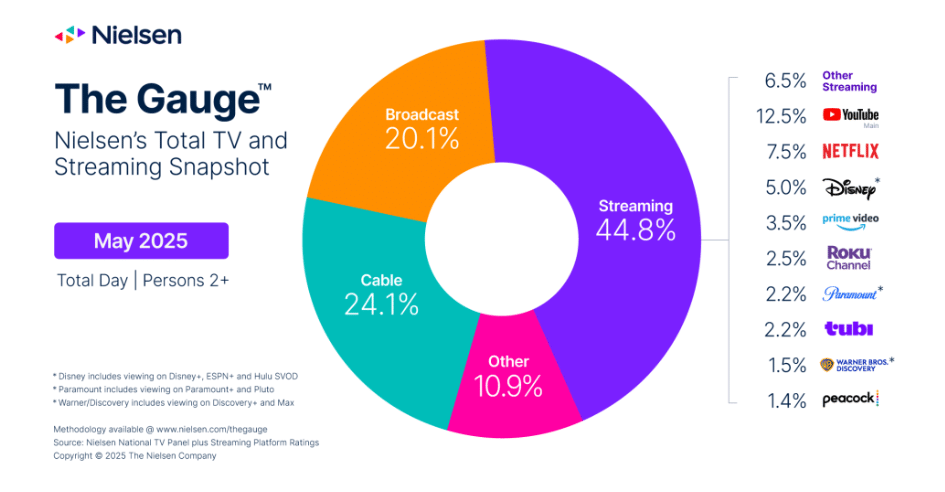
DataReportal estimates that people now spend several hours a day online across devices, with mobile driving most web traffic in many markets. Meanwhile, streaming has overtaken cable television in U.S. viewing share, according to Nielsen’s The Gauge reports.
The result is a new behavior pattern: grazing.
Sixin Zhou, Marketing Manager at LDShop, works in the highly competitive gaming marketplace where digital products, offers, and content compete for attention within fast-moving online communities.
“Gaming audiences move incredibly quickly between platforms. Someone might see a clip on TikTok, jump into Discord to discuss it, and then look up more information on YouTube or Reddit. That means the first signal of value has to appear almost instantly. If the audience can’t tell why something matters within a few seconds, they simply keep scrolling.”
People sample constantly. A video here. A thread there. Half an article before a notification pulls them somewhere else.
That doesn’t mean audiences stopped wanting depth.
But it does mean stories increasingly have to function in fragments first. The full arc only lands if the early moments hold.
What’s Actually Causing the Attention Recession
Several forces are colliding at once.
Sheer volume
Content volume is the obvious one.
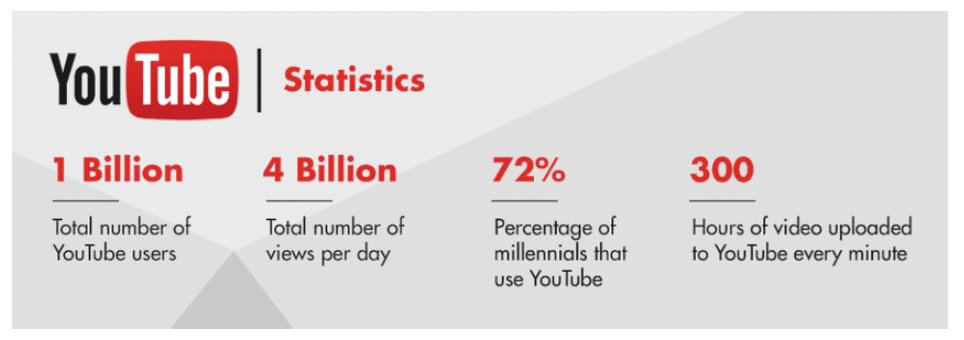
YouTube alone sees more than 500 hours of video uploaded every minute, according to Statista. Add podcasts, newsletters, short-form video, livestreams, branded content, and the endless flow of social posts, and the scale becomes hard to grasp.
Every new piece of content launches into a marketplace already flooded with alternatives.
Jeff Zhou, CEO and Founder at Fig Loans, leads a lending platform that works closely with borrowers navigating financial decisions online, giving him a front-row view into how people process complex information in crowded digital environments.
“In lending, attention shows up in a very practical way. People might open several financial guides while comparing options, but only one holds them long enough to understand the terms. If the first few sentences don’t clearly explain what’s at stake for the reader, they move on before the information that actually helps them.”
This changes the real challenge. It’s about giving someone a reason to stop and give you time.
And stopping is expensive now. It means ignoring the next five things in the feed.
Changing attention spans
Attention fragmentation plays a role, too.
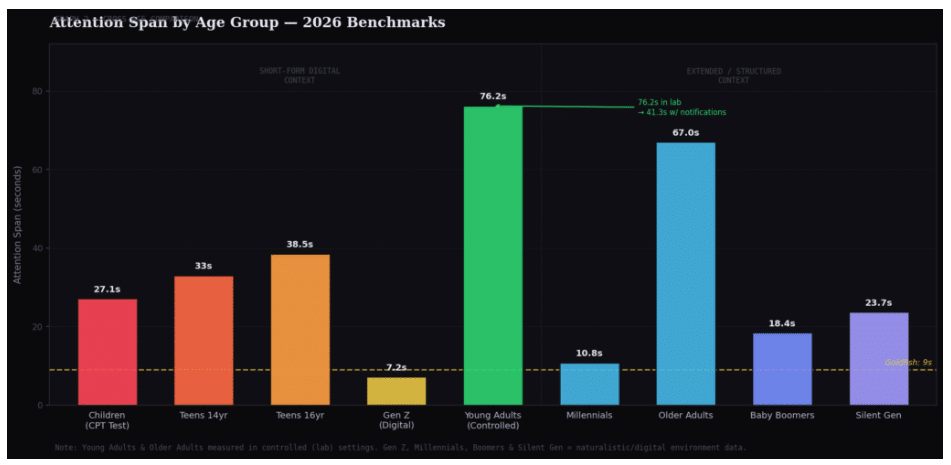
There’s debate about whether human attention spans are actually shrinking. What’s easier to measure is how frequently people switch tasks. Screens make interruption frictionless. A message appears, a notification flashes, another tab opens.
Within seconds, the brain is somewhere else.
A well-known Stanford study found heavy media multitaskers performed worse on attention and memory tests than lighter users.
Even if our brains haven’t fundamentally changed, our habits have.
Kashif Ali, Growth Specialist at PsychologySchoolGuide.net studies how people interact with educational resources online.
“In educational content, we see a very clear pattern. Readers don’t approach articles the way they approached textbooks a decade ago. They scan headings, jump between sections, and look for the part that answers their question fastest. The challenge for writers is designing content that still holds together as a complete explanation while allowing readers to enter the story from multiple points.”
Skewed algorithms
Then there are the platforms themselves.
Algorithms reward novelty, velocity, and emotional reaction. Content that sparks comments, outrage, or surprise tends to travel farther than something slow and careful.

We’ve seen this pattern repeatedly. Earlier research on Twitter found false news often spread faster and farther than accurate reporting.
Engagement becomes the metric that drives distribution.
Which creates pressure upstream.
Creators start optimizing for the click. The reaction. The quick spike of attention. Jump scares and cliffhangers. Headlines that promise more than the content can realistically deliver.
The long arc, the thing storytelling actually depends on, gets squeezed.
Put those forces together, and sustained attention becomes rare. Much harder to earn than before.
What This Does to Quality Storytelling
The environment favors speed.
Quality storytelling usually requires the opposite.
Investigative journalism, narrative features, documentaries, and serialized podcasts, these formats depend on patience from both the creator and the audience. They take time to build context, tension, and payoff.
In a feed-driven ecosystem, that patience gets harder to secure.
Quiet craft struggles to compete with viral spectacle. A carefully reported investigation might land beside a dozen algorithmically boosted clips built purely for reaction.
Inside newsrooms and creative teams, the pressure shows up operationally.
Publish faster. Feed more channels. Produce formats that fit the algorithm.
Travis Lambert, General Manager at Central Oregon Heating, Cooling, Plumbing & Electrical, runs a regional home services company where customers often arrive already overloaded with online advice about repairs, equipment, and installation decisions.
“Most homeowners who call us have already read several articles or watched a few videos trying to diagnose the issue themselves. By the time they reach us, they’re dealing with information overload. What actually helps is when someone explains the situation clearly and cuts through the noise. In that sense, attention today isn’t about being louder than everyone else. It’s about making the next step obvious.”
Output velocity starts to matter more than impact.
Another effect is the “winner-take-most” dynamic. A handful of titles dominate attention and distribution, while many solid mid-tier projects struggle to surface at all.
Streaming charts, podcast rankings, bestseller lists, again and again, the same pattern appears.
The result can be cautious commissioning and an overreliance on proven intellectual property. Sequels feel safer than experiments.
In information ecosystems, emotionally charged content also travels farther than measured reporting. Sensational framing spreads easily.
Which makes the environment feel louder, even when the underlying stories are valuable.
But the core truth about storytelling hasn’t changed.
When a story lands, it still holds people. Here’s how you can tell one.
How to Capture and Sustain Attention
There isn’t one fix. But certain practices consistently work better than others.
Offer clarity with a strong hook
The biggest shift happens at the beginning.
Stories now need to orient the audience quickly. Stakes, tension, context, something that tells the viewer or reader why this moment matters.
Andrew Bates, COO at Bates Electric, oversees operations where communicating technical work clearly to customers is essential to getting projects approved and completed safely.
“In construction and electrical work, you quickly learn that attention is tied to clarity. When a homeowner or project manager asks a question, they don’t want a long explanation of theory. They want to know what’s happening, why it matters, and what needs to happen next. The same thing applies to content today. If the audience has to work too hard to understand the point, they’ll stop reading before the message lands.”
Clarity first.
If people understand the stakes, they’re far more likely to stay.
Structure it to make sense on its own
Structure matters too. Strong storytellers design narratives that work both as fragments and as full arcs. Someone might encounter a clip, a paragraph, or a visual excerpt first.
Those fragments should stand on their own while still pointing toward a larger story.
Understand new viewer data
Community also matters more than distribution.
Audiences no longer behave like passive viewers. They speculate, remix, debate, and share interpretations. When creators give those conversations somewhere to live, comment spaces, forums, social communities, the story continues beyond the initial viewing.
That extension of attention often matters more than the initial click.
Viewer data helps if it’s used carefully.
Not just view counts.
Watch time per viewer. Completion rates by segment. Scroll depth across long reads. Where people drop off. Where they rewatch. Understanding what they’re saying via social listening.
Those signals reveal where the story is working and where attention slips.
Used well, that information guides craft rather than replacing it.
Success Stories Worth Studying
Some teams have adapted particularly well to this environment.
The Washington Post’s TikTok presence leaned into the platform instead of fighting it. Character-driven sketches and humor allowed complex news topics to travel in short bursts without abandoning substance. Coverage from Nieman Lab documented how the account became a gateway for younger audiences to engage with news.
The New York Times built two different attention anchors. A daily podcast that turns major stories into intimate conversations, and a simple word game that created a global ritual people return to each morning.
Depth and habit work together.
Patagonia Films shows that longform storytelling still works when the stakes feel real, and the craft is strong. Adventure narratives tied to environmental action continue to attract dedicated audiences.
The Pudding approaches storytelling differently again. Data-heavy topics turned into playful interactive essays where the reader actively explores the material.
What these teams share isn’t a single format.
It’s discipline.
They respect the platform, but protect the story. They design moments that reward attention, then create reasons for audiences to return.
Reach matters. But depth matters more.
Where We Go From Here
Attention hasn’t disappeared.
It’s just harder to earn.
People still spend hours inside stories that justify the time. Long investigations, serialized podcasts, and deep-dive documentaries continue to succeed when the craft and trust are there.
The challenge now is how those stories invite people in. Storytellers are learning to build narratives that survive in fragments without losing their core.
That balance, between the scroll and the full arc, is where the next generation of storytelling will be built.
If you want to see how brands and communicators are adapting their storytelling strategies in real time, explore the resources and insights available at Agility PR Solutions. Find research, tools, and guidance on navigating today’s fast-moving media landscape.