

In a business setting, brand trust is one of your most valuable assets—and not only because trust is one of the major prerequisites for getting consumers to buy from your brand. A credible brand reputation enables you to outperform your competitors and weather market dips, placing you in an advantageous position regardless of current economic circumstances.
But here’s the deal. Using the psychology of trust to your advantage isn’t always simple. Yes, basic tactics like showcasing social proof (primarily reviews and ratings) can help you build brand trust and earn more business. Nevertheless, standing out from your competitors — particularly in highly competitive markets — requires a more refined approach.
In this guide, we’ll cover some of the most effective ways to ensure customers believe your brand over others. But first, let’s take a closer look at the impact of brand trust on business outcomes.

Source: depositphotos.com
Why Is Brand Trust Essential in the Modern Buyer’s Journey?
If you look at the research on the role of trust in the buyer’s journey, you’ll find that it’s an essential prerequisite for reaching your business goals.
According to Edelman’s latest special report, trust is “the currency of consumer power.” No, it’s not a nice-to-have. Instead, it’s just as important a purchase factor as product quality and value for money, with 88% of consumers needing to trust a brand to consider buying from it.
However, being able to sell your solutions isn’t the only benefit of building a credible brand reputation. In fact, earning your target audience’s confidence comes with numerous benefits, all of which have some degree of influence over your brand’s profitability.
The Benefits of Building a Trustworthy Brand Reputation
If you look at some of the data about how brand trust influences the buyer’s journey, you’ll find that there are numerous pros of investing in positioning your business as a credible entity:
- A recent survey discovered that 87% of consumers would pay more for products by brands they trust. And some data suggests that the premium on trust averages at 25%.
- A breach of trust, on the other hand, almost always guarantees loss of profits. Adobe found that 71% of UK consumers will stop purchasing from a company if their trust is broken.
- Trusted brands earn both loyalty and advocacy. 59% of people are likely to purchase new products from businesses they find credible, and 67% are likely to advocate for them.
- When it comes to inevitable business crises, having your audience’s trust can give you some much-needed leverage. According to a 2024 report, 55% of people who fully trust a brand would remain loyal even if the business makes a mistake or if others accuse it of wrongdoing.
- It’s also worth noting that brand trust is a major differentiation factor. If you’re trying to stand out from your competitors, focusing on credibility can provide major benefits.
- Trustworthy brands have an easier time on the business side of running things. For starters, they are more likely to attract top talent — 76% of employees want to work for a company that is trying to have a positive impact on the world. Trust also plays a major role in strategic partnerships, with 94% of tech leaders emphasizing the importance of establishing trust in innovation partnerships.
How to Ensure Customers Believe Your Brand Over Others
Taking all of this data into consideration, it’s evident that investing in a trustworthy brand reputation pays off.
But what are the specific branding and marketing tactics that can help ensure customers believe your brand over others? Let’s look at some of the best ones out there, along with great examples of how real-world businesses are implementing them in their digital marketing strategies.
Utilize Relatable Social Proof
Social proof — especially that which is relatable and relevant to your target audience’s experiences — is one of the most powerful (and budget-friendly) methods to earn your customers’ trust.
After all, with over 99% of people seeking out social proof before making a buying decision, using this type of UGC is an easy way to establish the effectiveness of your solutions, the competence of your brand’s team of experts, and to show your dedication to providing customers with a superior customer experience.
Of course, not all types of social proof are equally powerful. Especially when trying to establish a reputation in a competitive market. For this reason, it’s a good idea to focus your efforts on demonstrating that you’re the best choice for your specific customer base.
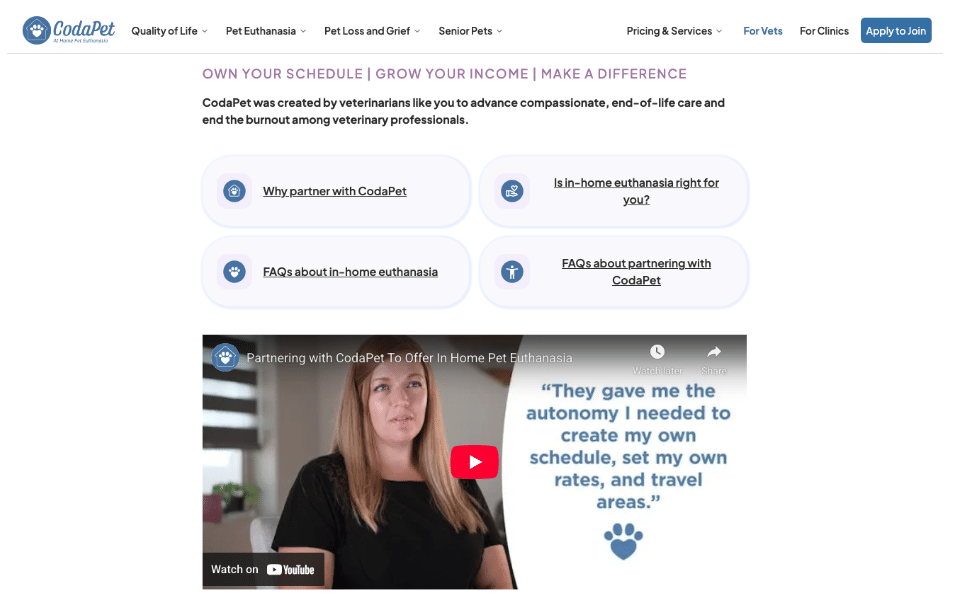
For an excellent example of how to accomplish this, check out CodaPet. This brand targets veterinarians, inviting them to join its growing network. But, instead of attempting to do this via impressive value propositions and CTAs, CodaPet lets its existing (and highly satisfied) customers do the talking. The social proof video isn’t just an authentic piece of content, which is exceptionally effective at building trust. More importantly, it addresses several unique pain points and aspirations that CodaPet solves, making the option of joining this network a no-brainer for any vet looking for flexibility, profits, and purpose.
Source: codapet.com
Take a Stand on Relevant Issues
Did you know that brand values play a major role in earning customers’ business?
According to a 2022 survey, 82% of people want consumer brand values to align with their own. However, the thing is that doing good is no longer sufficient in today’s complex world. Instead, to ensure your audience chooses your business over your competitors necessitates a more vocal approach.
Edelman’s Trust Barometer research found that 53% of people assume that a brand is doing nothing or hiding something if it doesn’t speak up about current world issues.
So, if you care about your company’s positive reputation and don’t want to lose customers to your more vocal competitors, it’s essential to speak up.
For example, Madhappy prides itself on its support of mental health issues. But it doesn’t just let potential customers assume that it’s doing enough. Instead, the brand actively posts about its involvement with this social issue, effectively building a trustworthy brand reputation by showing that it doesn’t just talk the talk but actually walks the walk.

Source: instagram.com
Deliver Selfless Educational Value
Sometimes, convincing your audience to trust you (and choose you over alternative options in the market) isn’t about advertising. Instead, it’s about selflessly providing your ideal customers with value they genuinely need.
Investing in educational content and distributing it across multiple platforms is a marvelous method to build brand trust. But perhaps even more importantly, it’s a great way to boost conversion rates.
According to research, educational content makes consumers 131% more likely to buy your products. Producing high-quality, unique resources that no one else is making can be a great way to differentiate your business and boost your profits.
When implementing this tactic, there are two things you’ll want to prioritize:
- Optimize each resource for SEO so that it’s easily discoverable — especially by consumers in the awareness stage of the buyer’s journey who may not yet be familiar with your brand and products.
- Do your best to fill your resources with immense value that web visitors won’t find elsewhere. This doesn’t just pertain to information. It also involves how you present that info.
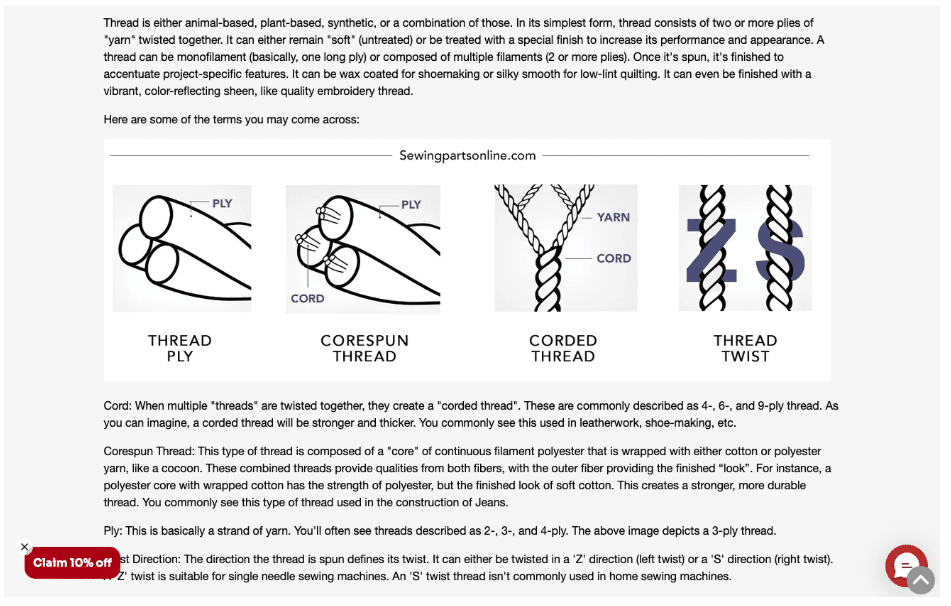
For instance, if you check out Sewing Parts Online, you’ll see how invested this brand is in helping its audience figure out the differences between thread options. The text is valuable and educational. However, what makes this resource particularly effective at building brand credibility and preference is the visual aids that ease learning and make the information exceptionally accessible to anyone researching the topic, regardless of their level of experience.
Source: sewingpartsonline.com
Prioritize Accessible Product Information
While we’re on the topic of information accessibility, it’s essential to mention that prioritizing readability and comprehension isn’t just something you should do on content pages.
Instead, this tactic works equally well on your product pages, particularly considering that consumers need to understand the value a solution offers before being willing to invest in it.
But what are the brand reputation-building benefits of this approach to credibility?
From a psychological perspective, information accessibility builds trust by removing uncertainty and signaling transparency. For example, Achieve supports credibility with specific proof points (like a 4.8 TrustScore on Trustpilot from 12K+ reviews) and a clear breakdown of three debt consolidation options from Achieve (personal loans, home equity loans, or debt relief), helping visitors quickly understand what fits their situation.
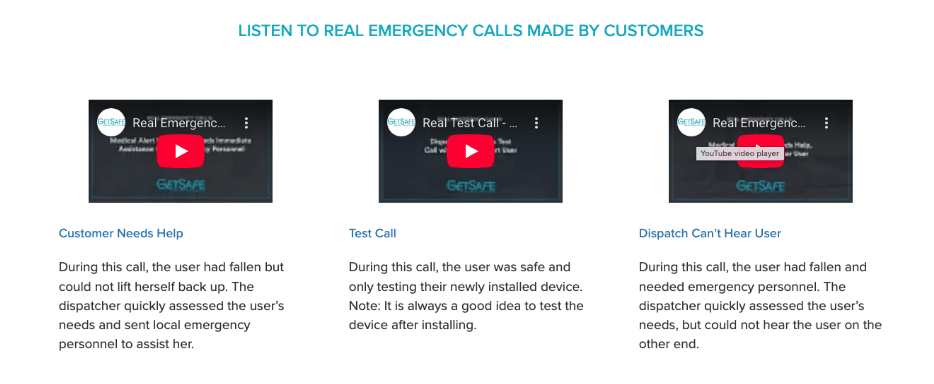
So, if you look at brands like GetSafe, you’ll see that they build customer trust and create preference by making it super easy for leads to comprehend the value they offer. Page elements, such as the how-it-works video, the product overview, and real-world examples of emergency calls, effectively elevate product understanding, making it easy for prospects to choose GetSafe over alternative options thanks to their in-depth understanding of the benefits they can expect from the business.
Source: getsafe.com
Practice Customer-Centric Transparency
Sometimes, earning your customers’ trust and getting them to choose your solutions over alternative options doesn’t come down to making promises or presenting them with specific content. Instead, it’s all about showing that they can count on your business to be honest with them.
In today’s world, everything is an illusion — from brand promises to people’s social media feeds, everything is beautified to some extent. Yet, research shows that people crave truthfulness over impressive claims.
A 2024 study found that 94% of consumers would be more loyal to brands that practice transparency, and that 56% would be ‘loyal for life’ due to brand transparency.
Considering that honesty plays a huge role in building trust, the data above doesn’t come as much of a surprise.
But how can you use this aspect of the psychology of trust to help your brand stand out as a trustworthy choice in a sea of options? One tactic you could employ would be to practice customer-centric transparency in all your marketing materials.
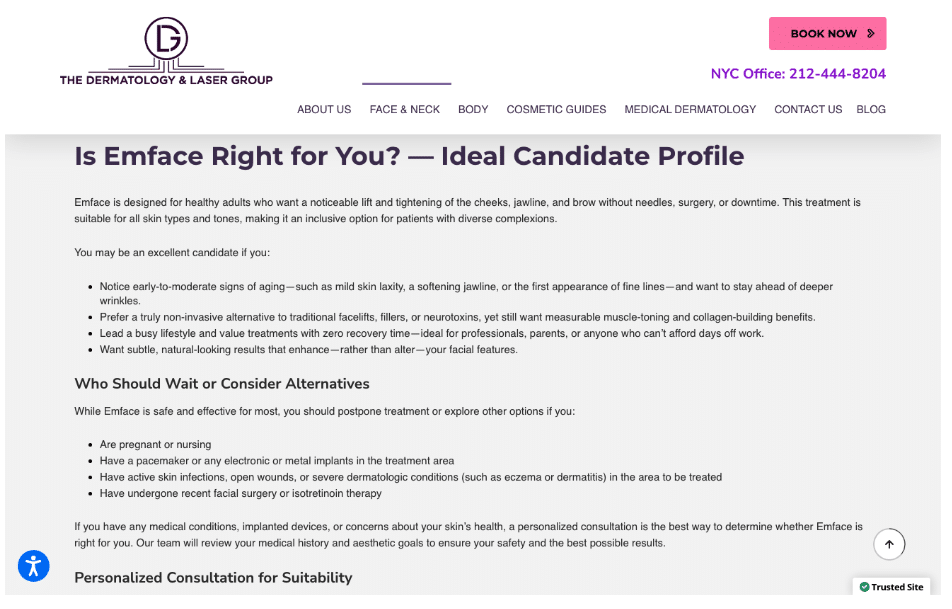
For instance, check out The Dermatology and Laser Group. You’ll see that this brand includes a “Who should wait or consider alternatives” section on all of its service pages. This is a marvelous strategy for elevating brand trust. It communicates that this is a business dedicated to providing customers with the best care for their unique needs. Furthermore, the approach effectively manages expectations, prevents people from investing in the wrong procedure, and helps direct customers toward safe solutions for resolving their pain points (instead of letting them make the wrong decision for the sake of making a profit).
Source: dermatologyandlasergroup.com
Ensure Advice Objectivity
Last but not least, when exploring opportunities to differentiate your brand through the psychology of trust, don’t forget to convince your audience that they can count on your business for objective and helpful advice.
Ultimately, prioritizing your target audience’s needs with fairness and impartiality is more than a signal that your business has integrity. It’s also a great method to demonstrate your expertise — especially in niche industries where knowledgability plays a major role in your ability to meet customer demands.
So, how can you implement this tactic in your digital marketing strategy?
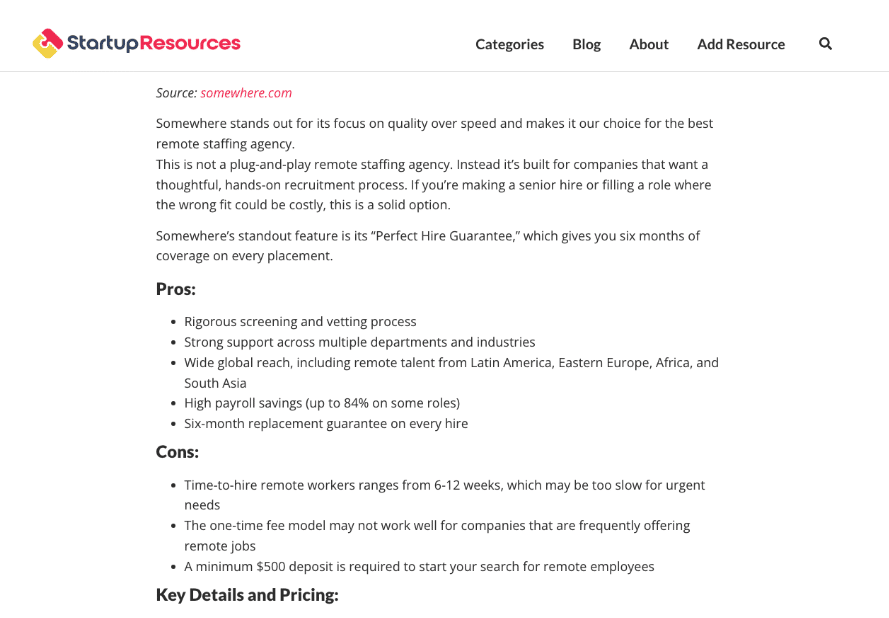
Well, one option would be to draw inspiration from Startup Resources. This brand’s primary service is presenting consumers with curated lists of the best startup tools and business advice.
However, the only way for people to want to sign up for the brand’s newsletter is to see that it’s a genuinely trustworthy source of such information. It is for this reason that Startup Resources pays so much attention to objectivity in its online content.
A close look at its resources, like this post on remote staffing agencies, reveals that each review includes both a pros and cons list. Plus, the brand provides unfiltered feedback on what each solution is (or isn’t) good for, showing web visitors that it truly is a credible and competent entity and that its target audience can easily put their faith in it, knowing they’ll always get objective, well-intentioned advice.
Source: startupresources.com
Final Thoughts
There you have it: some of the best tactics to harness the power of psychology for building brand trust and differentiating your business from your competitors.
What’s great about all of these methods isn’t just that they’re highly effective at building credibility. More importantly, they’re easily applicable to any branding and marketing strategy.
So, even if your focus hasn’t been on building trust so far, rest assured that it’s not too late to start. All you have to do is pick one (or more) from the tactics in this guide, incorporate them into your business strategy, and stay consistent. Rest assured that results will follow.