

Brand reputation is the story people tell about you when you’re not in the room. It’s built on what customers experience and what employees share. Even what the public sees across headlines and social feeds.
One post can now define a narrative. Reputation has become the foundation that supports trust and loyalty. The Edelman Trust Barometer research shows how quickly trust can shift. And why it matters across business and society.
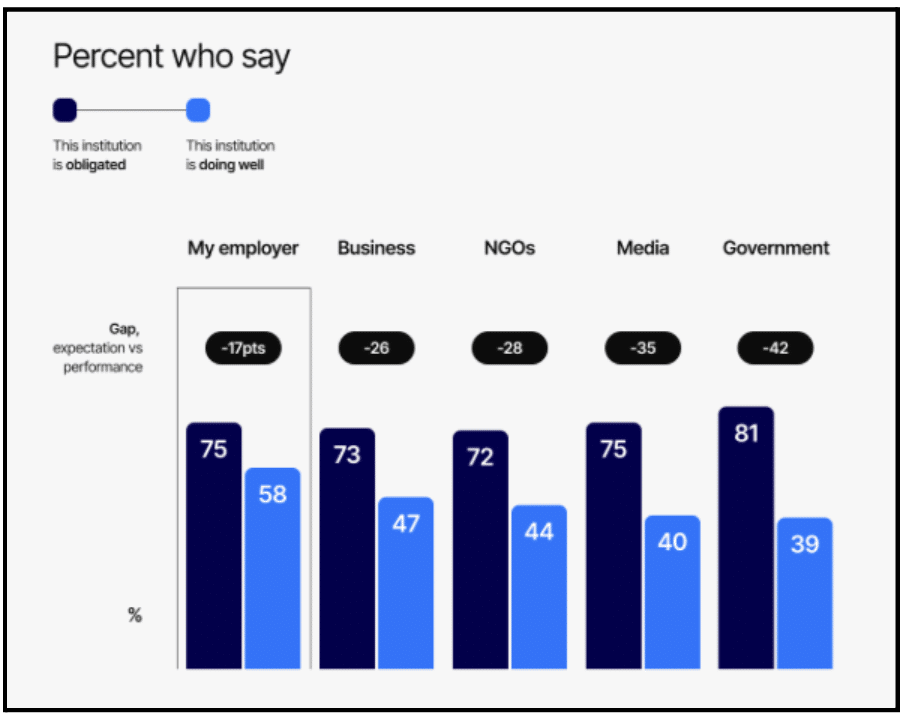
The good news? Across the globe, institutions are expected to bridge divides and build trust. Employers are in the strongest position to do this, as they consistently rank highest in trust.
Public relations teams sit at the center of this work. They’re the early-warning system and the translators. The people who keep communication clear and honest.
Day to day, they shape perception through earned media and direct engagement. During a crisis, they turn preparation into action.
This article covers five practical strategies PR teams can use right now:
- Proactive media monitoring
- A crisis communication plan that actually works
- Strong relationships with the media
- Direct, thoughtful audience engagement
- Regular assessment and refinement of brand messaging
Read on to learn more…
Understanding the Current PR Landscape
The news cycle is relentless. Social media can amplify both praise and outrage in minutes. And misinformation spreads faster and farther than the truth. What a well-known MIT study found when it analyzed how false news diffuses more rapidly on Twitter than accurate stories!
More than half of U.S. adults say they get news from social media at least sometimes. This raises the stakes for how messages are framed, shared, received, and spread. The numbers don’t lie:

For PR teams, you need two things:
- Real-time visibility into what people are saying and how fast a story is moving
- Responding quickly and with substance. Not spin.
5 Effective Strategies for Protecting Your Brand
Protect your brand reputation for long-term business growth by turning strategy into daily practice. The most resilient brands don’t react as they engage and adapt in real time. Here’s how to build that foundation with five proven approaches:
Strategy 1. Proactive media monitoring
If reputation is a story, media monitoring is how you read it as it’s being written. Tracking brand mentions and industry narratives across news, social, forums, and reviews helps you spot problems before they explode. It also reveals opportunities:
- An emerging storyline you can weigh in on
- A customer insight you can build on
- A partner moment you can celebrate
Jeffrey Zhou, CEO and Founder of Fig Loans, brings a data-driven perspective to media monitoring shaped by the financial services industry. Where trust and transparency are critical. His team relies on real-time insights to understand borrower sentiment and respond quickly to protect customer relationships.
Zhou says, “Media monitoring today isn’t just about tracking mentions. It’s about understanding intent and sentiment in real time. In financial services, a small spike in negative conversation can signal a much bigger trust issue. The ability to catch those signals early and respond with clarity can make the difference between a contained issue and a reputational setback.”
A few ways to turn monitoring into action:
- Setting threshold alerts for volume and negative sentiment, so you’re not surprised by a surge
- Tracking message pull-through and share of voice to see what’s landing (and what’s not)
- Mapping narratives to stakeholders and channels to plan targeted outreach or clarification
- Keeping a “watch list” of high-impact journalists and creators who shape your space
Strategy 2. Develop a crisis communication plan
A crisis is any event that threatens people or operations. The right plan turns chaos into clarity. Crisis communication is key to protecting your brand.
As you can see, the brands that weather storms successfully are those with detailed response protocols already in place. Your crisis communication plan should include:
- Pre-approved messaging templates
- Clearly defined spokesperson roles
- Well-set escalation procedures
Here’s a practical approach:
- Spotting possible risks and scenarios – Let’s say, product issues, data incidents, executive behavior, supply disruptions
- Setting a cross-functional crisis team – with clear roles, decision rights, a single owner for approvals
- Creating holding statements and FAQs – for each scenario with variations by audience and channel
- Creating an escalation tree for inbound signals – customers, media, employees, regulators
- Preparing a dark site or landing page – for transparent, up-to-date information
- Running simulations at least twice a year – to test speed, accuracy, and coordination
- Document what you learned – update the plan after every drill or real event
Real examples help:
- Johnson & Johnson’s response to the 1982 Tylenol tampering crisis remains a gold standard for prioritizing safety and transparency. And it reshaped packaging norms across the industry.
- KFC’s 2018 chicken shortage in the UK prompted a swift human apology campaign. They acknowledged the problem directly and even used humor to defuse frustration.

Both examples show the same thing: move quickly, be honest, and communicate like you mean it.
Strategy 3. Build strong relationships with the media
Media relations is important for any successful marketing and/or PR strategies. Good relationships with journalists and credible creators matter. Especially on tough days.
When a reporter trusts you, you’re more likely to be heard fairly and to get a call for context. To even shape a nuanced story rather than a rushed one.
Wade O’Shea, Founder of BusCharter.com.au, approaches media relationships through the lens of reliability and real-world coordination. In an industry where schedules shift quickly and public demand can spike overnight, his team understands the value of being a dependable source for timely, accurate information.
For O’Shea, credibility is earned through action. He explains, “Journalists value sources they can count on. If you respond quickly and provide clear, accurate details, you become more than just a contact. You become someone they trust to call when it matters most.”
Practical ways to build those connections:
- Studying each reporter’s beat and past coverage before you pitch
- Offering data, customer access, or product experts
- Sharing embargoed and/or exclusive angles when it’s genuinely helpful
- Keeping your online newsroom updated with bios and images — and ensuring it’s on reliable hosting so it stays fast and accessible when media attention spikes
- Following through quickly
Strategy 4. Engage with your audience
Your audience doesn’t just receive messages. They shape them. Direct, transparent interaction builds trust. Why? Because it shows you’re listening and you care enough to respond.
Your audience wants to feel heard and valued. This is where event framing comes in. How you present and respond to interactions shapes how people interpret your brand.
For one, respond to comments within hours. Not days. Likewise, address concerns with transparency and follow through on your commitments. Every interaction becomes part of a larger narrative that can strengthen your reputation and turn customers into advocates.
A few essentials for audience engagement:
- Set public response-time goals and meet them – consumers increasingly expect replies within a day or less, and in many cases, within hours
- Give frontline community managers instructions – clear guidelines and escalation paths
- Use plain language, show empathy, be specific – no canned replies if you can help it
- Close the loop – by sharing what changed based on feedback
One simple story captures why this matters:
Chewy has earned goodwill by treating customers like neighbors. Not order numbers. How? Sending flowers or handwritten notes when a pet passes away and resolving issues with real care.

These human gestures influence perception across social platforms. Ultimately, every service interaction shapes your reputation.
Strategy 5. Regularly assess and enhance brand messaging
Consistency builds recognition; authenticity earns trust. Your message should feel the same in a press interview as it does on a product page or a customer reply. But markets change, expectations shift, language ages. That’s why a message you loved two years ago might need a tune-up today.
For Adrian Iorga, Founder and President of Stairhopper Movers, brand messaging isn’t something you set once and forget. For him, it’s something you refine as your customers and market evolve.
In a service-based business where trust is earned through every interaction, keeping messaging clear and relevant is key to standing out.
Iorga puts it simply: “Your messaging should reflect how your customers think and what they need right now…not what worked a few years ago. Regularly reviewing how you communicate across channels helps you stay aligned and spot gaps. This ensures your brand still feels authentic and easy to trust.”
How to keep your messaging sharp:
- Building a simple message house with proof points and examples
- Auditing your top channels quarterly for alignment, clarity, tone
- Testing key narratives with quick surveys, interviews, or focus groups using tools like SurveyMonkey

- Monitoring search interest with Google Trends to spot shifting language or intent
Measuring effectiveness is easier with a framework. The AMEC Barcelona Principles 3.0 provides useful guidance for linking communication to outcomes. Pair that with your own dashboard of:
- Message pull-through in coverage
- Share of voice and sentiment over time
- Brand lift surveys and Net Promoter Score
- On-site behavior tied to key messages (time on page, scroll depth, CTA engagement)
Final Thoughts
Protecting reputation isn’t about a single hero move. It’s the steady, everyday practice of listening closely and communicating with care.
When PR teams monitor proactively, plan for crises, invest in real media relationships, engage people directly, and keep messages honest and consistent, they create the conditions for trust to grow.
The work never really ends. The most resilient teams build in time to learn, to run drills, and to adjust as platforms, expectations, and culture shift.
That said, start with one or two improvements this quarter. Make them part of your routine, and keep going. Ultimately, reputation is compounding interest for brands that show up when it matters most.
If you need help in protecting your brand reputation, consider leveraging Agility PR Solutions’ AI-powered platform. Enabling you to manage media relations, monitoring, intelligence, social listening, and communication, all in one place. To speak with an expert, book a demo today!