

Hoping to land more media coverage this year?
Journalists are busier than ever, and if your press release (PR) pitch doesn’t catch their attention fast, it’s likely gone for good.
In fact, about 75% of journalists only find value in 25% of pitches or less. The challenge is standing out and making your story so relevant and easy to cover that a journalist can’t pass it up.
That’s why we’re gathering ten actionable tips for writing PR pitches that get your story in front of the right people and actually read.
How to write PR pitches that journalists will actually read
With your journalist lead list ready, you’re one step closer to a perfect pitch. Here are ten proven ways to make your press release pitch stand out, get opened, and spark interest from the journalists who matter most to your story.
Tip #1: Research before you pitch
Don’t just “know their beat.” Map your target journalist’s recent coverage trends and identify gaps.
For example, if a business reporter has covered AI layoffs three times in the past quarter but hasn’t touched on the talent retention side, that’s your entry point.
Build a one-page dossier for each journalist you target with:
- Last 5-10 stories, with headlines and themes
- Which stories were syndicated or picked up elsewhere
- Patterns in their source types (execs, academics, consumers)
Why does this work? Because relevance is the journalist’s filter. When you can position your story as the natural next step in their ongoing coverage, you remove the biggest barrier to getting a response.
Tip #2: Lead with a strong subject line
The subject line should mirror the value a journalist’s audience will get, not the value your brand will get. Think in terms of a headline they’d actually publish.
Example: “Independent cafés outpacing chains in five major cities” is more compelling than “Company ABC releases coffee market report.”
Start with the most compelling act or angle from your pitch and lead with that. For example: Survey: 62% of consumers cutting back on streaming services.” Keep it under 10 words and avoid generic phrases like “Exciting news! or “Announcement.”
When writing PR pitches for journalists, use these tips to improve your subject lines:
- Put the most compelling detail first.
- Keep it under 10 words when possible. Avoid buzzwords or ALL CAPs.
- Test different styles over time to see which gets more opens.
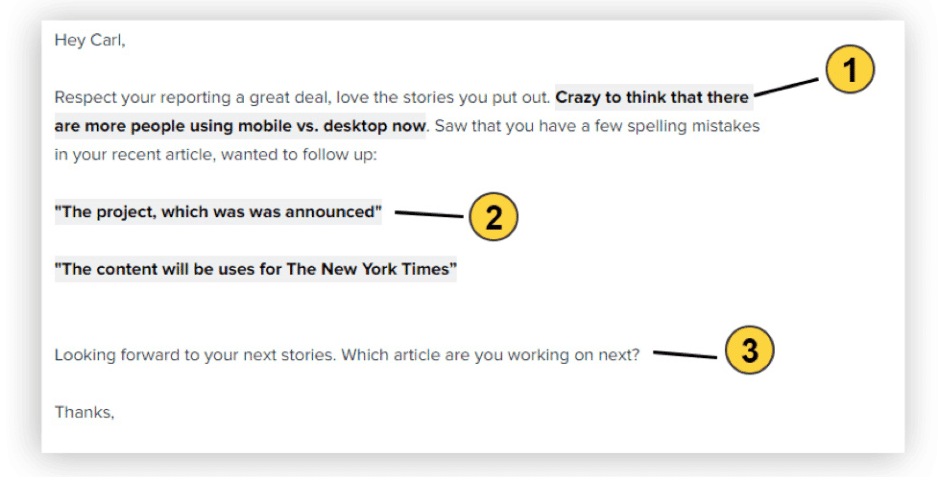
Tip #3: Keep it short and focused
Journalists don’t have time to hunt for the point of your email. A pitch that meanders through your brand story or tries too hard with unnecessary business storytelling, multiple announcements, and every award you’ve ever won is going to get skimmed at best and skipped at worst.
Your goal is to make it possible for them to understand the story in the time it takes to glance at their inbox between interviews.
Think of your pitch like an elevator ride. You should be able to deliver the hook, the key details, and the value to their audience in under 30 seconds.
Let’s look at an example.
Too long:
“We’re excited to announce that ABC Company, which has been in business since 1998 and has received multiple awards for its innovative approach to cloud-based solutions, will be launching the next iteration of our award-winning software that leverages AI, ML, and NLP to deliver enhanced user experience and drive operational efficiencies across the enterprise, enabling organizations in 50 countries to better manage…”
Focused:
“ABC Company is launching a new AI-driven tool that reduces invoice processing time by 60% — and we can connect you with our CFO to share the exclusive data behind the results.”
This works because journalists need to decide quickly whether a story fits their beat, their audience, and their deadline. If they can’t see the hook within the first sentence or two, they’ll move on. Short, focused pitches also make it easier for them to copy and paste details directly into a working draft, which saves them time.
In a nutshell:
- Cut extra adjectives and filler.
- Use bullet points for key stats or quotes.
- Read your pitch aloud. If it takes more than 45 seconds, tighten it.
Tip #4: Personalize every pitch
Personalization means more than inserting a first name and hoping it feels tailored. Real personalization shows that you understand the journalist’s audience, coverage style, and current priorities.
If a tech journalist recently wrote about the challenge small businesses face with cybersecurity compliance, and your client just completed a survey of 1,000 SMB owners on exactly that issue, lead with that connection.
Mention the article, explain how your data adds a new perspective, and offer it as a follow-up angle.
To implement:
- Read at least two weeks’ worth of their published stories.
- Reference one piece directly and connect your pitch as a continuation, contrast, or update.
- If possible, tie your story to their audience’s reaction, such as comments, social shares, or unanswered questions from that article.
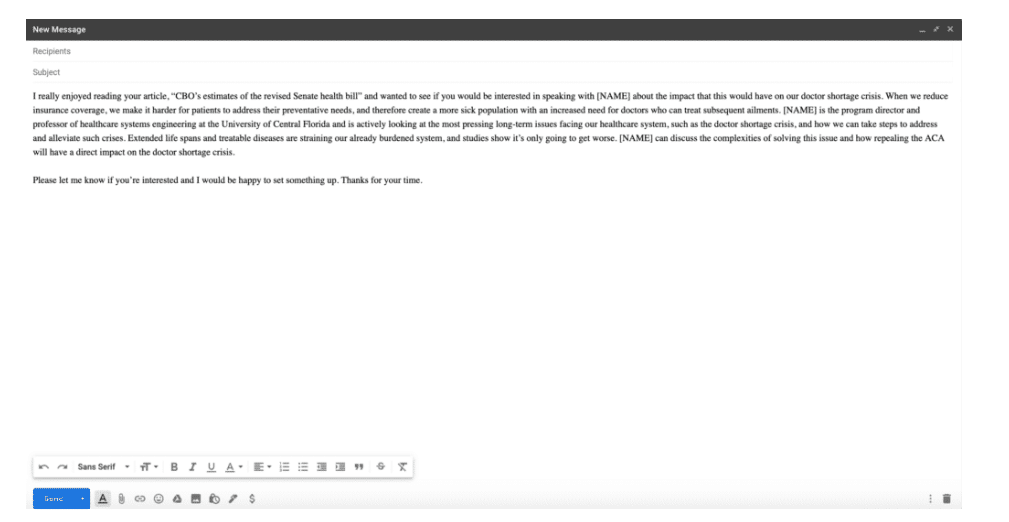
This pitch works because it ties directly to the journalist’s recent coverage. It also offers a credible expert with a fresh perspective, framing the issue in a way that’s timely and easy to develop into a compelling story.
Tip #5: Offer a newsworthy angle
Even the sharpest pitch won’t work if the story isn’t timely or significant. Newsworthiness comes from fresh data, a first-mover perspective, or a tie-in to current events.
For example, if you represent a retail client, “We’re opening a new store” is not inherently newsworthy to a national reporter. But “We’re the first retailer in the region to integrate biometric checkout”, paired with consumer adoption data, creates a story with broader appeal. Analyzing these trends can also spark new business ideas for your own products or services.
To get started:
- Monitor industry news daily and keep a “hook calendar” for upcoming events, reports, or policy changes.
- When possible, offer exclusive access to your data or spokesperson before the peak coverage period.
- Frame your pitch around the larger trend, using your client as a credible voice or case study.
If you’re struggling to figure out how to do it yourself, asking for help from an enterprise SEO agency is nothing to be ashamed of, as it’ll help reach your goals faster.
Tip #6: Provide clear, useful assets
A journalist’s willingness to cover your story often depends on how easy you make it for them. Sending bulky brand brochures or gated files slows them down. Press-ready assets, like high-resolution images, concise fact sheets, and pre-cleared quotes, remove that friction.
Ready-to-use content reduces their workload and makes your pitch more appealing compared to others they might consider.
Here are some ways to provide clear, useful assets:
- Prepare a media kit in advance with the most likely assets a journalist would need.
- Store it in a cloud folder with public, no-login access.
- Include the link in your pitch with a one-sentence summary of what’s inside.
Tip #7: Make your CTA obvious
A pitch without a clear next step leaves the journalist guessing. And guessing usually leads to inaction. Your call-to-action (CTA) should be specific, easy to answer, and binary (yes or no).
Instead of ending with “Let me know if you’re interested,” try “Would you like to schedule a 15-minute call with our lead designer this week?” This sets an expectation and makes it simple for them to respond.
Tips for effective CTAs when writing PR pitches for journalists:
- Place your CTA at the end of the pitch.
- Make it one action, not a list of possibilities.
- Include context like dates, times, or embargo details so they can make a quick decision.
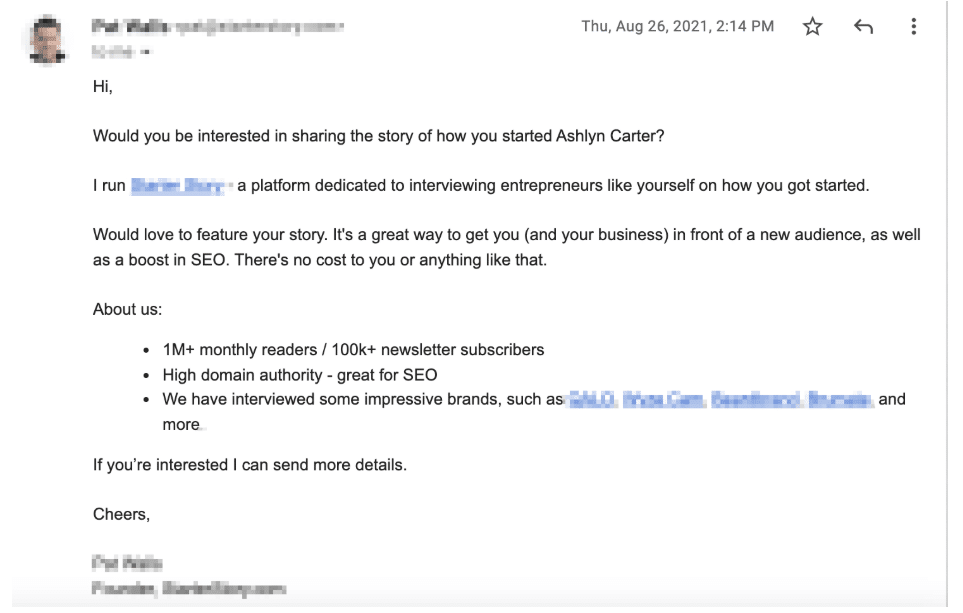
For even more tips on writing straight-to-the-point pitches, check out this one. It’s a concise outreach email that ends with a direct and simple call-to-action.
Tip #8: Follow up the right way
Following up is part of media pitching, but it’s where many PR pros lose journalists’ trust. A “just checking in” email with no new value only clogs their inbox.
A better approach is to add something useful. If your original pitch was about a new industry study, a follow-up could highlight one specific, attention-grabbing stat that wasn’t in your first email or a relevant news development that makes the story even more timely.
Here’s what you can do to make your follow-ups more meaningful:
- Wait three to five business days before following up.
- Change the subject line to reflect the new element (“Update: New stat on remote work burnout”).
- Keep the follow-up short (50 words or fewer) and paste your original pitch below for reference.
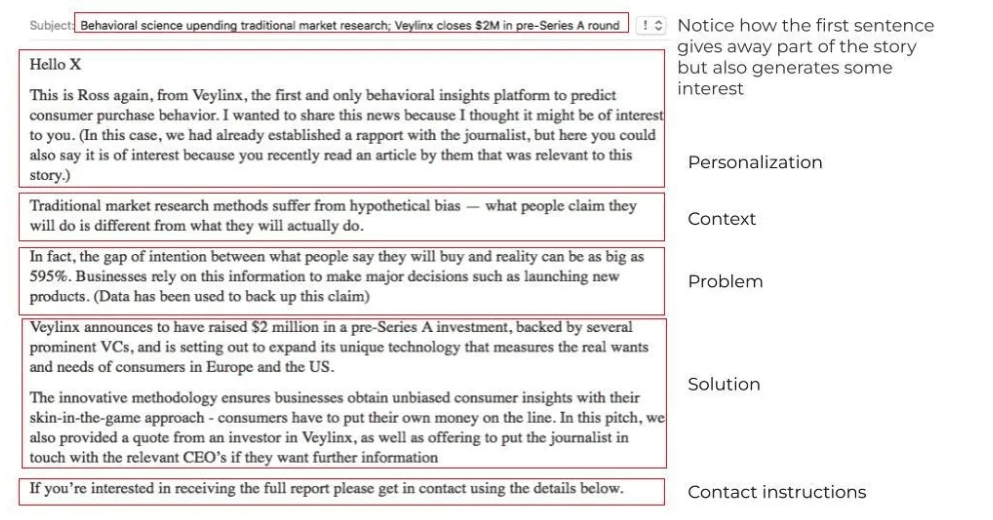
The follow-up below works well because it’s personalized, structured around a clear problem and solution, and ends with a direct next step, which makes it easy for a journalist to act on.
Tip #9: Build relationships outside of pitches
Journalists are more likely to respond to someone they’ve interacted with before and not just when that person wants coverage.
Building media relationships means showing up with useful information, insights, or kudos when you have nothing to pitch.
For example, if a reporter publishes an investigative piece that breaks new ground in your industry, share it on LinkedIn with a thoughtful comment. If you come across a relevant dataset or report that might be helpful, please send it over without associating it with a client.
Other tips for building strong relationships with journalists include:
- Engage with their content on social media in a way that adds perspective.
- Share resources or leads that match their beat, even if unrelated to your clients.
- Keep a light, consistent cadence. Quarterly touchpoints work well for most relationships.
- Don’t forget to share professional event videos that highlight your brand stories or key moments they might find newsworthy.
Tip #10: Track and improve your pitches
Tracking your pitch results lets you see patterns, such as which subject lines get opened, which journalists respond to, and which formats lead to coverage.
For instance, you might find that one editor responds best to data-driven leads sent early in the week, while another engages more with human-interest angles on Fridays.
How to implement:
- Keep a simple database that includes the journalist, date, subject line, topic, response, and outcome.
- Review it quarterly to spot trends in timing, angles, and journalist preferences.
- Adjust your PR strategy based on those patterns and re-test.
Wrapping up
That wraps it up. Strong press release pitches are built on strategy, timing, and a clear understanding of what a journalist needs to deliver a great story.
The demands on newsrooms aren’t getting lighter, and the volume of pitches isn’t slowing down. But the PR pros who respect those realities, adapt their approach, and treat journalists like true collaborators will find their stories making it to publication more often.
Ready to put these pitching strategies into practice and secure more media coverage for your brand? Book a demo with Agility PR Solutions and see how our platform helps you craft, send, and track PR pitches that actually get noticed.