

B2B brand campaigns are often misunderstood. Many teams either treat them like demand campaigns with brand-focused messaging or drop them when results don’t appear quickly enough. The result is inconsistent execution and unclear impact.
This guide breaks down what B2B brand campaigns actually are, how they differ from demand marketing, and how to plan and run them in a way that supports real business outcomes. The focus is on clarity, consistency, and long-term impact, without relying on unclear ideas or vanity metrics.
What Is a B2B Brand Campaign? (And What It Is Not)
A B2B brand campaign is how you shape what buyers think about your company before they’re ready to buy. Instead of chasing immediate demand, you focus on building familiarity, trust, and credibility over time.
Most of your audience isn’t actively buying right now. Studies across B2B markets show that only about 5% of buyers are in-market at any given time. If you only run lead-generation campaigns, you stay invisible to the other 95%. A brand campaign keeps you present so that when timing changes, your brand already feels familiar.
In practice, a B2B brand campaign helps you:
- Build recognition in your category
- Earn trust before sales conversations begin
- Reduce resistance in long sales cycles
- Influence future pipeline, not just today’s leads
Brand Campaign vs Demand Campaign
Brand and demand campaigns are often grouped, but they play distinctly different roles in B2B growth. One is designed to build long-term preference, while the other is built to convert existing intent. Understanding this difference helps you set the right expectations and measure success correctly.
| Brand Campaign | Demand Campaign |
| Influences buyers before they are ready to buy | Targets buyers who are actively buying |
| Builds trust, familiarity, and credibility | Drives leads, demos, and trials |
| Focuses on long-term impact | Focuses on short-term results |
| Optimized for recall and perception | Optimized for conversions and CPL |
| Measured by branded search, direct traffic, and win-rate lift | Measured by leads, MQLs, and pipeline |
| Requires consistency and repetition | Can be turned on or off quickly |
| Compounds over time | Spikes and drops with spend |
The simplest way to think about this is that demand campaigns capture intent, while brand campaigns create it. When you invest in both, brand makes demand cheaper, faster, and more effective.
To see how long-term brand thinking translates into execution, it helps to examine real-world social media campaign examples, where platforms like Walls.io are often utilized to support consistent brand visibility and campaign storytelling across multiple marketing touchpoints.
How to Plan and Run High-Impact B2B Brand Campaigns
1/ Set clear business and brand objectives
You should never start a brand campaign without a clear reason. Building awareness on its own is not an objective. A strong B2B brand campaign exists to support a real business outcome.
Start by identifying the business problem you’re trying to solve. This usually shows up in situations like:
- Entering a new market
- Moving upmarket to larger deals
- Losing deals to better-known competitors
- Facing long or delayed sales cycles
- Inconsistent sales compensation
Once the business goal is clear, define the brand objective. This answers a simple question: what needs to change in the buyer’s mind for this business goal to be achieved?
For example, buyers may not trust you yet. They may not recognize your name. Or they may see you as similar to competitors. In each case, the brand objective is different.
This is where many teams go wrong. They combine business goals and brand goals into one vague statement. Instead, keep them distinct. The business objective focuses on company results. The brand objective focuses on buyer perception.
2/ Define your target audience
A brand campaign only works if the right people remember you. That means you need to be clear about who the campaign is for. Trying to speak to everyone usually results in a message that connects with no one.
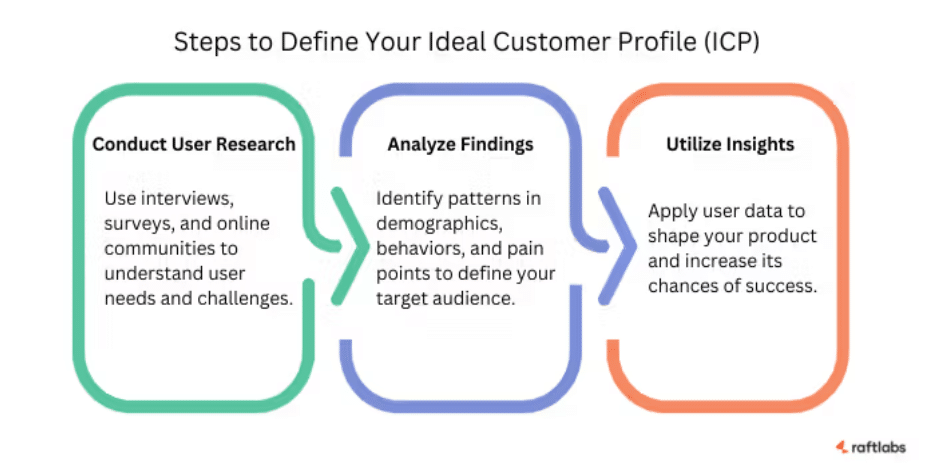
Start by identifying the buyers who matter most to your growth. In B2B, this is rarely a single person. Most buying decisions involve multiple roles, each with different concerns and priorities, particularly in complex B2B categories such as Cloud security, enterprise IT platforms, procurement software, and regulated SaaS products.
(Source)
Think beyond basic demographics. Your audience definition should consider how people influence the buying process and what they care about at that stage. A founder, a VP, and a manager may all be part of the same deal, but they don’t respond to the same message.
A useful way to improve your focus is to consider:
- Who has final buying authority
- Who influences the decision
- Who will use the product day to day
You should also account for the awareness level. Some buyers are problem-aware but not solution-aware. Others know the category but don’t know you. When your audience definition is clear, your message feels familiar and credible, even to buyers who are not ready to act yet.
3/ Craft a clear brand narrative
Your brand narrative is what you want buyers to remember about you when nothing else is remembered. If this is unclear, the entire campaign loses focus.
Start by defining a single core idea. This is not a slogan. It’s the main belief or point of view your brand consistently stands for. Buyers should be able to understand it quickly, even if they see your message out of context.
Your narrative should clearly answer three things: what problem you exist to solve, how your approach is different, and why buyers should trust you. Particularly in complex categories such as cloud deployment, system integrations, and IT transformation projects.
If any of these are missing, the message feels incomplete. Avoid trying to say too much. Brand campaigns work through repetition. The simpler the message, the easier it is to reinforce across channels.
4/ Choose the right distribution channels
A brand campaign succeeds through visibility and repetition, not by being everywhere. The goal is to show up consistently where your buyers already spend time.
Start by identifying the channels your audience trusts and uses regularly. In B2B, this often includes platforms where buyers consume ideas, not just ads. Being present in the right environment makes your message feel more credible.
You should prioritize channels based on:
- Where your buyers already pay attention
- How they prefer to consume content
- The length and complexity of your sales cycle
Your message should remain the same across channels, even if the format changes. A LinkedIn post, a video, or a podcast appearance should all support the same core idea.
For example, here’s how Vector, a contact-based marketing and advertising platform, uses LinkedIn to break down product videos:
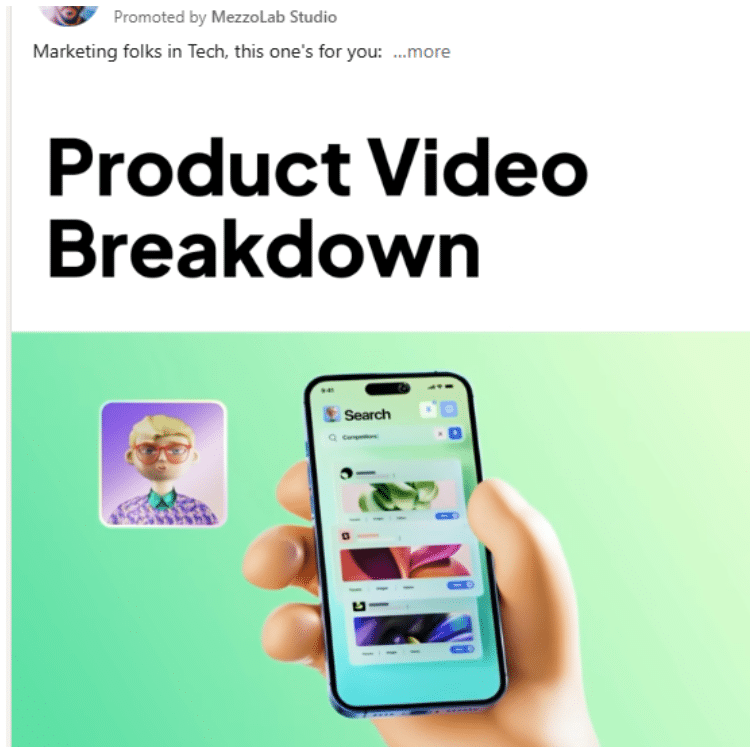
Consistency is what builds recognition over time. The right distribution strategy ensures your brand doesn’t just appear once, but stays visible long enough to be remembered.
5/ Create strong campaign assets
Your campaign assets are how your brand narrative shows up in the real world. This is what buyers actually see, hear, and remember. If the assets are weak or inconsistent, the campaign won’t resonate—no matter how good the strategy is.
Start by designing assets around memory, not action. Brand assets are not meant to push immediate conversions. They are meant to make your brand recognizable and familiar over time.
Strong B2B brand assets usually share a few traits:
- Clear and simple messaging
- Consistent visual identity
- A distinct point of view
- Easy recognition, even without context
Your assets can take many forms. This may include short videos, social posts, thought leadership content, visuals, or founder-led opinions. What matters is not the format, but the consistency of the message across every asset.
Especially for complex B2B products like sales enablement software, enterprise video conferencing, and infrastructure platforms, where differentiation isn’t obvious at first glance.
6/ Launch with consistency, not urgency
Brand campaigns aren’t about a big launch moment. They work when your message shows up often enough to feel familiar. Once the campaign is live, give it time. A few weeks of visibility usually isn’t enough in B2B. Buyers need repeated exposure before they even register what you stand for.
The key is staying consistent. The message should remain the same across posts, videos, ads, and conversations. You can change the format, but not the idea. It also helps when sales and leadership use the same language. When buyers hear the same message from marketing and from people they talk to, the brand feels more credible.
Over time, this familiarity lowers resistance. Conversations start more easily. And when buyers are finally ready, your brand already feels like a known option.
7/ Measure the right signals
Brand campaigns fail when they’re judged by the wrong metrics. If you measure them the same way you measure demand campaigns, they will always look ineffective.
Brand work influences decisions over time. Particularly in categories like people analytics platforms, AI recruiting software, and internal systems that require trust before adoption.
It changes how buyers perceive you, not how fast they fill out a form. That means you need to look at signals that reflect awareness, familiarity, and trust, not just clicks.
Most buyers will see your brand multiple times, across channels, before they ever convert. Instead, focus on signals like:
- Growth in branded search volume
- Increase in direct and repeat website visits
- Higher engagement from first-time visitors
- Better quality inbound conversations
- Sales feedback from discovery calls
These indicators tell you whether buyers are starting to recognize and trust your brand. Sales feedback is especially important. When prospects say things like “I’ve seen your content” or “your name keeps coming up,” that’s brand impact showing up in real conversations.
You should also look at downstream effects. Over time, strong brand campaigns often lead to shorter sales cycles, higher win rates, and less resistance in competitive deals.
These outcomes don’t appear overnight, but they are often the clearest proof that the brand is working. Especially in categories like operations software, ERP for small businesses, and other foundational tools that require trust before adoption.
8/ Optimize and compound what works
Brand campaigns shouldn’t be rebuilt every few months. Most of the value comes from improving what already resonates, not from constantly starting over. Once the campaign is running, pay attention to what’s landing with your audience. Certain messages will get more engagement.
Some formats will feel more natural for your buyers. Optimization doesn’t mean changing the core idea. It means improving it. You adjust how the message is expressed, where it shows up, and which formats carry it best.
Over time, your campaign becomes clearer and more effective. Buyers start to recognize the message faster because they’ve seen versions of it before.
Strong brand campaigns reward consistency. The longer you repeat the same idea, the easier it becomes for buyers to associate that idea with your brand. That’s when demand efforts feel easier, sales conversations start warmer, and growth becomes easier to sustain.
Common Mistakes to Avoid in B2B Brand Campaigns
Most B2B brand campaigns don’t fail because the idea of the brand is wrong. They fail because of a few repeated execution mistakes. These mistakes are easy to make, especially in SaaS teams that are used to performance marketing and fast feedback loops.
1/ Treating brand as a short-term experiment
This is one of the most common reasons brand campaigns fail. Teams launch a campaign expecting clear results in a few weeks. When that doesn’t happen, the effort is paused or dropped. The brand doesn’t deliver on short timelines.
Buyers need repeated exposure before recognition starts to form. If you stop early, you never give the campaign a fair chance to influence perception or trust.
2/ Changing messaging too frequently
This mistake often comes from good intentions. Teams want to improve the message, so they keep adjusting it. In practice, this prevents any single idea from sticking. Buyers need to hear the same message multiple times before it registers.
When messaging keeps changing, every exposure feels like a first impression. Over time, this creates confusion instead of clarity. Strong B2B brands are built by repeating one clear idea long enough for it to become familiar.
3/ Over-optimizing for clicks and engagement
This usually happens when brand campaigns are judged using performance metrics. Clicks and engagement feel clear, so teams default to them. The problem is that these signals don’t reflect how the brand actually works. Messaging gets shaped to attract attention instead of building memory.
Content becomes broader and less unique. Buyers may click, but they don’t remember who you are or what you stand for. Real brand impact shows up later, in recognition, trust, and easier sales conversations—not in short-term engagement numbers.
4/ Ignoring sales alignment
This mistake quietly undermines even well-run brand campaigns. Marketing may communicate a clear position, but sales conversations often go in a different direction. Buyers notice this gap quickly. It creates doubt and slows decisions.
Brand works best when sales understands the core message and naturally uses the same language. That consistency builds confidence. When sales and marketing are misaligned, the brand feels less credible, no matter how strong the campaign looks on the surface.
Conclusion
Strong B2B brand campaigns aren’t built on clever ideas or one-time launches. They’re built on clarity, consistency, and patience. When your message is clear, your audience is well-defined, and execution stays consistent, your brand stops feeling unclear and starts supporting real growth.
Brand doesn’t replace demand marketing. It makes it work better. Over time, it lowers resistance, improves sales conversations, and helps you win before buyers are ready to buy. When treated as a long-term asset, a brand becomes one of the most reliable growth drivers in B2B.