

The world of PR is in constant motion, and that pushes communicators to think beyond mere announcements by crafting meaningful, evidence-based narratives. That has been the case since data journalism became one of the most powerful and non-promotional tools in existence. Such unwieldy information will be transformed into highly compelling and shareable content that gets earned media coverage all too easily. If the goal is to make your brand more authoritative and improve your interactions with journalists, take the chance to learn how to tell stories through data.
Why Data Is the Ultimate PR Advantage
Pitches and story ideas just overwhelm modern journalists. The only ingredient that regularly manages to pierce through this relentless stream is a narrative that is relevant, really fresh, and backed by verified, solid data. This vital factual foundation is provided by data journalism. Data journalism provides that essential backbone.
You’re not peddling a product; instead, you’re uncovering some important truth or trend, then framing and illustrating it in a clearer, more visual manner than anyone else has. This strategic deployment of data makes your organization known and valued as a source of fresh perspective and groundbreaking research, most significantly increasing your potential to win quality earned media coverage.
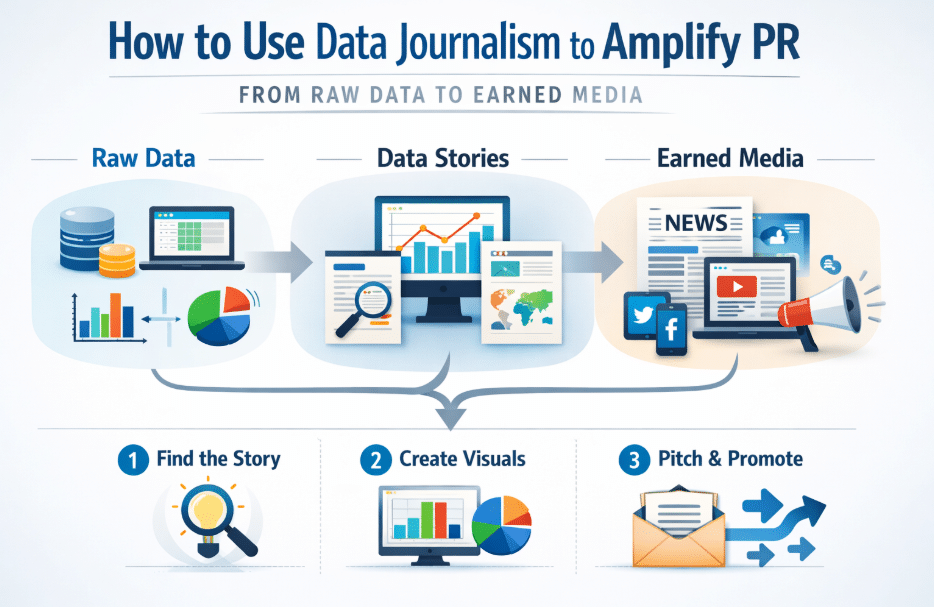
The Practical Steps from Data to News Story
It all starts by selecting an interesting dataset and concludes with publishing a story that might be consumed by the media. The work requires commitment for the analysis of data and communication with and within a team.
Finding and Validating Your Core Data
The believability of your whole story depends upon how reliable your data is. You can use primary data that you collected through your company’s own surveys or studies, or you can rely upon secondary data sourced from reliable and timely public sources. Credible industry reports, authentic university research, and legitimate government bodies are examples of good sources. In cases where data is collected or shared digitally, verifying its integrity and authenticity—such as through standards like DKIM, SPF, and DMARC for email-based data exchange—helps maintain trust and credibility.
Uncovering the Newsworthy Narrative
A series of numbers is all that constitutes raw data. It’s in the painful analysis to discover an unforeseen trend, surprising correlation, or stark discrepancy in something that has real implications for your industry or audience. Go that extra mile and tease out that one deep insight. For instance, what hidden bottleneck does the logistics data show costs businesses millions? That one outcome is your hook.
Story development and creation of visuals
Once that key insight has emerged, it needs to become part of a story. Clear writing applies terms to which the readers can relate in order to explain what the data says, why it is important, and who is impacted. Most essentially, the statistics have to be converted into eye-catching, easily accessible visuals. An excellent chart, infographic, or interactive dashboard converts abstract knowledge into physical, shareable media.
Pitch Execution of Strategic Media
Rather than delivering the whole narrative, use your pitch to journalists as an enticing teaser. Highlight just the most relevant discovery and ensure reporters can readily access the source data along with high-resolution graphic elements. Direct your approach toward editors and writers who have previously covered comparable themes or who are recognized for their data-focused reporting style. You have to persuade them that your study is unique, offers a fresh perspective, and will resonate deeply with their target audience.
Success in Earned Media: Essential Skills
Here are some ideas to maximize the return on your investment in data journalism:
Wide Relevance
Wide relevance, objective focus, and creating content that matters strategically. Beyond establishing thought leadership, PR teams should also track how coverage correlates to action through clear measurement and analytics, ensuring the insights generated by earned media translate into meaningful outcomes for the organization.
Objective Focus
At its core, data journalism is structured around a problem/solution format—never an overt sales message. The function of your business in the research should obviously be that of an objective data provider, never of the issue being investigated. If you want to add one non-promotional link, make sure the wording that surrounds it presents it as a useful resource for obtaining the study’s complete methodology or additional reading.
Create Intellectually Strategic Content
Your audience consists of professional communicators who need strategic, high-level content. The PR 101 basics mean little here; your writing should therefore dwell on what the trends mean in terms of the strategic implications of the data for the evolution of communication strategy, market positioning, and regulatory compliance in the future.
From Earned Media to Measurable Impact
Data journalism is changing how success in PR is defined. It’s no longer enough to earn coverage or spark conversation. Evidence-based stories are now expected to influence real decisions and behaviors. As a result, PR teams are starting to think beyond visibility alone and consider how earned media connects with conversion rate optimization strategies, so the trust created by data-driven storytelling leads to meaningful audience action.
Frequently Asked Questions
Does my company have to own the data, or can a story be successful without that?
No, and while there was definitely some value in the proprietary data, smart analysis of high-quality, complex public or secondary data can yield similarly newsworthy and impactful coverage.
What makes a data visualization most effective at pitching to the media?
Make certain all charts and graphs are clean, straightforward, and instantly understandable with simple labeling and accessible color schemes to make the main takeaway instantly clear to the journalist.
Should reporters be given access to the entire underlying data set?
Indeed, offering a clean, sourceable version of the data fosters media confidence and enables reporters to independently confirm your conclusions—a fundamental tenet of ethical data journalism.