

If you’re still sending out press releases based on old templates, this piece is for you. 👇
Now that AI tools are on the market, you have endless ways to improve your PR releases. This includes optimizing them for better SEO, tailoring them to the right audience, and measuring your results to see what’s working.
Let’s take a closer look at what AI press release optimization is and how you can start optimizing yours for better results!
What is AI press release optimization?
AI press release optimization means using artificial intelligence tools to improve every part of a press release. This includes writing and formatting your press releases. As well as targeting, distribution, and performance tracking.
For example, you can use AI to:
- Generate or refine content: Some tools offer a press release generator that can help you draft headlines, summarize key points, or adjust tone and structure for better clarity and engagement.
- Measure results: AI tools can help you track engagement, coverage, backlinks, and social performance. These are great insights you can use to improve your future press releases.
- Enhance SEO: AI can help identify relevant keywords, suggest metadata, and suggest proper formatting, so your releases rank higher in search results.
- Personalize outreach: AI can help you analyze your audience data and tailor messaging for different journalists, outlets, or industries.
Say you wanted to write a press release about a specialized research product like CJC-1295 DAC 5mg.
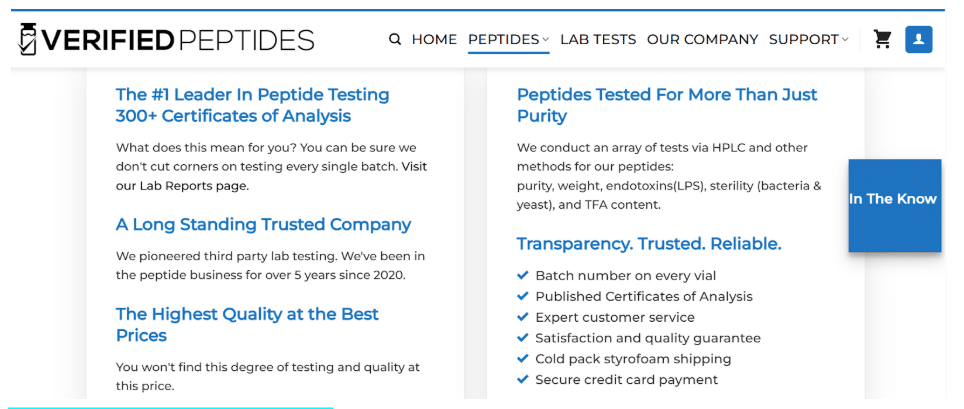
Peptide research report example.
You could use AI tools to surface the most relevant keywords and identify which journalists or outlets regularly cover peptide research.
TL;DR: Use AI to create smarter and more effective releases that reach the right audiences. AND perform better across media and search platforms.
How to optimize press releases with AI for more effective PR strategies
Getting your press releases noticed starts with having a solid story. But that’s just one piece of the puzzle.
Here’s how to make your releases work harder without overcomplicating things:
Implement structured press release templates
Start with a template that lays out the Who, What, When, Where, and Why. Add bullet points and metadata fields to keep things organized.
(Templates help AI and search engines understand your story and make drafting faster.) They also make it easier to maintain brand consistency across multiple releases. You can even create variations for product launches, event announcements, or executive updates.
Once the structure is set, your team can focus on content quality instead of figuring out the format every time.
Integrate SEO best practices and AI SEO best practices
Sprinkle in relevant keywords naturally in your headlines and body text.
Link to authoritative sources and add schema markup if posting on your site. AI can suggest headline variations, meta descriptions, and long-tail keyword opportunities. Take advantage of this to increase your search visibility and help journalists or bloggers quickly find your story.
Use AI tools to draft content but always human-edit
With AI technology, you can generate headlines and full drafts in minutes, so you have multiple content angles to consider. You can even use AI to suggest punchy first lines or quotes from your statements.
Then step in to refine and add your human touch.
Verify the facts and smooth out the tone. (Most importantly, make sure it sounds like your brand voice. This balance saves you time without compromising content quality.)
Over time, your team can build AI-assisted workflows that cut hours from your process while still maintaining impact.
Agility PR Solutions’ PR CoPilot is a great tool for this.
You can use it to draft press releases and media pitches by inputting key messages, selecting a tone and format, and letting the AI generate a draft.
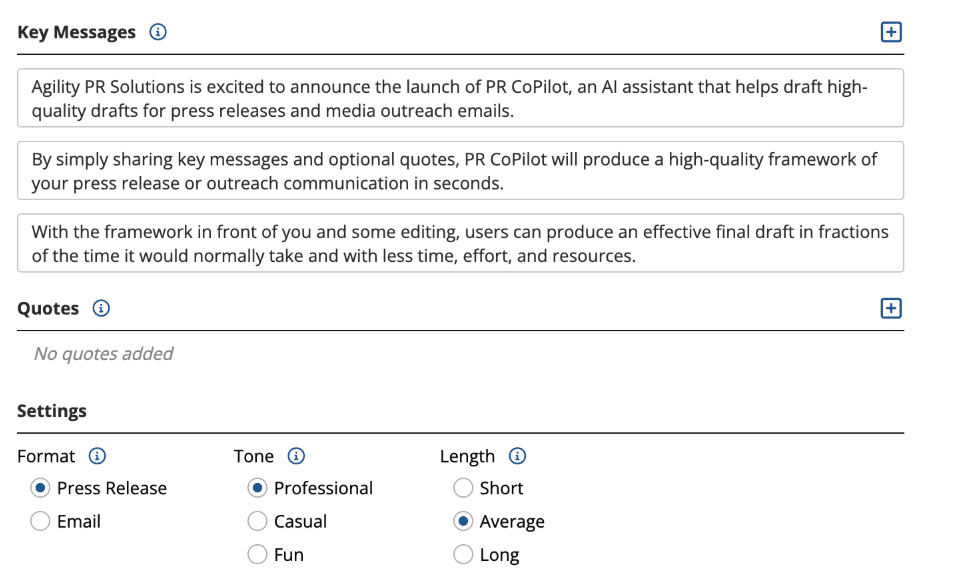
Using An AI Press Release Generator
It’s designed to save time and reduce the blank-page syndrome, aka writer’s block. Without sacrificing your brand identity.
PR CoPilot is also integrated into the Agility platform, so you can easily streamline your workflow—from drafting to distribution.
Disclose AI usage transparently when needed
If AI helped write your release, you might need to include a quick note or disclaimer, depending on the publishers’ rules.
A simple addition like “Drafted with AI support” should work if they require disclosure of AI use.
Embed multimedia elements
Add images, videos, charts, or infographics, and include alt text for accessibility and SEO.
Infographics can turn complex stats into digestible visuals, while videos give journalists or readers a real feel for your story. AI can help you generate image captions, resize files, or suggest the right visual types for your content. You can also use it to suggest alt text and metadata.
Customize content creation for target audiences
Tailor your press releases for different regions, industries, or media outlets. Adjust the tone, stats, and story angles so they resonate with each audience segment.
(AI can help you analyze past media coverage to show which messaging performs best for each group.) Speaking of which …
Track and analyze performance metrics
Once your release is live, monitor your open rates, media pickups, backlinks, social shares, and search rankings. AI tools can help you generate reports and even predict which types of releases will perform best next.

Social Media Intelligence
Use these insights to tweak future headlines, distribution channels, or story angles.
Over time, tracking performance helps you understand what works, so you can continuously improve your PR strategy.
Keep a centralized content library
Store all press releases and multimedia in one place.
With a centralized library, you can reuse successful formats and reference past quotes. AI technology can also scan archives to suggest updates or identify media coverage gaps. This gives you a living resource that grows more valuable as your PR history expands.
Wrap up
With AI in the mix, there’s no limit to how much you can optimize your press releases.
Just remember to integrate a quality control process so each piece receives the human review it needs. When you think of AI as a collaboration tool, it can help your PR team move faster and create smarter processes. (Without sacrificing content quality.)
Looking for an expert AI writing assistant to help you generate optimized press releases? Book a time to watch PR CoPilot in action!
AI press release FAQs
What is AI press release optimization?
It means using AI tools and techniques to improve the structure, SEO, clarity, and distribution of press releases.
How does AI improve press releases?
AI helps generate drafts faster, suggests keyword integration, optimizes headlines, and formats content for better search engine and media visibility.
Is AI-generated content safe to use for press releases?
Yes, if carefully reviewed by humans and in compliance with ethical standards.
Can AI replace PR professionals in writing press releases?
No. AI assists with drafting and optimization, but human oversight is essential for quality control, strategy, and relationship management.
How do I optimize a press release for SEO with AI?
Use AI to identify relevant keywords, create structured content, add metadata, and embed multimedia elements. Apply schema markup for better search engine indexing.