Whether you intend to or not, being in the media, marketing, journalism, advocacy, or even developing a personal brand online means you will influence people. It does not matter whether you will influence opinions; it matters how responsible you will be.
The role played by the media in this day and age is subtle, emotional, and highly human. It is no longer about who could speak the loudest or who had the most fantastic platform. It is who is attentive, trusting, and contextual, and who is not.
Let us simplify this in a way that is viable, realistic, and consistent with how people consume media today.
Understanding Media Influence
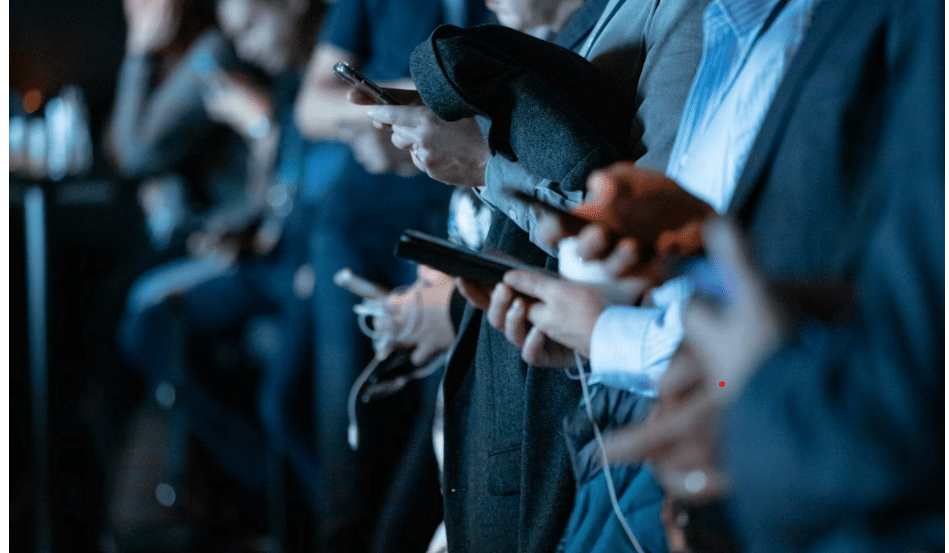
Simply, media influence lies in its repetition, and in how such repetition can shape what is seen as normal, necessary, or proper. It does not necessarily convince people. More often, it nudges. It frames. It prioritizes.
Consider the last time you googled something. You believed in the top results compared to others. Or when a tweet went viral, and everyone started discussing the same problem. It is media influence but without coercion, by exposure and repetition.
The effectiveness of this is extreme because people are emotional processors and then rational thinkers. Stories, tone, and familiarity make us react. Media that understands this doesn’t just inform, it sticks.
A Short History of How We Got Here
Media influence didn’t start with social media. In the print, radio, and television era, influence was controlled by institutions. Editors decided what mattered. Gatekeepers filtered information. Trust was centralized.
Then came the internet and search engines. Google sneaked into becoming one of the most potent media systems ever. When it was highly ranked, people thought it was credible. Authority became algorithmic.
Social media reversed the entire game. Social media networks such as Facebook, Twitter (since renamed X), YouTube, TikTok, and Reddit took over the role of traditional gatekeepers, replacing them with engagement metrics. What spread fastest wasn’t always what was most accurate but what triggered emotion.
Today, influence is decentralized. A TikTok teenager, an anonymous Reddit user, or a small-time newsletter writer can just as easily form opinions as large media houses. The balance of power has changed, but responsibility has not necessarily accompanied it.
How Media Influence Actually Works Today
Algorithms and human psychology working together drive modern media influence. Social networks like platforms are encouraging content that makes people scroll, react, comment, and share. Consequently, emotionally evocative messages such as hope, fear, outrage, and belonging spread further and faster.
Search engines influence through visibility. Social platforms influence through repetition. Communities influence through trust. None of these requires lies to be effective. Even selective truth, framed a certain way, can guide perception.
This is why misinformation doesn’t always look fake. It is often familiar, emotionally gratifying, and socially affirmed. This dynamic is essential for a future communicator, rather than mastering a single platform.
The Human Cost of Influence
One mistake many communicators make is treating audiences like abstract “users.” However, behind each impression and click, there is a man with fears, experiences, and limited attention.
Media influence shapes how people perceive themselves, others, and the world. It influences the state of the psyche, political polarization, consumerism, and even the security of the population. The harm will be real and possibly unforeseen if the influence is careless.
This doesn’t mean you should communicate timidly. It means you should communicate consciously. This is why exposure matters. In a close-knit learning environment that focuses on real-world experiences, future communicators are better able to gain insight into the power of media influence through examples of how messages influence communities, conversations, and personal development.
It makes it more challenging to be inconsiderate when you have seen words affect real people.
The Ethical Tensions You Can’t Avoid
Every communicator eventually faces hard choices. Do you publish quickly or wait to verify? Do you simplify a message or preserve nuance? Do you chase virality or protect credibility?
The uncozy fact is that ethical communication is not usually rewarded as immediately. Responsible content usually does not spread as quickly as sensational content. But over time, trust compounds and audiences remember who respected them.
If you’re optimizing only for reach, you’re playing a short game. If you’re building influence that lasts, ethics are not optional.
What Future Communicators Should Do Differently
The most effective communicators going forward won’t be the loudest or most polished. They’ll be the most trusted.
That starts with being honest about uncertainty. You don’t need to know everything. Saying “here’s what we know so far” builds more credibility than pretending to be definitive.
It also means learning to work with platforms without being controlled by them. Learn algorithms, and do not allow them to value you. Create interesting material, but without use emotion irresponsibly.
Most importantly, talk with compassion. Individuals do not switch their minds when they are talked down to. They change when they feel understood.
It is not a sign of weakness to assume that your listeners and readers are astute and have the kind of experience you are sharing. It’s influence at its strongest.
This attitude also extends to how you approach the media. The credibility gained through building genuine media relationships is long-term and does not involve getting coverage when it is convenient.
Skills That Will Matter More Than Ever
The technical skills will be altered. Platforms will evolve. However, only some skills will become more significant: critical thinking, narrative awareness, media literacy, and moral judgment in challenging situations.
The communicators of the future have to be taught to offer context, rather than the content. To slow down conversations when needed, not always speed them up. To listen as much as they speak. Clarity is authority in a world full of messages.
Final Thoughts
The media’s power is not good or bad. It’s a tool. And as with any tool, its use will be in the hands of the user and the purpose.
In the case of a future communicator, words will influence more than numbers. They’ll shape beliefs, conversations, and decisions you may never directly see. That is a duty that should be taken seriously.
The right kind of influence not only draws attention but also moves the action. It is trustworthy and leaves people in a better state than it found them.