Cancel culture started as a grassroots movement demanding accountability, but it has evolved into a high-stakes reality for brands. Today, every tweet or post can be scrutinized and judged in real time. Screenshots live forever. Private conversations go public. Misinformation can spread faster than corrections.
Becoming “uncancellable” isn’t about avoiding mistakes. It’s about building trust and aligning values with actions. It’s also about responding quickly and sincerely when controversy arises. For brands, survival isn’t enough—you need resilience!
Fret not; This page delves deep into cancel culture 2.0 for companies or organizations. As a brand, read on to learn how to become ‘uncancellable’ in this time and age.
1. Understand the concept of cancel culture
Cancel culture began as a way to call for real accountability. Think of early Twitter and Tumblr call-outs and scattered movements. Consider various communities asking powerful people and companies to answer for their choices.
Now, cancel culture is part of everyday brand management. If you have an audience, you have a record, and your choices will be judged in public. The term itself is divisive, but see how Americans define it below.
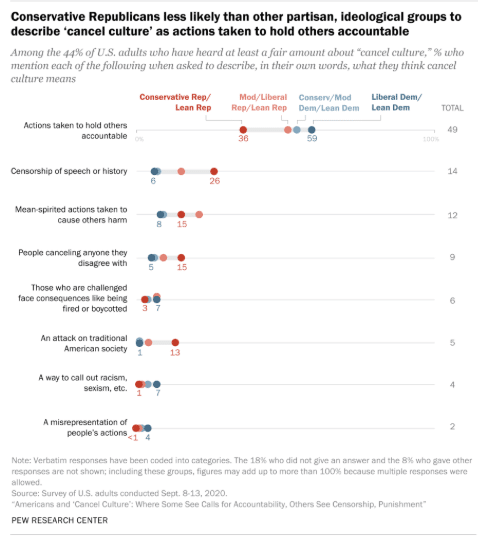
A 2021 Pew Research Center study found Americans split on whether the cancel culture represents accountability or censorship, with many seeing both sides depending on context. The survey also found that most people regularly encounter calls to cancel public figures and companies online, which shapes how we all think about reputation and responsibility in the digital age.
In recent years, we’ve entered a new phase. The cycles are faster. As far as cancel culture is concerned, here’s what’s happening:
- Screenshots live forever.
- Private group chats can ignite a public firestorm by lunch.
- Creators can mobilize millions in an afternoon.
Add emerging risks like generative AI and deepfakes, and misinformation can accelerate faster than the truth. In fact, the World Economic Forum named misinformation and disinformation as top global risks in 2024. They put institutions and brands squarely in the crosshairs, as WEF reported.
Andrew Bates, COO at Bates Electric, understands the concept of cancel culture so deeply. More importantly, he suggests positioning your brand in a positive light to avoid being cancelled.
Bates says, “Brands that build trust on purpose and keep it through consistent, transparent action don’t just survive these cycles. They eventually become harder to cancel.”
2. Identify what triggers backlash and what follows
When your brand gets cancelled, there are a few things your PR team can and can’t do. But before you dig into these, identify what triggers backlash. Usually, it’s a mix of things:
- Ethical or cultural missteps (tone-deaf creative, labor issues, harmful sourcing, etc.)
- Poor responses to legitimate criticism (silence, deflection, defensiveness, etc.)
- Misalignment between stated values and actual behavior
- A slow, muddled crisis response that leaves room for speculation
Then, understand what happens next. The consequences hit fast: reputation damage, financial pain, erosion of trust. A few examples from the last decade:
- United Airlines’ 2017 passenger removal incident led to global outrage and an immediate market reaction. Shares dipped, and the brand spent months rebuilding trust. The slow, legalistic early responses made things worse.
- Starbucks closed 8,000 stores for racial-bias training in 2018 after an incident in Philadelphia. They chose to invest in repair in a way customers could see and understand.
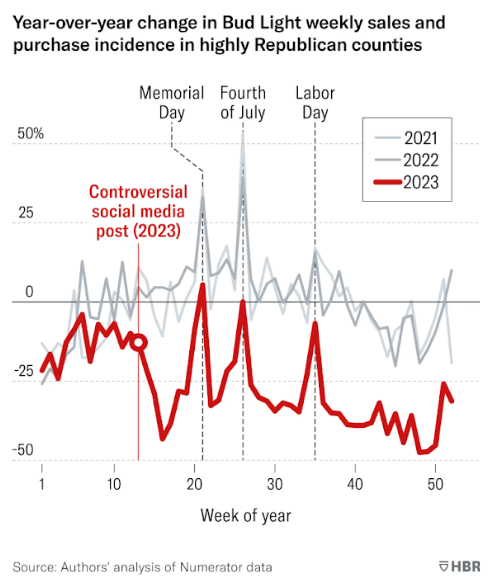
- Bud Light’s 2023 controversy shows how culture wars can reshape a category. The brand lost its top spot in the U.S. beer market to Modelo as sales slid for months.
Not every backlash equals a brand collapse, however. Here’s a perfect example:
Nike’s 2018 Kaepernick campaign drew boycotts and praise. However, online sales reportedly jumped shortly after launch. That wasn’t luck. Nike had spent years building credibility on athlete empowerment and social issues. The brand didn’t pivot overnight; it continued a story it already owned.
3. Unravel what makes a brand harder to cancel
Uncancellability isn’t invincibility. It’s about resilience built on purpose. It’s the ability to absorb criticism and correct quickly. It’s being able to prove over time that your values match your actions.
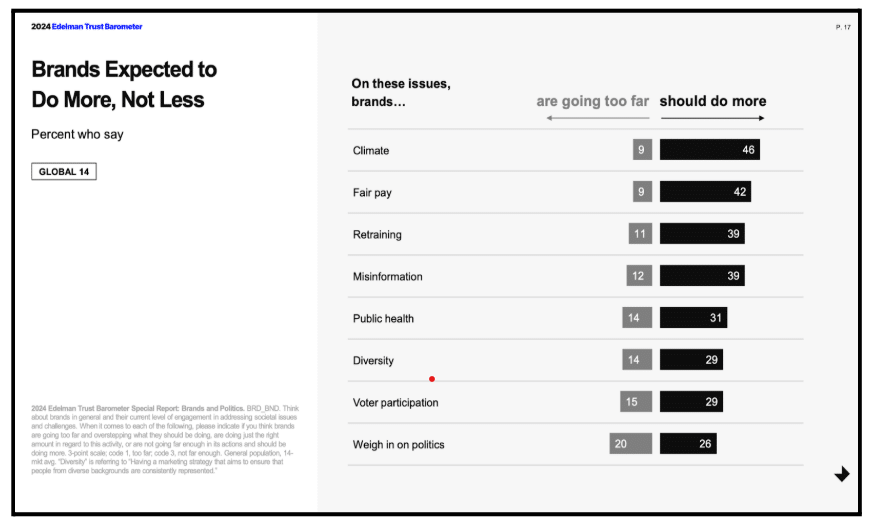
Authenticity and transparency form the foundation. People accept imperfection when they see honesty and effort. Edelman’s 2024 Trust Barometer shows people still expect business to lead on societal issues (see below). However, they punish performative activism and empty statements.
Learn from Andrew Scheidt, General Manager at Central Air Heating, Cooling & Plumbing. He believes that uncancellable brands share one trait: their actions consistently match their stated values.
Scheidt explains, “This alignment creates a foundation of trust that can withstand criticism. When your employees, customers, and community all understand and believe in what you stand for, temporary controversies become opportunities to demonstrate your commitment.”
Getting that alignment right means your internal culture and external storytelling point in the same direction. It also means you apologize well when you miss. Effective apologies are fast and specific. They should be tied to clear corrective actions, not legalese or vague sentiment.
4. Design a playbook for cancel culture 2.0
Crisis management is crucial in the age of cancel culture. There’s no magic fix, but there is a practical approach. And it starts before anything goes wrong!
When controversy strikes, brands have a narrow window to shape the narrative. Quick yet genuine responses that acknowledge concerns and demonstrate accountability can turn potential cancellations into opportunities for meaningful dialogue. Meanwhile, silence or defensive reactions almost always amplify the damage. The first 48 hours often decide whether a brand recovers or spirals.
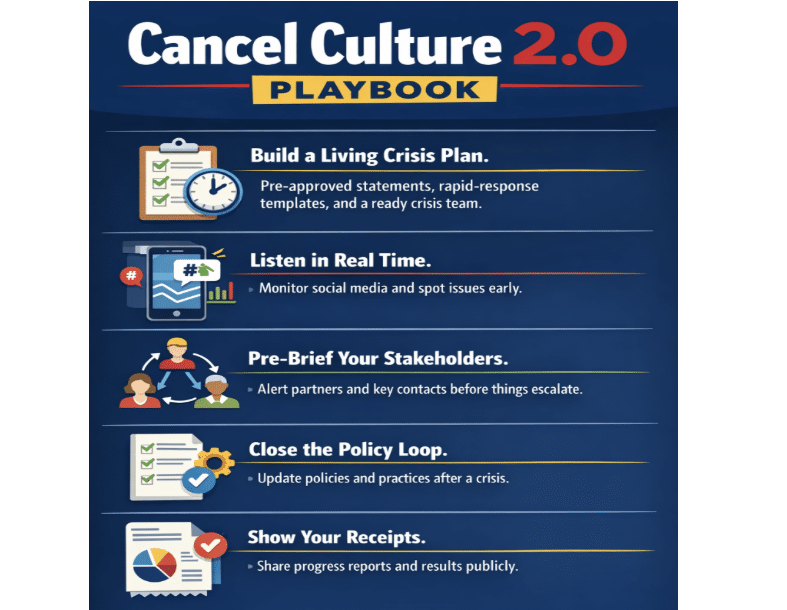
Image source: Generated by author via ChatGPT
To avoid the cancel culture, set a PR crisis checklist. Here’s what you can do:
- Build a living crisis plan. Pre-approved holding statements, a cross-functional response team, clear decision rights, and “dark site” templates you can publish in minutes, not days. ISO 22361:2022 offers useful crisis management guidance if you need a structure.
- Listen in real time. Smart brands invest in social listening tools and dedicated teams to track sentiment shifts across platforms. This early warning system lets you address misconceptions and engage constructively with critics before hashtags trend and opinions solidify.
- Pre-brief your key stakeholders. Retail partners, creators, industry groups, and community leaders should hear directly from you when a risk is on the horizon. Even a one-paragraph heads-up can buy you goodwill and time.
- Close the policy loop. Use lessons learned to update hiring, vendor oversight, creative review, and DEI frameworks so the same issue doesn’t come back. Starbucks, for example, coupled its 2018 training with policy reviews and public updates, making the fix part of the story.
- Show your receipts. If you’re making a commitment on sourcing or safety, publish progress reports and target dates. Patagonia’s Footprint Chronicles are a long-running example of transparent supply chain storytelling that wins trust by showing work in progress rather than perfection.
5. Work with influencers and brand advocates
Influencers aren’t just distribution channels. They’re credibility carriers. In tense moments, outside voices who know and trust you can translate your intent better than a corporate statement ever could. That’s what it takes to move from cancel culture to cohesion culture!
A clear example comes from companies offering TRT online services. Because testosterone replacement therapy is often misunderstood, brands partner with fitness coaches, men’s health educators, and medical professionals who already talk about hormone health with their audiences.
When these creators share real experiences and explain the process responsibly, their voices build credibility and help counter misinformation far more effectively than a corporate statement alone.
Your influencer partners become your credibility insurance during controversies (see how Glossier works with a micro-influencer below). Choose collaborators who genuinely use and understand your products and share your core values. These authentic voices carry far more weight than corporate statements when public opinion wavers.
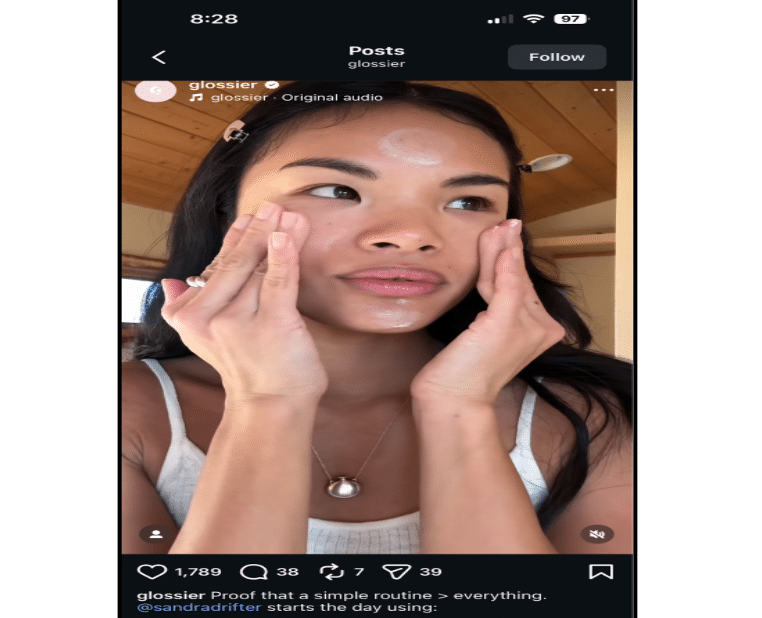
Image source: Glossier’s Instagram account
A few practical moves:
- Vet for values, not just reach. Look at past content under stress. How do they handle disagreement? Do they engage thoughtfully?
- Build long-term relationships. A creator who has worked with you for years will defend you more credibly than a one-off sponsor.
- Align on a shared understanding. Give partners context: what you stand for, how you make decisions, where you’re still improving. If a storm hits, they won’t be caught flat-footed.
- Diversify your advocate base. Employees, customers, nonprofit partners, and industry peers form a mesh of support that’s more resilient than any one high-profile voice.
6. Establish consumer education and engagement
Education sounds boring until you watch it save a brand relationship in real time. When people understand the why behind your choices, they give you more room during tough moments.
Take it from Kashif Ali, Growth Specialist at PsychologySchoolGuide.net. He has seen the pattern across studies.
Ali shares, “Brands that invest in consumer education create advocates who understand the complexities behind business decisions. When you transparently share your processes, challenges, and reasoning, customers develop empathy and context that makes them less susceptible to mob mentality. Education transforms passive consumers into active supporters.”
What does that look like on the ground?
- Publish behind-the-scenes explainers. These should explain things, such as product development, sourcing, safety, and quality control. Chipotle’s detailed food safety updates after its crisis are a good model for demystifying operational changes.
- Create living FAQs. They seek to update as questions roll in. If a misconception spreads, address it on your own turf and link to credible sources.
- Invite dialogue. Host AMAs with your head of product. Likewise, publish progress dashboards and share decision rubrics. It’s okay to say “we don’t know yet” as long as you explain how you’ll figure it out.
- Partner with third parties. Certifications, academic partners, industry affiliations, and community organizations lend legitimacy that brand-owned content rarely can.
Final Note: Building resilience for what’s next
Cancel Culture 2.0 rewards brands that move fast with sincerity and tell the truth with receipts. It benefits those who align their values with what people actually experience. But on the flip side, it punishes defensiveness and performative half-steps.
You can’t control the internet. You can control how ready you are for it. If you want your brand to become harder to cancel, start now. Tighten your crisis plan. Invest in social listening and stakeholder relationships. Align internal culture with external promises. Educate, then keep educating.
Remember, speed and sincerity get you through the first 48 hours. However, value alignment keeps you standing for the next 48 months. As the terrain will keep shifting, your best hedge is a brand that keeps learning out loud!
Need help to boost your brand image in the age of this cancel culture? Agility Solutions PR offers an AI-powered platform to help you manage your brand reputation. To speak with an expert, book a demo today!