
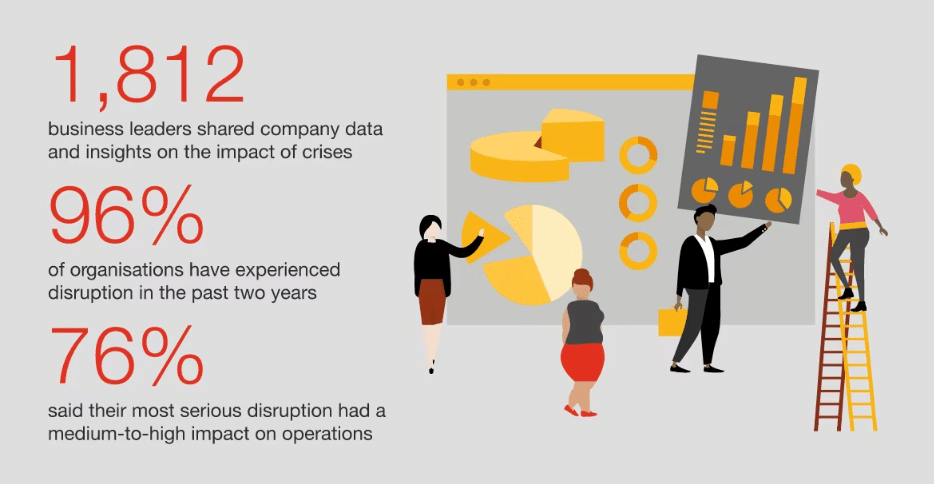
According to PwC’s 2023 Global Crisis and Resilience Survey, 96% of organizations have experienced at least one major disruption in recent years, averaging 3.5 incidents over 2 years. And you know why this happens? Few had the systems to catch them early enough to act.
The truth is that your brand reputation rarely breaks in one moment. Usually, it has been bleeding for days before anyone in leadership knows.
Most crises don’t announce themselves:
- A Reddit thread picks up steam
- Three separate reviews mention the same problem using almost identical language
- A creator who has never said anything negative about your space suddenly posts a thread
None of these feels urgent on their own. By the time they land on your leadership team’s radar, the story is already three days old. That is the gap media monitoring was built to close.
In this article, we’ll explain what media monitoring is and the predictive signals to pick up to protect your brand from a crisis.
What Media Monitoring Actually Does for Your Brand
Media monitoring is what happens when you stop waiting for the weekly report and start watching in real time.
It tracks brand mentions, sentiment shifts, emerging topics, and the specific contexts shaping how people talk about you across news, social platforms, forums, podcasts, reviews, and anywhere else your reputation appears.
No monitoring system means the news finds you instead. And late is expensive. Late means scrambling, delayed responses, and a story that hardens against you while you’re still in the conference room deciding who should speak first.
Ryan Walton, Program Ambassador of The Anonymous Project, a UK charity focused on anonymous giving and humanitarian work, puts it directly.
“When your organization’s entire mission is built on trust, you can’t afford to be reactive,” Ryan says. “Monitoring what’s being said about our work early means we can address concerns before they undermine the donor relationships and community confidence we’ve spent years building.”
The Predictive Signals You Should Be Tracking
Not every spike is a crisis. But some patterns consistently appear before things get bad. Here is what to watch for:
- Week-over-week spikes in negative mentions. Your weekly average of negative mentions matters here. When that number jumps 20 to 30% week-over-week, that is your flag, even if the overall sentiment dashboard still looks fine
- Platform migration across channels. A complaint that starts in a closed Facebook group and shows up three days later on a trade newsletter has already traveled. Each hop expands reach and extends shelf life
- Keywords like “recall,” “misleading,” “hidden fees,” or “boycott” appearing in your brand mentions significantly change the risk category. Track these as standalone signal types rather than folding them into the general volume
- Tone shifts from previously neutral creators. A trusted creator who has covered your category without bias for months can turn critical, signaling where mainstream coverage is headed within days
- Credibility escalation in your source mix. Chatter moving from anonymous accounts to verified journalists or industry analysts changes everything. That transition is when casual noise becomes a news cycle
For Jeffrey Zhou, CEO and Founder at Fig Loans, a fintech company providing responsible lending alternatives to underbanked Americans, catching these signals early is directly tied to sustaining the community trust the business was built on.
“In financial services, a single misread customer story can spiral into a regulatory inquiry if it’s not addressed at the source,” Jeffrey says. “You have to see the problem forming while it’s still small enough to resolve quietly, because by the time it reaches the top of the inbox, the window for a quiet fix has usually closed.”
How to Build a Media Monitoring Setup That Catches Early Signals
Most monitoring setups fail before a crisis hits because they were built for reporting, not detection. Here is what a setup that actually catches early signals needs.
1. Establish Your Baselines and Thresholds First
Your baseline is the data snapshot of what normal looks like for your brand, and it is what every future alert gets measured against. Without it, you have no way to tell a real warning from background noise.
Here is where to start:
- Start with 90 days of historical data from your monitoring tool or analytics platform
- Log your average daily and weekly mention volume, typical net sentiment split, standard complaint volume by channel, and share of voice against your top two or three competitors
- Set threshold alerts at 20 to 30% above your weekly negative-mention average. That number becomes your early warning line
Anything that crosses it gets flagged for immediate review, not held for the next reporting cycle.
2. Define Your Alert Triggers With Specificity
Alert triggers are the specific conditions that tell your monitoring system when to notify your team. Vague triggers flood your inbox with noise and train your team to ignore alerts entirely, which defeats the purpose.
Follow these steps to build triggers that actually work:
- Use a monitoring platform like AgilityPR and create separate alert categories for your brand name, key product names, executive names, and a list of high-risk keywords relevant to your industry
- Seed your keyword list with terms like “recall,” “misleading,” “lawsuit,” “refund,” and “boycott” as a starting point
- Assign each alert category to a team member, so ownership is clear the moment an alert fires
Layer in a credibility filter so alerts from verified journalists or industry analysts are routed to your comms lead separately from general-volume alerts.
3. Map Your Channel Coverage Completely
Channel coverage is the full list of platforms your monitoring tool actively tracks, and a coverage gap is a blind spot in your early warning system. Run through this checklist to confirm your setup is complete:
- Go through every channel where your audience talks and confirm your tool is actively pulling from each one. That typically includes news outlets, YouTube, TikTok, Reddit, X, Instagram, LinkedIn, podcasts, app stores, forums, Discord, and review sites
- Add any missing channels to your setup before you consider it complete
- Run a manual search on each platform using your brand name and top product names to cross-check what the tool captures versus what is actually out there. You should also monitor how users behave on your own website, since signals like sudden bounce spikes or abandoned sessions can highlight friction points. In some cases, tools such as exit-intent technology can help capture feedback or conversions before visitors leave.
Bryan Henry, President at PeterMD, runs a telehealth model where patient perception directly affects both retention and regulatory risk.
“Healthcare brands operate in a trust economy,” Bryan says. “If a patient’s experience goes unaddressed online, it doesn’t just affect one person. It shapes how thousands of potential patients evaluate whether to reach out. You need to catch that feedback early, before it compounds, because the difference between a service improvement and a reputation problem is often just timing.”
Steps to Turn Monitoring Data Into Action Before a Crisis Lands
Monitoring data is only useful if it reaches the right people quickly enough for them to act on it. Here’s how:
Build a Severity-Tiered Escalation Matrix
An escalation matrix maps out exactly who gets notified, how fast, and with what authority at each level of severity. Without one, every alert becomes a group chat, and nobody moves.
Set up your tiers before you need them:
- Tier one covers a single influencer complaint or an isolated spike. Flag it, log it, and assign an owner to monitor for spread
- The top tier is cross-platform spread, plus a journalist making contact, which means PR, legal, and product all need to be in the room immediately
In addition, every tier should have a named decision maker and a holding statement that is already approved. The moment a crisis hits is the wrong time to figure out who is in charge.
Align Response Playbooks to Each Channel
A Reddit thread needs a different response than a national newspaper story, a different tone, a different approval chain, and a different speed. Work those scenarios out before you need them.
Build your playbooks like this:
- Map out your five most likely crisis scenarios, and write a channel-specific response guide for each
- Include pre-approved language, tone guidelines, and escalation contacts for each platform where your audience is active
Agility’s media monitoring platform connects real-time sentiment tracking, anomaly alerts, and routing directly into your existing comms stack, so your team doesn’t have to manually check dashboards while they should be writing responses.
Review and Recalibrate on a Regular Schedule
Your thresholds need to stay current. What counted as a spike six months ago might be normal volume now.
So, keep the system sharp with a simple routine:
- Run a quick pattern review every month to check whether your baselines still reflect actual normal behavior
- Run a full simulation quarterly where your team practices responding to a staged scenario using the real tools and playbooks
After any real incident, do a retrospective and update your triggers, thresholds, and playbooks before the next cycle starts
Fix the Crisis Permanently
When a crisis arises, don’t just find a temporary solution in order to simply diffuse media narratives. Follow up on what caused the issue and implement a lasting fix.
Kashif Ali, Growth Specialist at PsychologySchoolGuide.net, puts it plainly: “The brands that recover fastest aren’t the ones with the best apology. They’re the ones that fix the root issue visibly and structurally. Audiences are surprisingly forgiving when they see real change. They’re far less forgiving when they sense damage control without operational reform. If you don’t correct the underlying process, you’re not preventing the next crisis. You’re scheduling it.”
Conclusion
Monitoring media seriously after something goes wrong will only result in higher resolution costs, fewer options in some cases, and even legal involvement if not careful. Avoid these by setting your baselines this week, locking in your alert thresholds, and ensuring the right people are in the routing chain.
To stay at the top of every move, you can use media monitoring platforms like AgilityPR. It combines a suite of AI-powered features to deliver instant article insights, customizable dashboards, and built-in reporting tools.