
Imagine walking down a busy street with billboards. Some are big and flashy. Others quietly show you something you didn’t even know you needed.
Now, picture this idea on a global scale. That’s what digital ads are today — the billboards of the internet, reaching people wherever they are.
The catch: People see hundreds of ads every day, but only a few make a lasting impact.
To help you cut through the noise, we’ve created the ultimate guide to digital ads and how you can make them work for your brand strategy.
Let’s take a look!
Understanding Display Ads
Display ads are visual advertisements of your brand shown to your target audience across websites, apps, or social media platforms. They can be static, video-based, or interactive. And they can target audiences at different stages in your sales funnel.
(You’ll often see them while reading an online article, playing mobile games, or watching a video.)
For instance, this display ad by Indeed, placed on the Business Insider website, promotes its Sponsored Jobs feature:

With a clear call-to-action (CTA) to Sponsor Jobs, the ad stands out in a placement where professionals are already engaging with career and business content.
10 Types of Display Ads Every Marketer Should Know in 2025
Marketers today have a wide range of display ad formats and placements to choose from. Each type serves a different purpose and can help your brand stand out.
Let’s discuss the most important types of display ads. 👇
1. Banner Ads
Banner ads are considered a traditional display ad format that appears as rectangular or square placements. They are usually placed on the top, bottom, or side of websites and apps.
These ads can be either animations or static images to attract attention without the cost of full video production.
Banner ads are also referred to as leaderboard ads.
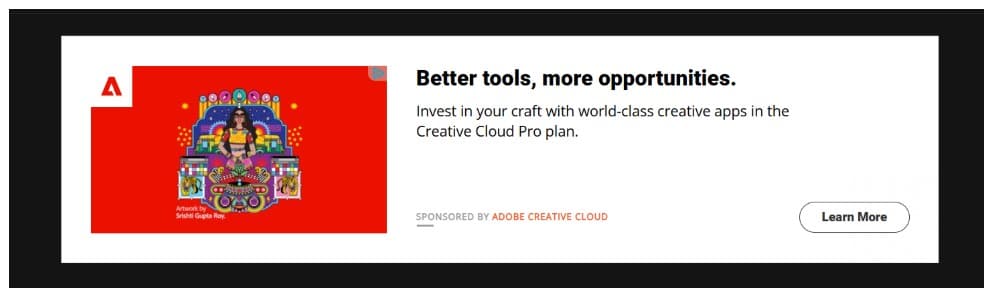
Key platforms for banner ad placements include:
- Niche Platforms like 6Sense and Terminus (for targeted ABM display)
- Social Media platforms (Facebook, LinkedIn, Instagram etc.)
- Microsoft Audience Network (MSAN)
- Demand-Side Platforms (DSPs)
- Google Display Network (GDN)
2. Native Display Ads
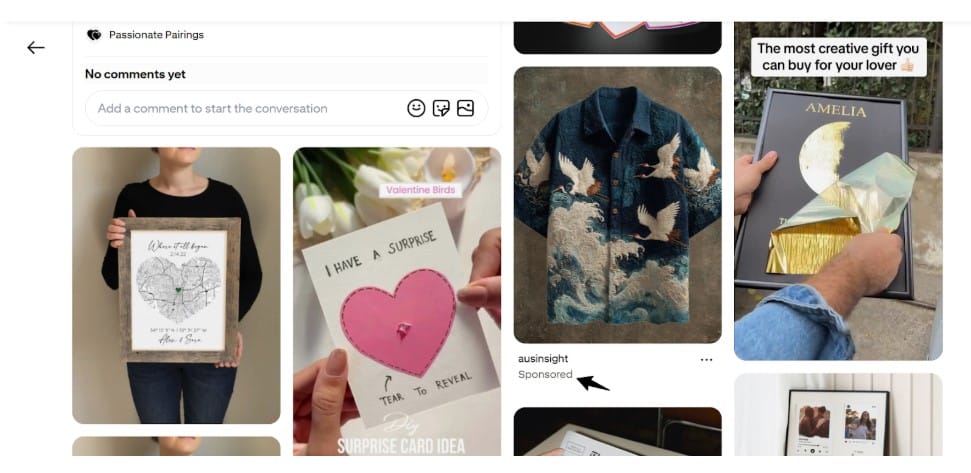
These are in-feed ads designed to blend in with the surrounding content. You’ll often find these sponsored ads alongside other organic content in social media feeds, recommendation lists, or within editorial content.
Since they feel less like an interruption, they can build trust with your audience and usually see higher engagement and click-through rates.
3. Video Display Ads
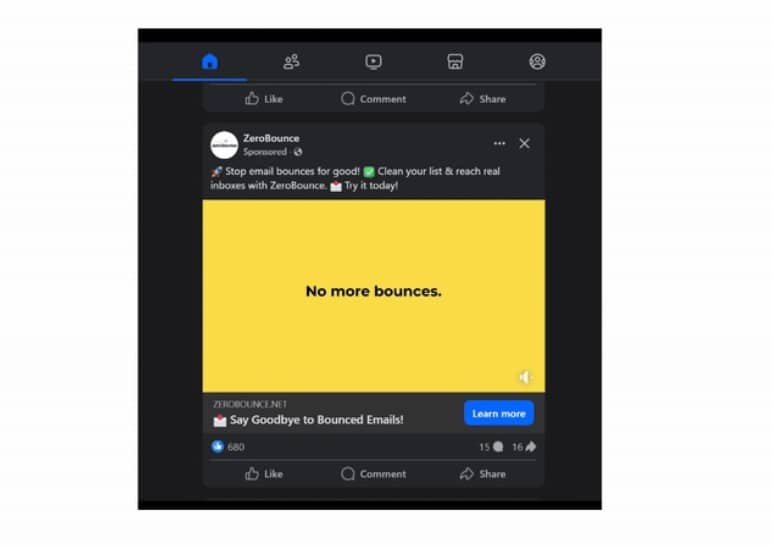
As the name suggests, these ads combine storytelling with movement and visuals to capture the audience’s attention. Video display ads work great when you want to explain products, show use cases, or tell brand stories in a short, snackable way.
You can also include a CTA at the end of the video that guides users to visit your website or make a purchase.
Screenshot provided by the author
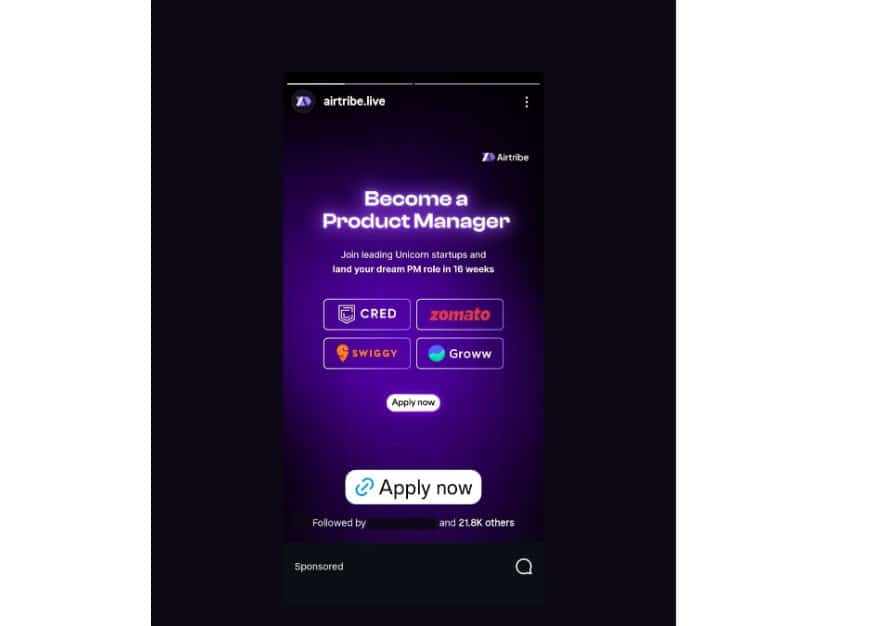
4. Interstitial Ads
Interstitial ads are full-screen ads that show up at natural transition points. This could be between web pages or app screens.
These ads are highly visual and can include images, videos, or interactive elements, making them ideal for campaigns aiming to drive awareness or engagement.
Screenshot provided by the author
5. Rich Media Ads
Rich media ads go beyond static or simple animated banners by including interactive elements like sliders, expandable panels, or clickable hotspots.
They encourage user interaction by allowing audiences to engage directly with the ad without having to leave the page.
(Brands often use rich media ads to showcase multiple products, tell a story, or offer mini experiences that increase engagement.)
6. Responsive Ads
Responsive ads automatically adjust their appearance, size, and format to fit different screen sizes and placements. This flexibility helps your campaign reach users seamlessly across desktop, mobile, and tablets.
7. Pop-Up Ads
Pop-ups are small windows that appear over a website’s main content. They’re commonly used to capture email signups or promote limited-time offers.
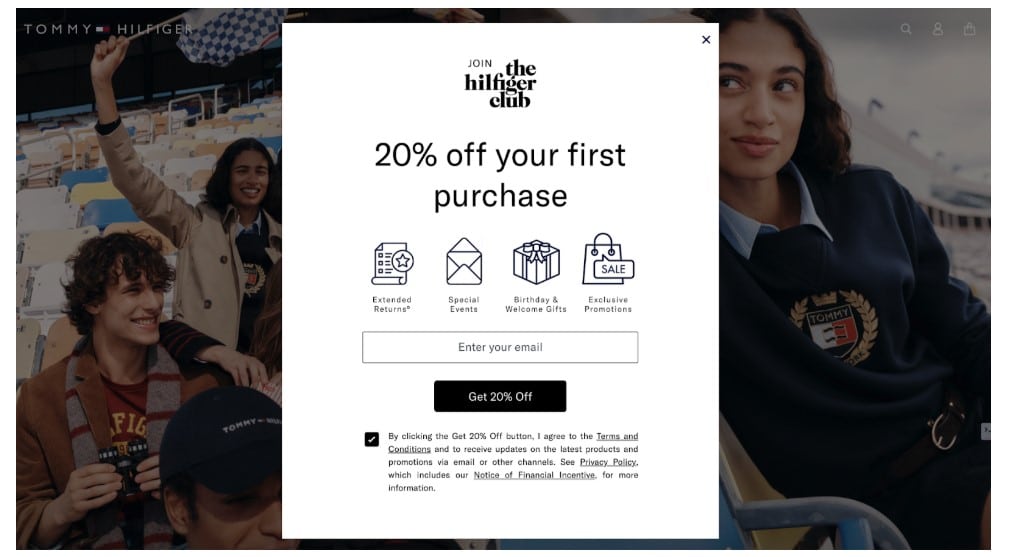
When timed carefully and designed with a powerful CTA, pop-ups can drive conversions without frustrating visitors.
8. Retargeting Ads
Retargeting ads, also called remarketing ads, appear to users who have already interacted with your content, website, or app. This is a great way to remind your audience of the products or services they’ve viewed earlier and potentially guide them back to your brand.
Retargeting can be highly personalized based on users’ past behaviour, which ultimately increases conversion chances.
9. Contextually Targeted Ads
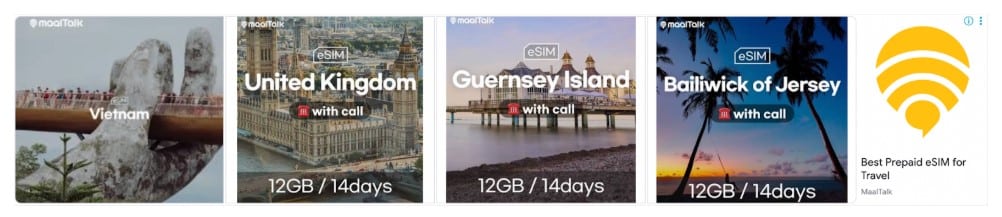
Contextually targeted ads display content based on the page’s topic or the user’s interests instead of their past behavior.
For example, Maaltalk travel eSIM can effectively place ads on travel blogs and booking sites where people are already looking for trip-related information. Now, seeing an ad that highlights an e-SIM with instant activation and global coverage feels relevant and timely.
Screenshot provided by the author
Since the benefits align with what users are searching for in the moment, these ads have a higher chance to draw attention, drive engagement, and lead to conversions.
10. Programmatic Display Ads
Programmatic display ads leverage automated software to buy and deliver ads automatically in real-time. For example, when a user visits a website with programmatic display ads enabled, an ad request is sent to an automated platform.
(It then selects the most relevant ad based on data signals like behavior, location, or interests.)
This way, advertisers can reach the right audience at the right time while dynamically adjusting bidding and targeting.
But there’s a caveat here. 👇
*Important note for digital marketing and PR teams:
Be sure to choose display advertising formats that prioritize safe ad placement. Native and contextual ads often offer more control over the environment, so your ads always stay aligned with your brand values.
Banner or programmatic ads may scale faster. But there’s a greater risk of appearing beside low-quality or unsafe content.
How Do Display Ads Work Today?
The display advertising ecosystem looks a lot different than it did even a few years ago.
Let’s quickly break down the modern workflow step-by-step:
1) Ad creation: You start by designing your ad visuals, videos, or interactive content. Then, choose the ad format, overall budget, and the campaign’s end goal. Many marketers now increasingly use AI to create more impactful advertising and PR communications.
2) Targeting: Ads reach users based on demographics, interests, browsing behavior, or even purchase intent. You can also manually choose specific websites or app placements.
3) Bidding: You can use different bidding models like cost-per-click (CPC) or cost-per-acquisition (CPA) to determine ad spend.
4) Display & Interaction: Ads appear as users browse. When clicked, they direct users to your landing page. This is where they can learn more, sign up, or make a purchase.
5) Programmatic buying: As we discussed earlier, ads can also be purchased in real-time through automated software, which makes the ad placement more precise.
Take a residential treatment center for teens as an example. Instead of running broad ads that may or may not reach the right people, display ad campaigns can be targeted to parents actively searching for terms like “mental health support for teens” or “troubled youth programs.”
As the ad appears the moment parents are seeking help, it feels relevant, timely, and far more effective than general awareness campaigns.
To optimize this step further, the center can leverage social listening using AI-powered tools like Agility PR. This supports the organization to gain insights into the conversations parents are having online, learn about any trending concerns, and use the right messaging in its ads.
Best Practices for Running Display Ads in 2025
Display advertising continues to change, and marketers need to stay ahead to capture attention.
Here are some key strategies to make your display ads work better this year:
1. Create Hyper-Personalized Ads For a Niche Audience
Move past basic user demographics. Focus instead on audience intent, interests, and behaviors to deliver the most relevant message.
For instance, a student loan refinancing company can use contextually targeted display ads to reach fresh graduates who are comparing repayment options. These ads can guide users to the company’s landing pages, where they can take further steps.
Personalization helps your display ads grab attention, feel meaningful, and encourage action.
2. Follow Standard Display Ad Size
Following industry standards helps your ads display properly across websites and devices.
The Interactive Advertising Bureau (IAB) sets the standard sizes that work best, and most of these are still super relevant in 2025:
- Mobile leaderboard: 320 x 50 – 640 x 100 px @2X (but many mobile ads now use responsive/adaptive formats, more on this below)
- Medium rectangle: 300 x 250 px
- Wide skyscraper: 160 x 600 px
- Large rectangle: 300 x 600 px
- Leaderboard: 728 x 90 px
Using the right sizes prevents cut-off or distorted ads and helps your creatives look professional everywhere they appear.
These five static sizes cover the majority of what you’ll see across the Google Display Network (GDN). Google supports a bunch more sizes, but over 95% of inventory can be captured with just these.
That said, the industry is moving fast.
Responsive and adaptive ads are becoming the norm, helping creatives scale across screens and devices without getting cut off or pixelated. *So while fixed sizes are still standard and widely used, flexible ads are the way to future-proof campaigns and get the most reach.
3. Test and Optimize Relentlessly
No display ad campaign is perfect from the start. From placement to creative design, treat every campaign as an ongoing experiment.
(A/B test headlines, visuals, calls-to-action, and even audience segments.)
Small tweaks can lead to big improvements — better engagement, higher conversions, and more efficient ad spend.
Wrap up
Display ads are one of the most versatile tools for digital marketing that offer brands countless ways to connect with audiences at the right moment.
For PR professionals, we recommend pairing the right ad formats with AI-powered analytics, media monitoring, and social listening to promote a solid brand reputation.
To learn more about these features or speak to an expert, book a 15-minute demo now.
For more tips and tricks to boost your brand image, check out our Agility PR Resource Center.