

Digital public relations (PR) has never been more visible and more accountable. Brand stories travel across social feeds, newsletters, podcasts, and search results in minutes.
That speed is a gift. It’s also a measurement headache. We’re still too quick to celebrate surface metrics. AND too slow to prove what really matters: how earned media moves people and, ultimately, the business.
The conversation has shifted. Modern PR must be tied directly to business performance to prove its worth. Treat earned media as a strategic driver, not a soft function.
PR has become a boardroom conversation. Executives want to see how a well-placed story moves the needle on trust, demand, revenue, and success. When you can draw a clear line from earned coverage to business results, PR stops being a cost center and starts being a growth engine.
That’s the task in front of us: connect earned media to outcomes without flattening PR into a clicks counter. Keep reading to learn how to optimize your PR measurement for earned media.
The Evolution of PR Measurement
For years, we tried to quantify PR with yardsticks designed for a different era. We equated column inches to Advertising Value Equivalency (AVE) and swapped true influence for a theoretical ad rate. It felt simple. It wasn’t accurate.
Having spent years building learning programs and hiring tech talent in the education technology sector, Vladyslav Sokol, CEO of Academy Smart, brings a data-driven perspective to PR measurement. He values metrics that show what actually happened after a story was published.
Sokol says, “A media mention is only valuable if we understand what it actually achieves. AVE can put a price on coverage. However, it doesn’t tell us whether people trusted the story and became interested in the brand. In short, good PR measurement should connect media coverage to real outcomes.”
Digital changed the scoreboard. We gained impressions, engagement, share of voice, and sentiment analysis. Those signals are useful. Still, they’re waypoints, not the destination.
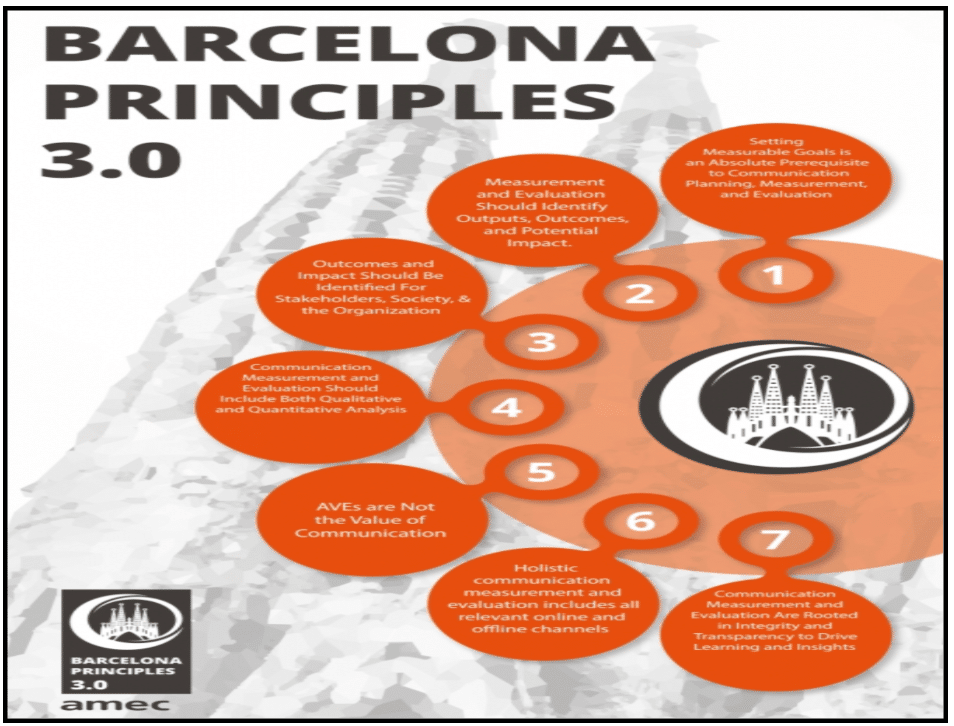
The industry response captured in AMEC’s Barcelona Principles 3.0 (see above) moved us from vanity metrics toward: outputs, outcomes, potential impact. That’s progress. It also means we’re on the hook to connect dots across the funnel.
How To Optimize PR Measurement for Earned Media
1. Understand what earned media really is
Earned media is the attention you don’t buy and can’t fully control: a journalist’s article, a customer review, a podcast mention, an analyst note, an influencer’s organic shoutout. It sits alongside owned channels (your site, your social profiles, your email list) and paid channels (ads, sponsorships, paid influencer programs). Together, they shape how a brand shows up in the world.
Earned media plays a distinct role alongside owned and paid channels. Credibility is what sets it apart.
Paid media buys attention and owned media controls the message. However, earned media earns belief. When a third party champions your brand voluntarily, that endorsement carries credibility you can’t buy. That’s exactly why it’s so hard to pin down.
For example, a homeowner searching for bathroom remodeling in Brandon FL might discover a local renovation company through a home improvement article or a trusted recommendation. They may not contact the company right away. But that third-party mention can make the company feel more credible when the homeowner later visits its website or asks for a quote.
That credibility is also why measurement is tricky. Trust builds over time and across touchpoints. A single article might not spark an instant conversion. However, it can improve click-through on future ads and make a sales conversation feel safer.
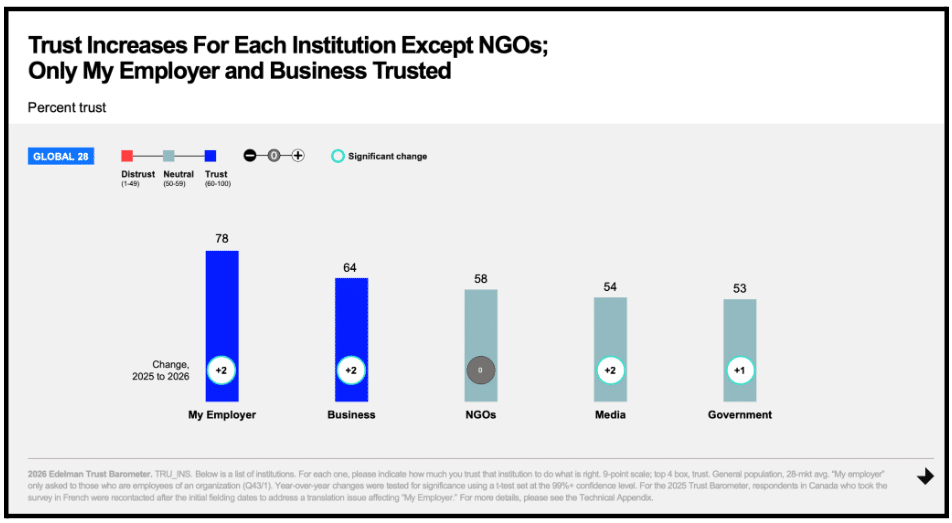
Research from Edelman continues to show how trust shapes behavior across categories (see the facts and figures below). The challenge is proving that connection with the care it deserves.
2. Connect earned media to business outcomes
If you want to link PR to business results, start by stating the business result. That sounds obvious. However, it’s where most measurement gaps begin. For instance, are you trying to:
- increase aided awareness in a priority market?
- Safeguard reputation during a product recall?
- Kick-start enterprise pipeline for a new category?
Each goal demands a different chain of evidence. So, start with clear goals before diving into the numbers.
How? Define what success looks like before you measure it. If your objective is reputation, track sentiment and share of voice. If it’s demand, follow the audience path from coverage to conversion. Advanced analytics let you attribute outcomes with confidence instead of guessing which story drove the result.
A practical way to translate coverage into outcomes:
- Tie stories to specific audiences and intent. Tag every placement by theme, message pillar, audience, and stage. A category-defining op-ed serves a different purpose than a product review.
- Watch for second-order effects. After tier‑one coverage, do you see lifts in branded search, direct traffic, email signups, or demo requests? Connect the timing and the source paths in your analytics.
- Track exposure cohorts. Do this by building audiences of people who likely saw the story (site visitors from referring domains or newsletter subscribers during the coverage window) and compare their downstream behavior to a matched control group.
- Validate with mixed methods. Pair web analytics and CRM data with surveys that measure lift in awareness, consideration, decision, and action among target segments.
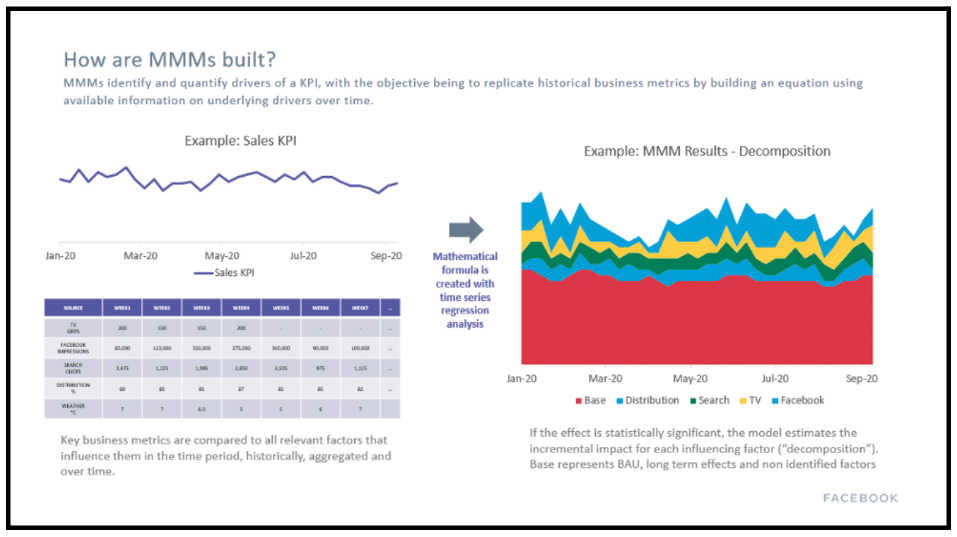
Model incrementality using Marketing Mix Modeling (MMM) and geo- or time-based lift tests where possible to estimate PR’s contribution to revenue alongside paid and owned channels.
3. Measure PR success holistically
Clicks are part of the story, not the whole thing. For instance:
- A thought leadership piece might drive a few immediate sessions but become the proof point a prospect cites in a sales call.
- A podcast interview may not send referral traffic, yet it might lift brand recall across your next campaign.
Be wary of the temptation to judge campaigns solely by traffic and clicks. It’s best to have a broader view of what success really means for a brand.
Clicks tell you someone showed up. Not whether they came away trusting you. Real PR success lives in how customers feel at every stage of their journey and in the loyalty that keeps them coming back. A single-metric mindset misses all of that.
A more complete view blends:
- Brand health metrics – like aided and unaided awareness, consideration, preference, and net promoter score. Run periodic brand lift studies to spot movement
- Sentiment and share of voice – across priority topics and markets, weighted by outlet credibility and audience fit
- Journey impact – through assisted conversions, conversion rate changes among exposed audiences, time-to-close in sales for PR‑influenced accounts.
- Long-term effects – category entry point coverage and mental availability that pay off over months, not days
The advertising effectiveness work from Binet and Field, The Long and the Short of It, is a helpful lens on balancing short‑term activation with long‑term brand building. You’ll notice none of these metrics require abandoning clicks. They just refuse to stop there.
4. Use tools and technologies for PR measurement
The tech landscape is rich, and also a little noisy. Start with tools that capture the signals you actually need. Then make sure they talk to each other. Use artificial intelligence (AI) tools that can supercharge your PR strategy.
But here’s the thing: no single platform can do everything. And that thoughtful integration matters most.
Every tool has a blind spot. Media monitoring platforms excel at tracking coverage and sentiment. However, they need to talk to your web analytics and CRM to tell the full story. The smartest teams build a connected stack that turns scattered signals into one coherent picture of impact.
A practical stack often includes:

- Media monitoring and social listening – Agility PR Solutions
- Web and product analytics – Google Analytics 4, Adobe Analytics, event tracking for UTMs and referrals.
- CRM and revenue data flows – Salesforce, HubSpot, or your system of record to see the influenced pipeline and deals
- Visualization and warehousing – Looker Studio, Tableau, Power BI, plus a data warehouse if you’re stitching lots of sources together
Each has benefits and tradeoffs. What matters most is consistent tagging and clean taxonomy. Not to mention shared reporting cadence across PR as well as sales and marketing.
5. Build a measurement framework for PR
If you want measurement to stick, treat it like product development: versioned, tested, improved.
Alignment with business goals is the foundation of any useful framework. Start by choosing KPIs that mirror your business objectives. Then wire your PR data into the same reporting you use for marketing and sales. Treat the framework as a living system: review it often, adjust what isn’t working, let each cycle sharpen the next.
A straightforward way to build your framework:
- Clarify objectives and KPIs. Tie each PR objective to one or two business KPIs (e.g., increase consideration among enterprise buyers by 10% in H2; influence $5M in qualified pipeline).
- Map your logic chain. Start from inputs (pitches, briefings) to outputs (coverage, mentions) to outcomes (awareness, consideration, trust) to impact (pipeline, retention, revenue).
- Create a tagging taxonomy. Do this for message pillars, audience segments, funnel stage, market, and product. Apply it to pitches, coverage, and content.
- Instrument touchpoints. Use UTMs, referral tracking, and CRM campaign codes for PR‑driven assets like press rooms and gated content.
- Integrate data. For instance, connect media monitoring with analytics and CRM so you can view coverage and revenue in one place.
- Establish baselines and tests. Capture pre‑campaign baselines and run geo or time-split tests when feasible to estimate lift and measure ROI of your PR.
- Report and refine. Build dashboards for weekly pulse, monthly readouts, quarterly business reviews, and end-of-the-year reporting. Retire vanity metrics and promote those tied to outcomes.
Do this well, and your reporting starts to feel less like defense and more like a roadmap.
Final Words
PR doesn’t need a simpler story. It needs a better one: one that respects the complexity of how belief takes shape and still makes a clear case for business impact.
That said, move beyond AVE and single‑number scorecards. Set specific objectives. Track the right signals. Connect PR data to the same revenue reality your marketing and sales teams live in. When you do, earned media shows up not as a line item to defend, but as a lever to pull.
Need to measure your PR campaign for earned media? Agility PR Solutions can help, so use its AI-powered platform for faster, smarter, better, and more impactful communication. Book a demo to speak with an expert today!