

Traditional PR often struggles with targeting the right journalists, measuring return on investment (ROI), and spotting risks before they become crises.
But AI in modern PR has changed that.
Let’s take a closer look at why AI-powered tools are so important in modern PR, and how to use them to tailor and magnify your public relations strategy.
Why AI systems are important tools for modern PR
Artificial Intelligence helps teams focus on the right targets and PR approaches.
AI models can analyze tone, sentiment, and engagement across platforms, so you can tailor your messaging style to your audience’s preferences.
It can even help you identify journalists and outlets most likely to cover your story and predict which angles could resonate with them.
Early detection is another major advantage.
Social listening tools can monitor social media, forums, and news sites to flag potential reputational risks. This supports you to respond quicker with an action plan and company message before things escalate.
You can also automate repetitive tasks, like monitoring coverage or sorting media lists, to focus more deeply on relationship-building and storytelling.
➜ But most importantly, AI can help you link your PR activities to tangible business outcomes so you can make smarter decisions.
Here are some top examples of how you can use AI in PR:
1. AI-powered media outreach
Use AI-powered CRMs and research tools to identify reporters most likely to engage with your story. You can also predict which story angles will resonate based on past coverage, social engagement, and audience demographics.
Agility PR Solutions uses AI-powered targeting so you can find the right journalists to reach out to:
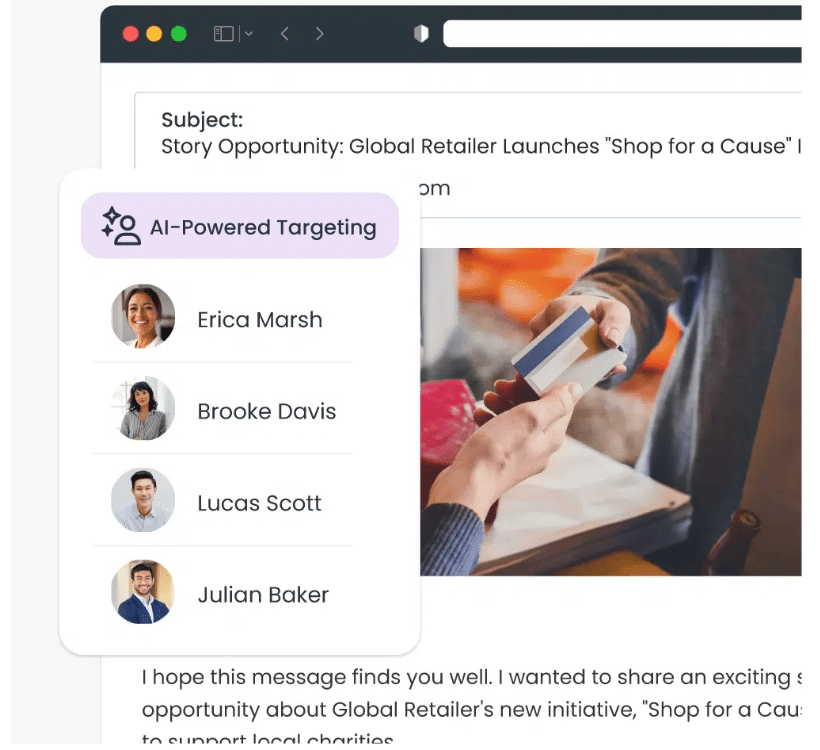
Timing is everything. You can also use AI to analyze when journalists are most receptive and see optimal windows to send pitches.
It also helps with content creation. More on this in the next section.
2. AI-driven content creation
Use AI to help you draft press releases, social media posts, and statements. It can help you tailor your messaging to different audiences simultaneously by using tone and sentiment analysis to make sure each piece lands as intended.
Agility’s PR CoPilot, for instance, is a great messaging companion:
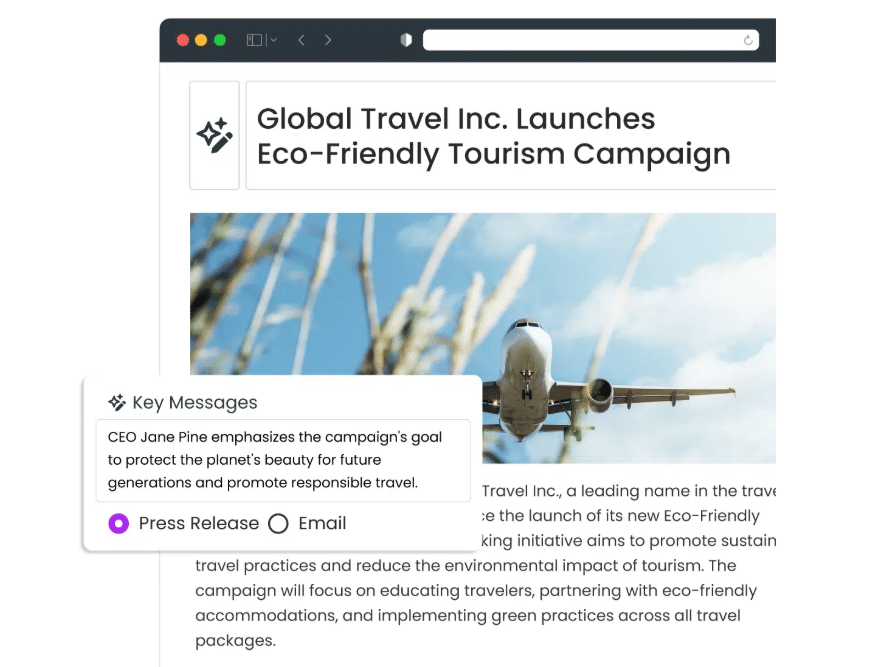
Human-AI collaboration is key, though. Use AI outputs as first drafts and refine them for brand voice and credibility. Segment your content for different platforms (LinkedIn, X, or email) and use AI insights to see what resonates with each audience.
Agility PR Solutions’ content intelligence tools can analyze which stories are gaining traction, so you can prioritize and adapt your messaging for maximum impact.
3. Predictive analytics and crisis management
Use AI as a watchdog for your brand. Track social media posts, forums, and news in real time so your team can detect emerging issues before they become crises.
AI trend analysis can also predict topics that could go viral so you can create content around them for more reach.
If one of your clients manufactures high-end garages, for instance, an AI platform might highlight a spike in social media discussions about “eco-friendly garage materials.”
You can then use that insight to proactively craft a press release about how the company uses recycled steel or about its energy-efficient insulation. This can help position them as a sustainable brand and tap into a new, conscious consumer market.
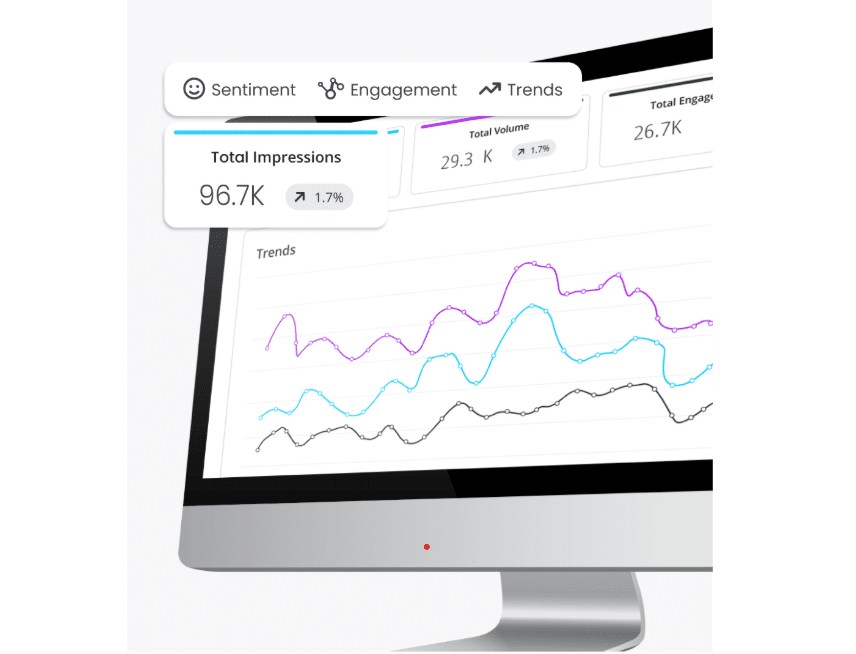
Scenario planning is also simpler with AI. Use it to simulate outcomes based on messaging or timing, so leadership can make informed decisions under pressure.
*Pro-Tip: Set AI alerts for spikes in negative sentiment. Pair that with predefined response protocols, and you have a system ready to act quickly. Agility PR Solutions’ media monitoring dashboards can make these alerts easy to manage and act on.
4. Measure PR impact and ROI
Track your PR success beyond counting mentions. Use AI to quantify reach, engagement, sentiment, and real business outcomes. Understanding how to integrate AI into an app or a website operations can enhance your ability to analyze data effectively.
You should be able to see which coverage drives app and website traffic, lead generation, or sales influence, so you can prioritize high-value opportunities.
AI can also help you identify which outlets and journalists provide the most impact versus low-value coverage, for smarter resource allocation.
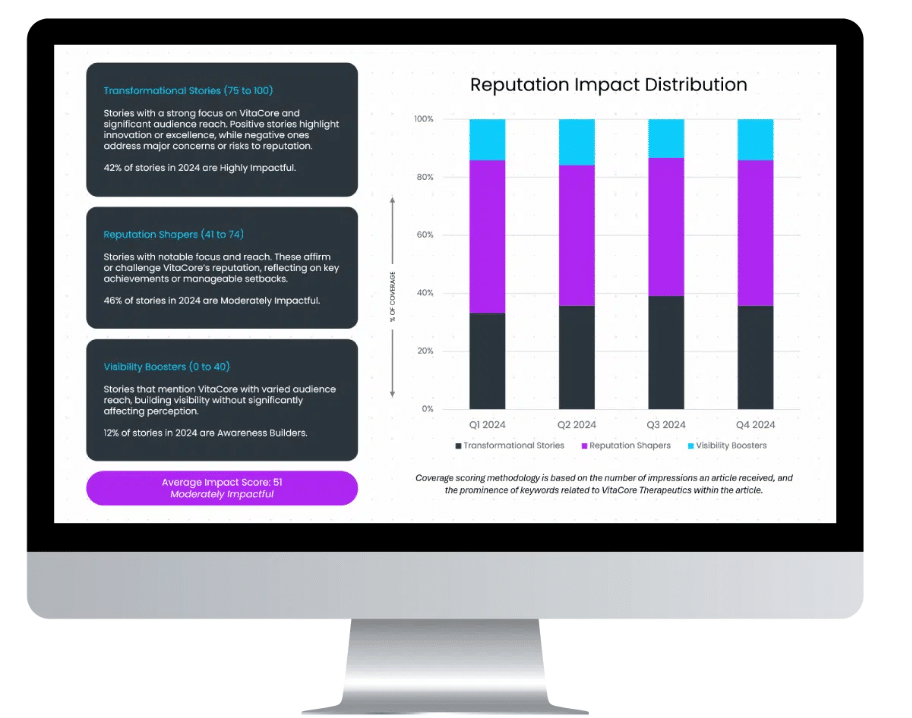
Use tools like Agility PR Solutions’ reporting suite. It connects media exposure directly to measurable outcomes, so you’ll always have actionable insights at a glance.
5. Automate repetitive PR tasks
Use AI to handle routine tasks like scheduling, follow-ups, reporting, and monitoring coverage.
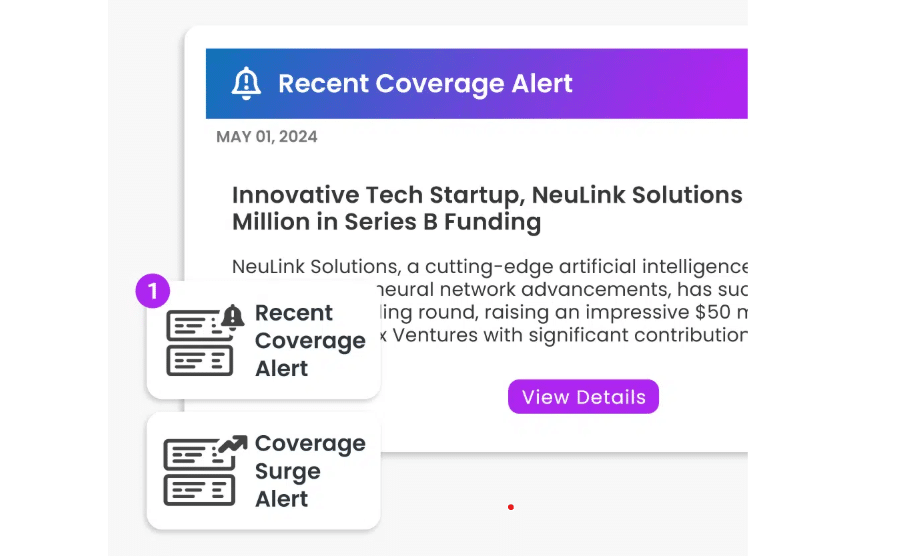
This frees up your team to focus on the high-value work that AI can’t replace. (Like relationship building, creative storytelling, and strategic planning.)
Ethical considerations and human oversight
AI is powerful, but it’s just a tool.
Maintain authenticity by always reviewing AI outputs before publishing. Review datasets, too, to make sure they’re accurate, representative, and free from bias. And always follow privacy and ethical guidelines when profiling audiences or monitoring social media.
TL;DR: Treat AI as a decision support tool, not a replacement for human judgment.
Tools like Agility PR Solutions provide transparency in media monitoring and content creation, but the final messaging should always have a human stamp.
Integrate AI into your long-term PR strategy
Think of AI as a long-term partner. Feed campaign results back into AI systems to improve predictions over time. Connect AI insights across CRM, social monitoring, and analytics for a holistic view of your media landscape.
➜ Iterate and refine your approach as audience interests change. Continuous learning helps AI become smarter and more aligned with your brand’s needs.
*Pro-Tip: Make AI a permanent part of your PR planning. Agility PR Solutions’ integrated dashboards can help maintain a single source of truth across your campaigns.
Practical 10-step AI workflow for PR (quick checklist)
Here’s a practical AI workflow you can start testing and adjusting for your public relations strategy:
- Map out your target media using AI.
- Analyze audience sentiment and engagement trends.
- Draft AI-assisted press releases with human review.
- Segment messaging for multiple channels.
- Predict optimal timing for outreach.
- Monitor coverage and mentions in real time.
- Measure PR impact on business outcomes.
- Set AI alerts for early crisis detection.
- Automate repetitive workflows like scheduling and follow-ups.
- Continuously train AI with campaign feedback.
This workflow blends AI’s efficiency with human judgment so you can create a learning and optimization loop that keeps PR strategies sharp.
TL;DR:
AI is transforming PR in the best ways. It supports precise targeting, helps you create tailored content, predict crises, and more.
But AI works best with humans in charge so you can promote ethical use and authenticity.
Start small. Test your AI tools, measure results, refine your approaches, and gradually scale. With the right balance, AI-powered PR can magnify your public relations strategy while keeping credibility and impact at the front and center.
Need help now?
Try Agility’s PR CoPilot, which uses AI to help you craft personalized pitches, identify relevant journalists, and automate follow-up communications.
FAQs
1. What is generative AI, and how can it improve PR and social media management?
Generative AI uses AI models and large language models (LLMs) to create content like social media posts, press releases, and product descriptions. Tools such as Notion AI, Vista Social, and AI video generators help PR teams streamline content creation, maintain consistent messaging, and enhance user experiences across platforms.
2. How do AI-powered tools assist in content creation for PR campaigns?
AI-powered tools like DALL·E 3, AI image generators, and text-to-image generators can produce visuals for social posts or media kits.
Conversational AI and AI chatbots help craft engaging messages for audiences or journalists. Combined with prompt engineering, these tools make messaging clearer, more consistent, and tailored to your PR objectives.
3. Can generative AI improve audience engagement and media relations?
Yes. AI chatbots, conversational AI, and AI-powered chatbots can handle routine audience queries, track user experiences, and assist with research to inform messaging.
In PR, these tools can help teams respond faster, maintain consistent communication, and improve brand perception with journalists and stakeholders.
4. What role does prompt engineering play in PR content creation?
Prompt engineering guides AI models like DALL·E 3, Google Gemini, or Microsoft Copilot to produce accurate, on-brand outputs. It can help with generating press releases, social media posts, videos, and images that align with messaging goals and audience expectations.
5. Which AI systems are useful for video content and media production in PR?
AI video generators, text-to-image generators, and tools like Video Intelligence API or Gemini Flash can streamline video creation and content analysis.
PR teams can use these tools to produce campaign videos, social media content, or multimedia press kits more efficiently.
6. How can Agility PR Solutions help?
Agility PR Solutions helps businesses manage and improve their public relations efforts. It tracks media coverage, monitors brand mentions, and analyzes audience sentiment so you can see how your stories are performing.
Its AI-powered features, like PR CoPilot, assist with writing press releases, pitches, and media alerts faster and more accurately. You can also find and reach the right journalists, plan campaigns, and measure results — all in one platform.

