

We are drowning in “authentic” brands that all sound like they were raised by the same focus group and fed a diet of corporate mission statements.
This seems like a trend these days. Most companies play defense. They sand down the edges, mute the personality, and pray the algorithm doesn’t notice them in a bad mood.
Sadly, that’s not resilience. It’s camouflage. And camouflage fails the moment the background changes.
Building a resilient brand means creating an identity that can absorb market shifts, survive public scrutiny, and still show up as the dependable choice tomorrow. It requires more than a clever logo or a viral post. It needs consistent behavior and clear communication.
If you want a brand that actually survives the next five years, you have to stop managing impressions and start managing expectations.
Here are six ways to do that without turning into a corporate robot.
1. Talk Like a Human Who Actually Wants to Be Understood
You know that sinking feeling when you land on a website and the first sentence reads like it was written by a committee of lawyers who just discovered a thesaurus? It just makes you want to click the back button.
That reaction is simply self-preservation. Nobody wants to decode a riddle just to figure out what you sell. When a brand prioritizes clarity, it signals respect. It says, “I value your time more than I value sounding clever.” That small gesture builds a surprising amount of resilience.
To get this to work for you:
- Go over your homepage with a brutally honest friend who knows nothing about your industry.
- Hand them your phone.
- Give them seven seconds.
- Then close the tab and ask them what you do.
- If they hesitate or guess wrong, you have work to do.
- Strip every sentence down to its function.
- Replace “leveraging synergistic paradigms” with “we help you triple your revenue.”
- Use short paragraphs.
- Write headlines that answer a question before it’s asked.
- If a fifth-grader squints at your value proposition and nods, you’re on the right track.
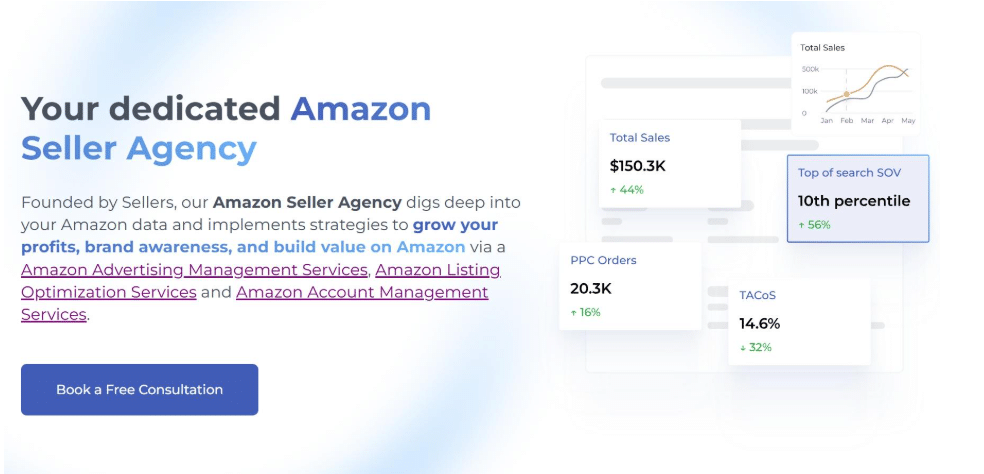
Just look at SellerMetrics, an Amazon PPC agency that works with sellers to optimize their advertising and scale their operations. On their website, you won’t find a single floating buzzword or vague promise about “unlocking potential.”
They state plainly what they do, who they do it for, and exactly how it improves the bottom line. The navigation is intuitive, the language is clean, and they explain complex ad management without hiding behind acronyms.
In a space notorious for snake oil and confusing dashboards, that level of directness brings visitors one step closer to becoming a loyal client.
Source: sellermetrics.app
2. Show Real Proof That Your Customers Are Happy with You
There’s a specific kind of exhaustion that hits when a brand’s “About Us” page reads like a self-nomination for sainthood. Adjectives piled on adjectives. Claims of being “the leading provider” or “the most trusted partner” without a shred of evidence to back it up.
Customers have been burned before, and they scroll past this kind of polished marketing copy with the same skepticism they reserve for infomercials.
Verified reviews, however, operate on a different frequency. They carry a weight that no in-house copywriter can replicate. Studies consistently show that consumers assign significantly higher trust to third-party verified feedback, which in turn translates directly into stronger purchase intention.
To get this to work for you:
- Ask customers for video testimonials, even if it feels awkward.
- Offer a small incentive or simply ask sincerely after a successful project wrap-up.
- Feature these clips prominently on pages where visitors are making high-stakes decisions.
- Let real people with real faces, real voices, and unscripted pauses, describe what changed for them.
- The messier the video, the more believable it becomes.
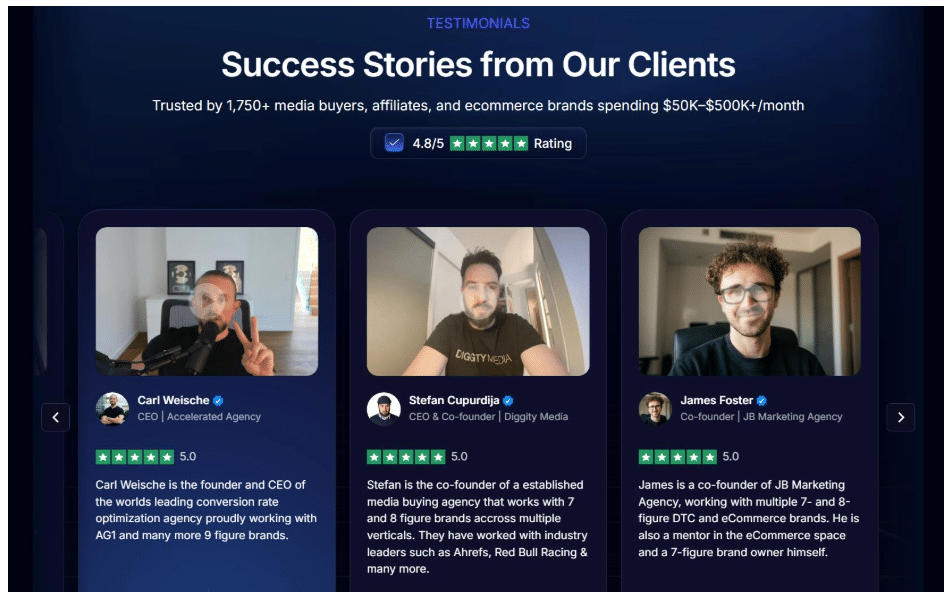
Uproas, a company that provides premium agency ad accounts for Meta, Google, and TikTok, understands this dynamic intimately.
On their Agency Ad Accounts for Google landing page, they don’t bury their social proof in a forgotten footer link. Instead, they feature video testimonials from recognizable CEOs and founders who speak directly to the camera about their experience.
In a niche where stability and support responsiveness are everything, watching a peer confirm delivery beats reading a marketing claim every single time.
Source: uproas.io
3. Be Upfront About Costs
Few things sour a relationship faster than reaching for your wallet and realizing the final number is higher than the one you agreed to.
This practice, often called drip pricing, erodes trust at the exact moment it matters most – the checkout page. When a brand lures someone in with an attractive base rate only to tack on processing fees, service charges, or mysterious surcharges at the last step, prospects start feeling tricked.
Resilient brands understand that transparency around cost signals confidence. It tells a potential customer that you stand behind your value so firmly that you don’t need to hide the bottom line behind fine print.
To get this to work for you:
- List your plans clearly.
- If a feature is only available at a higher tier, say so without apology.
- If taxes vary by location, include a note explaining why the final price may adjust slightly.
- Avoid asterisks that lead to paragraphs of legalese.
- Instead, write a short sentence that sets expectations accurately.
- Consider adding a simple calculator tool if your pricing structure has multiple variables.
- The goal is to make the financial commitment feel predictable rather than like a negotiation with a magician.
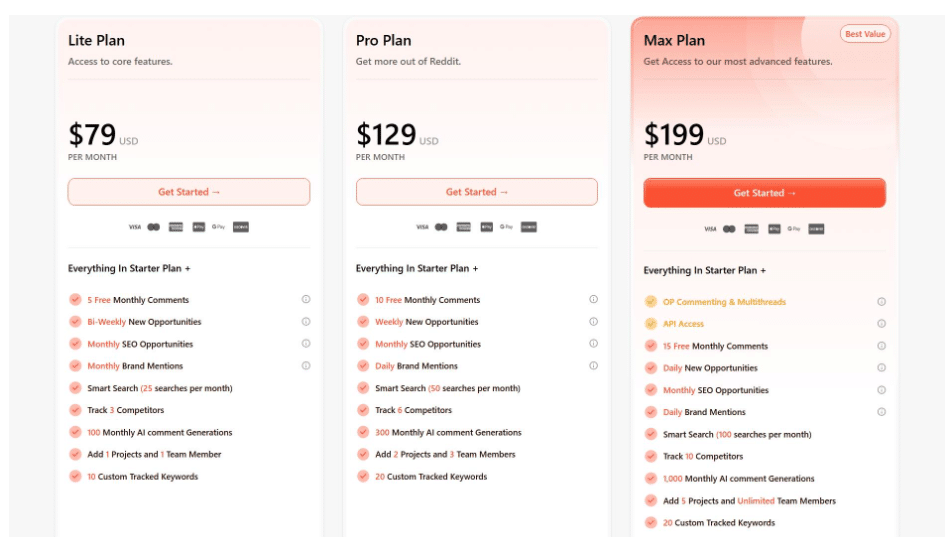
Engain, a marketing software built to help businesses amplify their brand presence on Reddit and generate more qualified leads and sales, handles this with refreshing directness.
Their homepage doesn’t make visitors hunt for a buried pricing link or schedule a discovery call just to see numbers. The three available plans sit right there, fully exposed.
Each tier lists its price in full and details exactly what the buyer receives. There are no blurred lines, no vague promises, and no last-second fees waiting to ambush a credit card.
That level of upfront honesty is a competitive advantage. It allows a business owner to decide quickly if Engain fits their budget without wasting mental energy on suspicion.
Source: engain.io
4. Make It Easy for Customers to Reach You When It Matters
Most brands treat customer support like a cost center to be minimized. They bury contact forms, route you through endless phone trees, and hope you give up before reaching a real person.
This approach works fine until something goes wrong. And something always goes wrong. A resilient brand distinguishes itself not during the smooth sale but during the messy follow-up.
Availability signals a quiet, steady commitment. It says your relationship with them doesn’t clock out when your office does.
To get this to work for you:
- Place an always-visible chat option on your site.
- Use a simple AI assistant to handle common questions instantly, so customers get answers in seconds rather than hours.
- Program the assistant to recognize when it’s out of its depth and offer an immediate connection to a human agent during business hours.
- If you cannot staff nights, set clear expectations. A message stating “We will reply by 9 a.m. tomorrow” is infinitely better than radio silence.
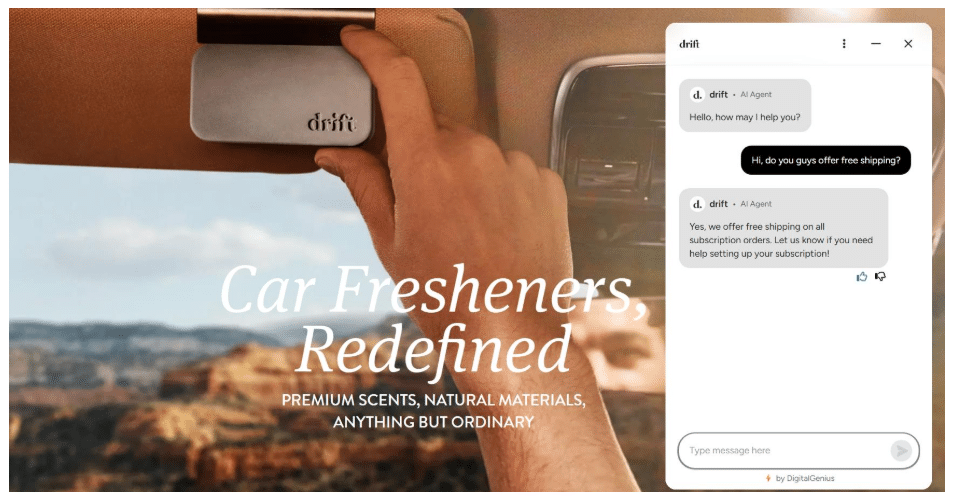
Drift, a company that makes premium car and home air fresheners, executes this playbook with precision. Their website features a chat bubble anchored permanently in the lower right corner.
This floating button doesn’t disappear as you scroll. It doesn’t hide behind a menu. Click it, and a window opens where an AI-powered assistant fields your questions immediately. And if the AI hits a wall or you simply prefer a human voice, you can request a transfer to a live support agent without jumping through hoops.
That seamless transition from automated efficiency to human empathy keeps frustration low and trust intact.
Source: drift.co
5. Build a Fast, Responsive Experience Across Every Device
There’s a specific kind of frustration reserved for pinching, zooming, and side-scrolling a website that clearly wants you to be on a desktop monitor. It feels like the company built its storefront for a world that no longer exists.
Subconsciously, that friction translates into a judgment call. If a brand cannot be bothered to make their site usable on the device living in my pocket, how much care do they really put into their actual product?
Research confirms this instinct. Responsive design improves load times and directly increases the perceived credibility of a company’s website. A smooth mobile experience signals competence. A clunky one signals neglect.
To get this to work for you:
- Borrow an older device from a friend.
- Load your site on a shaky 4G connection.
- Click every button.
- Fill out every form.
- If your checkout fields require microscopic thumb precision, enlarge the hit boxes.
- If your navigation menu collapses into an illegible mess, simplify it.
- Pay special attention to any web-based tools or dashboards you offer customers.
- Those need to be just as functional on a six-inch screen as they are on a twenty-seven-inch one.
- Compress your images.
- Ditch the unnecessary scripts.
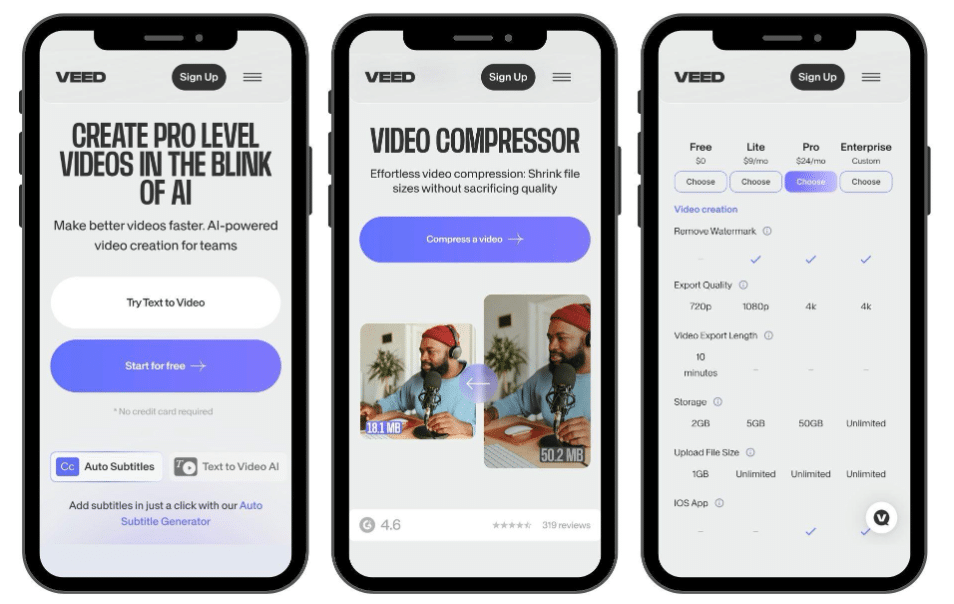
VEED, a browser-based AI-powered video editing platform, sets a high bar for what mobile functionality should look like.
Their entire ecosystem exists online, yet it renders cleanly on any device within a couple of seconds. The website text is readable without zooming. The buttons are spaced for thumbs, not mouse cursors.
More impressively, the actual video editing platform itself adapts to small screens without collapsing into chaos. Users can trim clips, add captions, and export finished content from a phone while being on the move.
That level of mobile consideration tells a visitor that VEED respects their time and their context, regardless of where they happen to be standing.
Source: veed.io
6. Keep up with Trends and Technologies Before You Fall Behind
Nothing ages a brand faster than stubbornness dressed up as tradition.
You have seen the pattern before. A company finds a formula that works, builds a comfortable moat around it, and then watches, bewildered, as the market quietly moves on without them.
Resilience doesn’t come from clinging to a single playbook until it crumbles. It cultivates by treating your current strategy as a rough draft that is always open to revision.
The platforms people use today may be ghost towns in three years. The way customers prefer to pay, browse, and communicate shifts constantly. A brand that earns long-term trust is one that evolves alongside its audience rather than demanding the audience slow down and wait.
To get this to work for you:
- Set aside thirty minutes each week to explore a platform or tool you have ignored.
- If your team lives in email, spend that time understanding how communities operate on Discord.
- If your marketing relies heavily on static images, experiment with short-form vertical video even if it feels awkward at first.
- Read industry news outside your immediate niche. A trend in ecommerce logistics might reshape expectations for your service business.
- Subscribe to newsletters written by people who annoy you slightly. The mild discomfort means you are encountering a perspective you have not internalized yet.
- Most importantly, reserve a small portion of your budget for low-stakes experiments.
- Test a new ad format.
- Try a different tone in an email subject line.
- Track what happens and adjust accordingly.
The goal here is to maintain enough intellectual flexibility that when a genuine shift occurs, you recognize it before your competitors do. A brand that adapts willingly survives downturns that crush brands waiting for things to go back to normal.
Final Thoughts
Building a resilient brand doesn’t demand a massive marketing budget or a team of consultants. It just needs consistency in the areas that actually matter to the people handing over their money.
The six tips covered in this article all point in the same direction: make things clear, be honest, stay accessible, and keep improving.
None of them are revolutionary on their own, but applied together, they form a foundation that withstands market noise, algorithm changes, and the occasional public misstep.
So, focus on execution. Apply one or two of these tips, measure the impact, then expand. Small improvements, done well, shape how people see and trust your brand long term.