
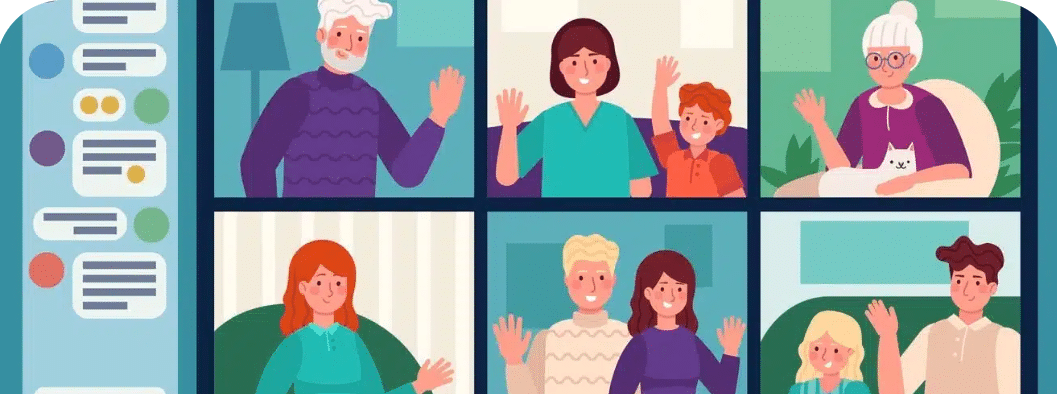
Multigenerational messaging means shaping one core story that works for different age groups—without losing what makes it matter.
In modern public relations, you can’t skip this. When brands need to reach Boomers, Gen X, Millennials, and Gen Z simultaneously, there’s no room for sloppy targeting. Sure, broadcasting the same message everywhere is efficient. However, you’ll miss most of your audience.
The thing is: demographics keep shifting. In the U.S., Millennials surpassed Baby Boomers as the largest generation of adults just a few years back. This has changed the labor force and how households buy things.
Digital platforms complicate everything. Email works for some people. Others live on TikTok. Preferences for TV, podcasts, social feeds, and video vary wildly by age. YouTube reaches almost everyone, but Facebook, TikTok, and Reddit show sharp generational splits.
Good campaigns find people on their preferred platforms and adjust tone without watering down the message. Keep reading to learn how to create multigenerational messaging for your modern PR campaign.
Understanding The Generational Cohorts
Stereotypes are limiting. However, baseline patterns help you avoid obvious mistakes. Here’s a working framework using Pew’s definitions:
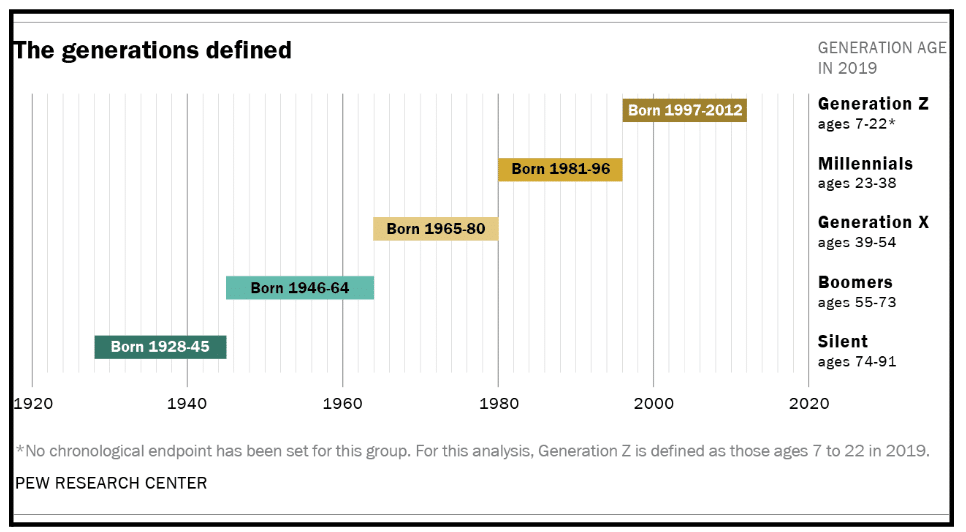
- Baby Boomers (born 1946–1964): They tend to value reliability and context. Email, news sites, TV, and Facebook get their attention. Clear details matter more than hype.
- Generation X (1965–1980): Pragmatic, skeptical, busy. They want to understand benefits quickly and see credible proof. Respect their time with concise copy and useful comparisons.
- Millennials (1981–1996): They care about stories and community. Values matter. They look for social proof and human narratives on Instagram, YouTube, podcasts, and email.
- Generation Z (1997–2012): Visual, fast, allergic to fake. They trust creators over brands. Short videos and interactive content carry more weight than polish. TikTok and YouTube dominate.
Every market mixes these groups differently. However, you’ll find all of them in most campaigns.
Millennials now make up the largest share of U.S. workers. Meanwhile, Gen Z is just starting their careers and already changing expectations around speed and transparency. Deloitte’s global survey found both groups prioritize financial stability and mental health. All factors that shape how they judge brands.
But here’s the thing: Differences get more attention. However, shared values matter more. People want respect and clarity. Even something useful. They don’t want to feel patronized.
Start there. Then adjust for how each group likes to receive information. Remember, the campaigns that connect across generations tap into shared experiences…family, achievement, community. That’s what it takes to keep up with the evolution of digital PR.
Challenges in Multigenerational Messaging
Multigenerational messaging can easily go wrong. So, it’s important to avoid common mistakes when launching digital PR campaigns.
Most issues come from age-based assumptions and disconnected channels. Even content that isn’t adapted to how different audiences actually engage across platforms can be problematic. But there’s more.
The challenges in multigenerational messaging:
- Beyond age-based assumptions: The biggest mistake is assuming you know what people want based solely on age. Stereotypes flatten audiences and produce tone-deaf work.
- Breaking down channel silos: When teams handle different channels separately, they create disconnected experiences. Someone sees your TV spot, finds you on TikTok, gets an email, and it feels like three different companies talking.
- One message doesn’t fit every platform: Comfort with technology varies. However, it’s more than just access. It’s about habits and norms.
- Matching content to audience expectations: Dropping identical content across every platform ignores how tone and pacing signal whether something was made for you. Generic blasts get low engagement and sometimes public backlash.
Recent history shows how this fails:
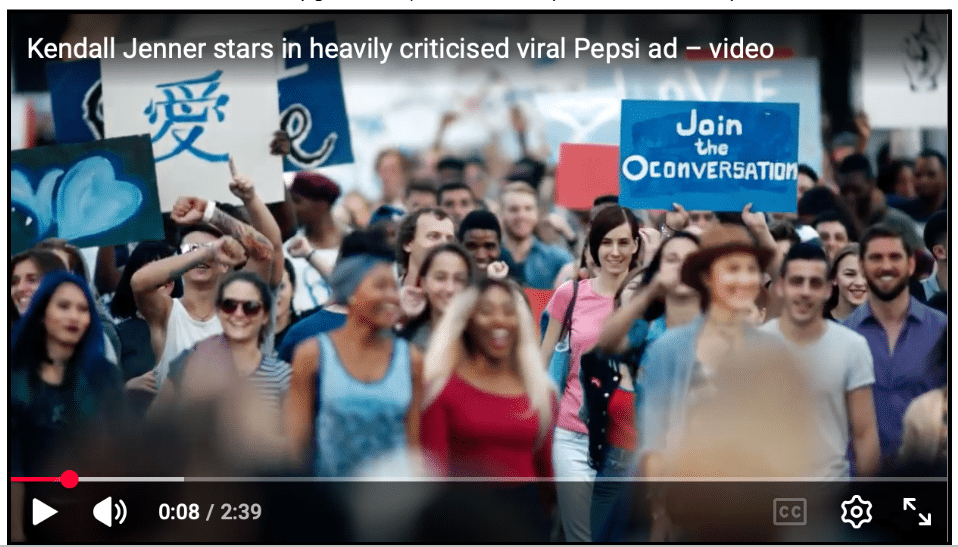
- Pepsi’s 2017 Kendall Jenner ad tried to reference social justice but trivialized a real movement. Criticism came from every generation, and the brand pulled it within a day.
- Gap’s 2010 logo redesign aimed for modern appeal but confused and alienated longtime customers across age groups. Both cases show what happens when brands assume instead of listen.
Strategies for Effective Multigenerational Messaging
Good multigenerational messaging starts with understanding people.
As such, it’s crucial to incorporate DEI in modern PR campaigns. The goal is to combine research with tailored content and connected channels. That way, your message stays consistent while still feeling relevant to different audiences.
That said, here’s how to create effective multigenerational messages:
1. Research and insight gathering
Research prevents guesswork. Look past age brackets to understand what motivates people, and what stops them.
Learn from Ryan Walton, Program Ambassador of The Anonymous Project. He believes effective communication starts with understanding the people behind the data.
Through his work preserving and sharing personal stories and experiences from different generations, he has seen how assumptions can obscure the motivations that drive engagement.
Walton says, “The strongest messages come from understanding real people…not demographic stereotypes. When you take the time to learn what different generations value and care about, you create communication that feels authentic and relevant. Research helps you find those shared human connections.”
Practical approaches:
- Monitoring social conversations and cultural trends to spot shifts early
- Mixing quick surveys with longer interviews
- Using CRM data to identify behavior patterns by life stage
- Running cohort analysis in your analytics to see how age groups move through your site or app
- Testing messages with A/B experiments before committing budget
Make research ongoing. Not a one-time event.
2. Tailored content development
Adapt how you say something. Not what you’re saying. Your core message should stay consistent while format and visuals change.
Nick LeRoy, Owner of PPCJobs.com, recommends building content frameworks for several national brands. He believes that each generation has its own content language.
Through his work helping companies attract talent and connect with diverse audiences online, LeRoy has seen how content preferences vary across generations. He emphasizes that successful brands adapt their delivery while keeping their core message consistent.
LeRoy explains, “Boomers want context. Gen X wants efficiency. Millennials respond to stories. Gen Z needs visual proof. But you can keep your message intact and still match how each audience prefers to take in information.”
Tactics that work:
- Breaking long narratives into shorter pieces without losing emotional weight
- Replacing stock photos with real people and trusted creators
- Adding captions, alt text, and accessible design for wider reach
- Partnering with credible voices (doctors, educators, influencers, etc.) depending on your topic and audience
3. Integrated and adaptive communication channels
Integration doesn’t mean posting identical content everywhere. It means creating a connected experience. So, people feel recognized no matter where they encounter you.
Take it from Ryan Beattie, Director of Business Development at UK SARMs. He focuses on building partnerships and growth strategies across digital and performance-driven channels.
In his work, he emphasizes that strong communication systems are not about choosing between old and new platforms. It’s about connecting them into a unified experience that feels consistent to the audience.
Beattie shares, “Email newsletters might anchor your approach for older audiences. Meanwhile, TikTok and short-form videos reach younger audiences. The real value comes when these channels reinforce each other. So, no matter where someone engages with you, it still feels like the same brand.”
Stay flexible. Monitor performance by segment and adjust spending. Swap creative. Or add channels when you see patterns shift. Rigid plans age badly.
Case Studies of Successful Multigenerational PR Campaigns
Always #LikeAGirl: Turning a universal insight into a movement
Always #LikeAGirl connected across generations by tackling a universal experience. How language shapes confidence. The campaign invited girls as well as parents and teachers to rethink a common insult. It won major awards and boosted brand perception while sparking conversations across age groups.
ALS Ice Bucket Challenge: Making participation easy for everyone
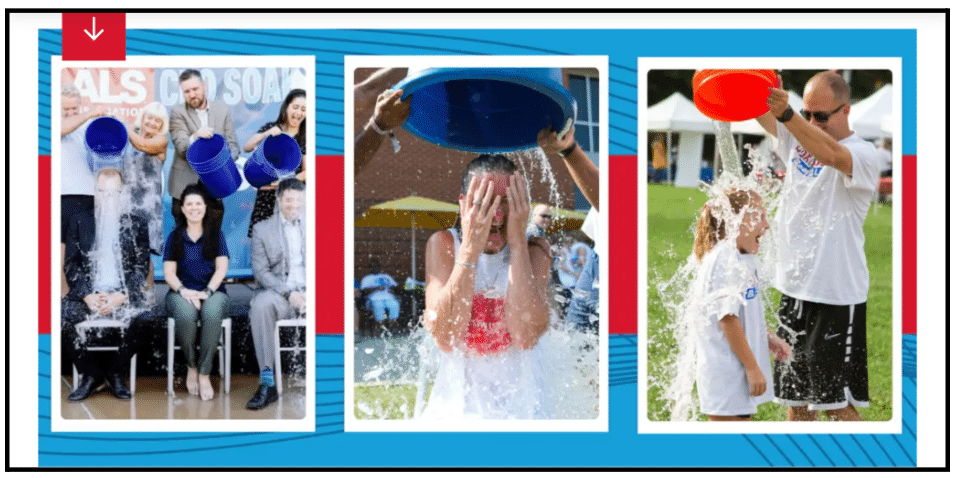
The ALS Ice Bucket Challenge worked because it was simple and easy to share. It started small and spread through Facebook and local news. It recruited almost everyone from teenagers to retirees. Harvard Business Review analyzed its success and identified social proof, clear instructions, and easy replication as key factors.
Spotify Wrapped: Personalization that sparks cross-generational sharing
Spotify Wrapped lands every December with personalized stories that feel native to social feeds but also work in email. It’s playful and personal, which helps it work for younger listeners and older music fans rediscovering old favorites. Spotify has documented the program’s growth and cultural impact.
What these campaigns share:
- A universal human hook
- Formats and tones matched to each platform
- Participation that feels authentic, not forced
- Measurement that guides real-time adjustments
The Future of Multigenerational Messaging
Generational boundaries will keep moving:
- Gen Z won’t stay young forever.
- Boomers will keep influencing high-consideration purchases.
- Platforms will evolve.
- Short videos will change form.
- Search will incorporate more AI.
- Audio will stick around.
Personalization at scale matters now. However, privacy and trust matter more.
Take AI as a tool, for instance, that could help deliver age-appropriate variations without manual overhead. The brands that do well will be the ones building flexible message frameworks now. Sure, AI can help deliver variations at scale. However, you need the right structure first.
In practice:
- Building modular messages with components you can swap by audience and channel
- Training teams to collaborate across communications, creative, media, and analytics rather than working in sequence
- Maintaining one source of truth for performance data so decisions happen faster and stay consistent
Wrap Up
Connecting with multiple generations doesn’t require chasing every trend or fracturing your story. It requires finding what’s human at the center of your message. It’s adapting delivery so different people feel like you’re talking to them specifically.
Start by listening. For one, test your ideas with real people. Likewise, keep the message steady while formats flex. Lastly, make sure every channel feels like part of the same story. Just told in a way that fits where people already spend time.
Good multigenerational work takes patience and attention. It also produces stronger results than blasting the same thing everywhere and hoping something sticks.
Need help creating multigenerational messages for your PR campaign? Consider working with Agility PR Solutions using its robust AI-powered platform. To speak with an expert today, schedule a demo!