
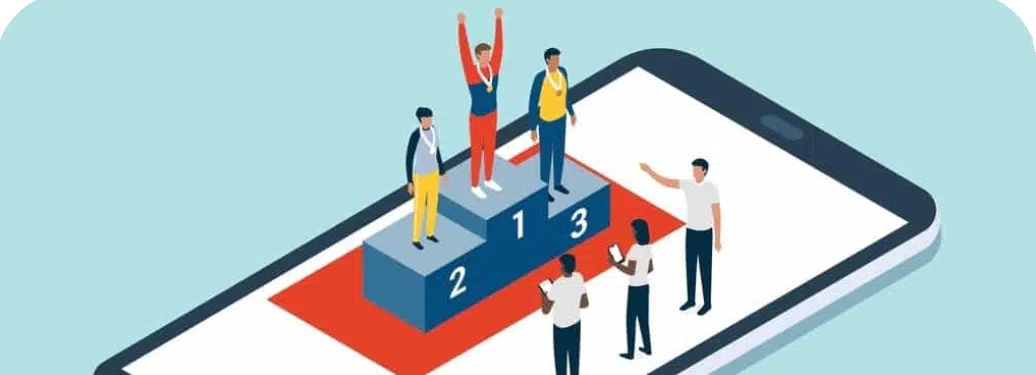
PR practitioners should face the facts regarding mega sporting events sponsorships: Immediately after they are over the media forgets about them.
Arguably, the two prime examples in the U.S. are the Super Bowl and the Olympics. And they have a lot in common: It costs millions of dollars for the brands to be able to say “proud sponsor;” there are so many sponsors that brands ‘messages are lost in the clutter; positive earned media in consumer news outlets is minimal, if any, and immediately after the last play of the Super Bowl and after the president of the International Olympic Committee (IOC) calls for the youth of the world to gather, wherever the next games will be held, the media turns to covering the big four American sports – football, baseball, basketball and hockey. And that’s a fact, not my opinion.
As the sports marketing guru for 35 years at two public relations shops—Arthur Cantor/Advance Public relations for 11 years and almost 25 years at Burson-Marsteller (during the days when it was the leading international public relations agency)—I advised on athletes to be used as brand publicity spokespersons, helped develop the creative for sports marketing accounts and managed or played key roles in mega sports marketing events, like the Super Bowl, Winter and Summer Olympics, Asian Games and baseball’s All-Star game during the days when Gillette was the sole sponsor of the event.
I also traveled the world as media advisors to Australian and South Korean government officials who were involved in the Olympics, played a key role as a media trouble shooter during the 1988 Seoul Olympics and was a lecturer for the IOC about media coverage.
And while I feel that the Olympics is the most important of any sports event, in good conscience when clients would ask my opinion about what sports would bring them the best bang for their bucks, I would say baseball, basketball and football, because, unlike the Olympics, those sports are covered throughout the year in the U.S. and a well-crafted PR publicity program could result in substantial ongoing positive earned media for the client.
I felt that way because it never made sense to me why brands would spend millions of dollars on the Super Bowl, and particularly on Olympics sponsorships, without allocating a small percentage of money for programs that can keep the brands’ Olympic connection in the news long after the games were over.
The summer Olympic games in Los Angeles are still more than two years away. It’s not too late for brands to craft programs that will lengthen their Olympic association.
A few “no brainier” examples:
1 — Youth organizations are always looking for tie-ins.
What to Do: Have Olympians conduct clinics with various youth groups in different parts of the U.S. Why And How It Would Work: This type of program would generate national and local coverage if rolled out correctly. Because of its structure it can be covered by print and TV outlets. Announcing the schedule of events and the athlete(s) who would conduct the clinics would receive national coverage. Local coverage would be assured, with possible additional national coverage, on the days of the clinics.
2 — Get that degree scholastic program
What to Do: This is a take-off of the above program with the addition of an Olympian talking about the importance of a good education after the clinic. Why And How It Would Work: If conceived correctly, a program of this type could receive media coverage in various sections of news outlets with sports, feature, education reporters and general columnists. A former or present Olympian who became a teacher would be the ideal spokesperson for this program, or an Olympian who could talk about how his/her education prepared the person for life after sports. An Olympian who became a teacher would be preferable, but is not necessary.
3 — Fitness program
What to Do: Unlike the other programs, this one would not require a clinic, but if desired one can easily be included. Why And How It Would Work: Youth obesity in the U.S. has always attracted news coverage. Having an Olympian(s) talk to youth groups in various sections of the U.S. about the necessity of eating healthy and working out would give this program a local and national facet.
4 — Clients wanting a direct business tie-in
What to Do: Hold youth clinics at various cities throughout the U.S. in the afternoon. In the evening, have an Olympian attend a dinner with the client’s invited guests. Why And How It Would Work: The youth clinics would attract media coverage and the dinners would give the client an opportunity to meet and further cement ties with customers.
5 — Make your client the go-to news site for Olympic news
What to Do: This more ambitious program would be establishing an “XYZ Corp. Olympic Information Bureau” that would provide on-demand, pre-canned, but “exclusive in your state” interviews with Olympians and Olympic hopefuls. Why And How It Would Work: Interviews would be offered exclusively to newspapers in locations where the athletes reside, providing a local news angle. This should appeal to midsize and smaller newspapers and TV and radio stations that have a limited staff. To keep the cost of the program from skyrocketing, Olympians from lesser covered sports could be featured. A program of this type could have many heads. 1) It should be rolled out between Olympic Games as exclusive (for a set amount of time) to small and midsize news outlets. 2) A few weeks prior to the Olympics being covered daily, canned interviews should be distributed in conjunction with the U.S. Olympic Committee to all U.S. accredited journalists, print, radio and TV, so it can be used as filler material. 3) Many midsize newspapers in major markets that send a staffer to cover the Olympics only report on the competitions between athletes. Some of these reporters never cover an event in person. They rely on coverage being televised in press centers and by attending press conferences. Selected newspapers can be offered exclusive feature stories written by freelance sports writers. 4) Exclusively produced video news releases can also be offered to selected TV stations. A program of this type gives the client an opportunity to cherry-pick which element(s) to bankroll. But for a major Olympic sponsor that spends countless millions of dollars prior to and during the Olympics, funding all the facets would be considered chump change.
6 — Taking A Stand
Publicly asking the IOC not to award its propaganda–rich games to totalitarian countries would also generate positive coverage and help the brand break through the clutter of other sponsors. Doing so would elevate a brand to a leadership position, generating positive publicity for as long as the brand wants, and most likely receive positive references in sports and political columns.
Unlike European countries where the Olympics are covered year-round, they receive minimal, if any coverage in the U.S. until shortly before the games commence.
And what little coverage there is prior to the start of the competitions is about protests and other negative happenings. Missing is the earned positive coverage of sponsor’s promotions in broad range consumer news outlets. Coverage of promotions are greatly limited to trade pubs. And that was true in the recently concluded Milan-Cortina Winter Olympics in Italy.
But it’s possible for brands to lengthen their Olympic connection by crafting an after the games publicity program. And savvy PR practitioners should be able to craft one without using major Olympic stars, thus reducing the costs.
In particular, I would advise clients not to use Lindsey Vonn, Ilia Malinin or any of the U.S. athletes who were attacked by President Trump for speaking out as spokespersons. On one hand, arranging media interviews for them would be as easy as taking candy from a baby. Conversely, the resulting stories would be about their experiences at the just concluded Olympics, with no sponsor talking points and probably a few words saying, “So and So is a spokesperson for the XYZ Company.”
From experience, I know that many PR practitioners feel that would make the story a success. I don’t. How that helps a brand is a puzzle to me. At the minimum, a story should include at least one client talking point to be considered successful. And that means using an Olympian, or a nonathlete affiliated with the Olympics, who is a natural fit for the client’s product, which I have done many times.