

‘The best way to find out if you can trust somebody is to trust them.’ – Ernest Hemingway
Few words capture the quiet intensity at the heart of the land use discussions better than Hemingway’s writing. For PR teams, trust plays a central role in shaping public perception, media narratives, and stakeholder response in land-use discussions.
Farmland is more than a production facility for the agricultural sector. It is also a symbol of culture, nature, and politics. This makes agricultural land use a complex and sensitive area for public relations professionals to manage.
What this means for PR professionals is a very specific communication challenge. It is not only about explaining a project or defending a policy. It involves managing public expectations, community relationships, and long-term credibility. It reflects people’s connection to the land they live on. Memories, livelihoods, heritage, food security, wildlife, and climate concerns are all closely tied to these discussions. When communication is unclear or incomplete, trust can erode quickly and lead to reputational risk.
This complexity makes agricultural land use a valuable context for examining modern public relations practices. It requires structured stakeholder engagement, transparent communication, and a strong focus on trust-building. PR teams that manage these dynamics effectively often apply the same principles across other sensitive public-facing projects.
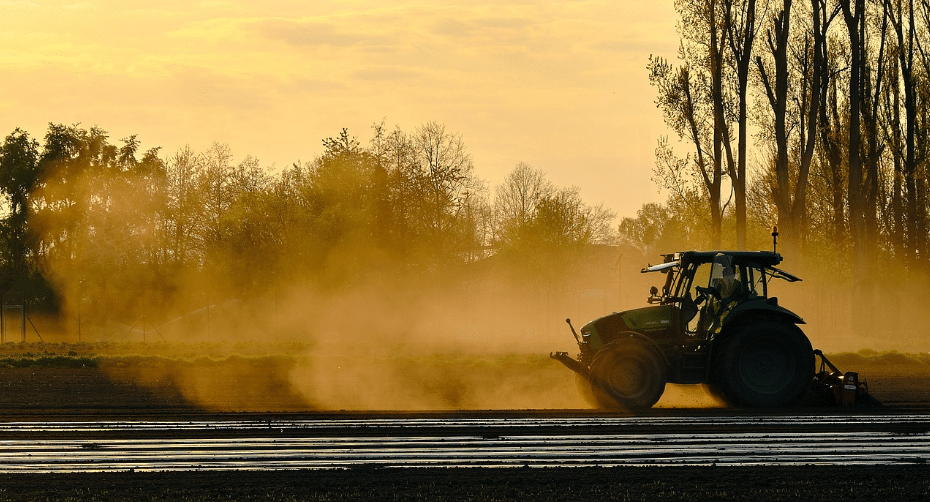
Planning policy, protected land, and why perception matters before a single brick is laid
Protected countryside is a highly emotive issue in England from both a legal and public perception perspective. The Green Belt is widely viewed as land that should remain untouched. This perception exists independently of policy detail and strongly influences public reaction to development proposals.
However, policy is not as straightforward as the headlines would indicate. The national planning policy framework up to 2024 and 2025 recognizes the Green Belt as being highly protected, although it does specify when development may be considered acceptable. Green Belt planning permission, obtained with the help of LandTech, can help you overcome any obstacles you may encounter.
Brownfield sites, exceptional circumstances, infrastructure requirements, and selected developments may be the keys to doors that people don’t know exist. For the PR side of things, this is important as it allows a story to be created as opposed to reacting.
If the general public hears the word Green Belt, they automatically assume nothing ever happens in these areas. And when they learn that certain development is legal, they feel deceived, even if the process was legal. Communication about the meaning of protected land, the changes in the new policy, and why the land meets these criteria prevents this feeling of being deceived.
Perception begins early. Now that a project is labeled as a threat to the countryside, it becomes quite difficult to reverse that perception.
Why agricultural land triggers deeper emotional responses than most infrastructure projects
If you place a wind farm, solar park, logistics hub, or housing estate in an area of industrial land, you will have debates. And if you put it in an area of farmland, you will have identity politics.
The PR department often underestimates how quickly these layers accrue. One project can ignite concerns about local flooding, national autonomy, biodiversity, and land grabs all at once. You have to talk about all the things that concern people, not just the regulatory or economic aspects.
It’s for this reason that land use battles with the farming community can’t be won with facts alone. Facts can be helpful, but stories mean even more. People want to see that their values are being taken into consideration, not just hear the reasoning behind why the data indicates that the location is good.
Trust, not spin, is the currency of modern land-use communication
In the old days, many firms operated land use PR as if it were a kind of defense strategy. You release your announcement, point out the errors, and then simply wait for the storm to pass. Well, that’s not how it’s done anymore.
Social media, the activist networks, and the chats about community planning have made the information environment into a two-way street. Folks want to be part of the conversation, not just managed. If you are going to try to steer the story without addressing the issues, you are going to be labeled as corporate spin.
But for agricultural land, the gap is even wider. The people in the area know the land quite well. They walk on it, farm it, or have a family connection to the land. The government’s message has to align with the people’s experience. Otherwise, the message lacks credibility.
Effective PR in this context is more about stakeholder diplomacy than about the media. It entails:
- Listening before talking
- Addressing the worries rather than ignoring them
- Sharing uncertainty if it exists
- The truth about trade-offs
This by no means is abandoning an initiative. It’s rather an understanding that the source of legitimacy is not what is delivered but how it is decided and justified.

The sustainability paradox and how it complicates the story
Many current development proposals for the use of the land are touted as being green. Solar parks, rewilding, and low-carbon housing developments all contribute to the green agenda. However, when they also include agricultural land, they face objections for removing the land from agricultural use.
This creates a paradox of sustainability that PR professionals have to manage. You have climate change objectives and renewable energy aims on the one side. Then you have soil, agriculture, and food chains on the other side.
The biggest mistake that communicators make is to treat it like this is just a ‘choose between progress and backwardness’ situation. This would just drive away farmers, rural communities, and anyone else who cares about food security.
The way to do this is to recognize the tension and describe how it is being resolved.
For instance, projects that combine solar energy, grazing, biodiversity corridors, or soil rejuvenation have a more convincing sustainability narrative than projects that use land as a one-off resource. Even if there are trade-offs, acknowledging them inspires greater confidence than ignoring their existence altogether.
Media dynamics in land-use disputes
Journalists pitch land stories because they are visual, full of human interest, and politically charged. ‘Save Our Countryside’ signs are more compelling than land-use maps. Public relations professionals should understand the implications of this for the coverage they receive.
The local press can often be found fighting on the front lines. Journalists are embedded within the community that is affected by developments and are aware of the power dynamic. National media could have larger narratives that encapsulate the story.
This is what a smart communications plan does. It prepares for both. It gets local voices who support the project or who would personally benefit from it, and voices who are experts and who know how to frame it in a bigger context. It makes sure that technical speak is interpreted in a way that people can grasp.
If the only voices that reach the journalists are those of angry residents and corporate spokespersons, the story will be polarized. It is when farmers, ecologists, or community leaders are brought in that the tone shifts.
Visual communication: maps, photos, and why they matter more than press releases
Agricultural land is visual. People care what it looks like. Aerial photos, field boundaries, hedgerows, floodplains, and wildlife corridors all tell a story in a way text never can.
Modern PR teams increasingly rely on mapping tools, satellite imagery, and visual simulations to show what a proposal really means.
We all know the saying that a picture is worth a thousand words. Imagine how a simple before-and-after visual can defuse rumours faster than a thousand words. So can showing where development is not happening. In many disputes, people imagine the worst because they cannot see the plan.
Interactive maps, short explainer videos, and site walk-throughs give the public something concrete to react to. That shifts the conversation from abstract fear to specific, solvable concerns.
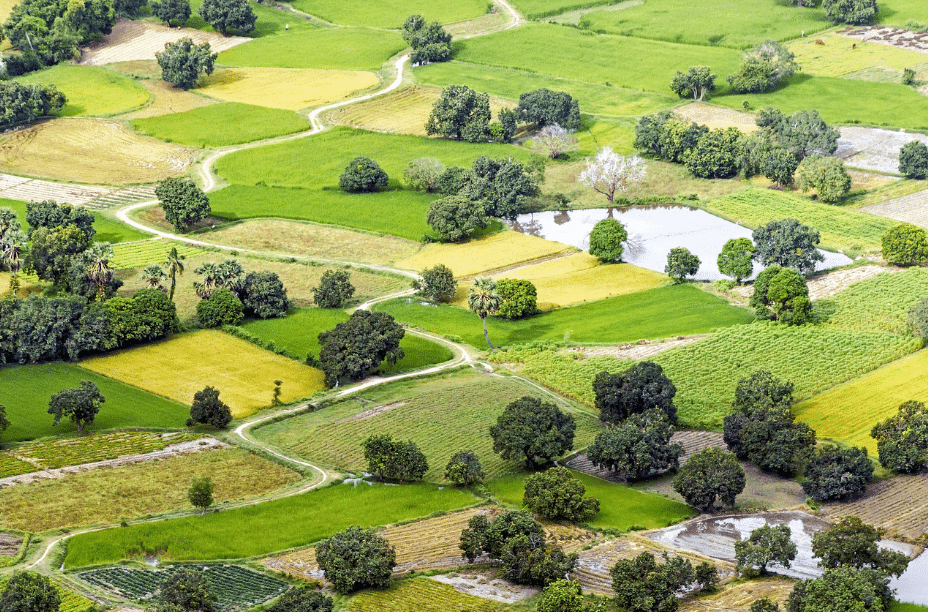
Why agricultural land is the ultimate stress test for public relations
The thing is that agricultural land combines policy complexity, emotional attachment, environmental stakes, and economic pressure in a single space. It exposes every weakness in how organisations communicate. And if PR can work here, it can work anywhere.
This is the field of work where PR can show its true colors, so maybe not to use persuasion at any cost, but to show and manage trust, understanding, and legitimacy.
For sophisticated professionals, this is not a burden. What’s more, some people take this as an opportunity. Projects that are transparent, grounded in data, visually clear, and genuinely attentive to public values can move forward with far less conflict.
The fields may be old, but the way we talk about them has to be modern.