

Public relations teams have never had more data at their fingertips. A modern PR dashboard can track everything from media mentions and sentiment to reach, engagement, and PR metrics that help demonstrate campaign performance. These insights make reporting faster and more accessible, giving teams a clear snapshot of what happened across multiple channels. Yet despite this abundance of information, many communications professionals still struggle to answer the questions that matter most to leadership: Why did a campaign succeed? Which conversations actually influenced perception? And what should the team do next?
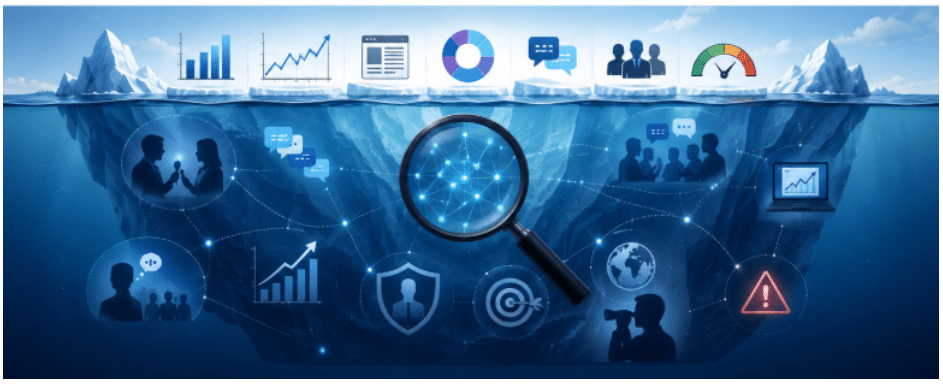
The challenge is that dashboards are designed to report activity, not explain it. They highlight trends and performance indicators, but they rarely capture the context behind changing narratives, evolving journalist interests, or subtle shifts in audience trust. That’s where meaningful analysis begins. By combining media monitoring with critical thinking and a broader understanding of the communications landscape, PR teams can uncover insights that charts alone cannot reveal. The most valuable decisions rarely come from watching numbers move—they come from understanding the stories those numbers are trying to tell.

Dashboards Show Activity—Not Understanding
A PR dashboard is an essential reporting tool because it brings large volumes of communications data into one place. Teams can quickly review coverage volume, media reach, engagement trends, share of voice, and other PR metrics without manually collecting information from multiple sources. This visibility helps monitor campaign performance and identify noticeable changes over time. However, the value of these metrics depends on how they are interpreted.
For example, a spike in media mentions may appear positive at first glance, but the numbers alone cannot explain what caused the increase. Was it driven by a successful announcement, an industry-wide discussion, or unexpected criticism? Likewise, higher engagement does not automatically indicate stronger credibility or improved brand perception. A dashboard records outcomes, but it rarely explains the circumstances, motivations, or conversations behind them.
This distinction is important because effective public relations relies on understanding patterns rather than simply tracking performance. While dashboards answer the question of what happened, they are less equipped to explain why it happened or what should happen next. Turning data into meaningful insight requires analysis, industry knowledge, and the ability to connect individual metrics to the broader communications landscape rather than viewing each number in isolation.
Context Is the Missing Layer Behind Every Metric
Numbers become valuable only when they are viewed in context. Without that additional layer of understanding, even the most detailed PR dashboard can create an incomplete—or even misleading—picture of performance. A report showing hundreds of media mentions may look impressive, but it does not reveal whether the coverage reached the right audience, reinforced key messages, or contributed to long-term reputation goals.
Context answers the questions that raw data cannot. It considers factors such as industry trends, competitor activity, the timing of a campaign, and the broader news environment. For instance, a drop in coverage might seem concerning until you realise the entire industry experienced lower media attention during a major global event. Likewise, a modest increase in coverage may represent a significant achievement if it came from high-authority publications that influence decision-makers rather than generating large volumes of low-impact mentions.
This is where thoughtful communications analysis goes beyond reporting.. Instead of evaluating metrics in isolation, successful teams connect them to the circumstances surrounding each campaign. They examine how narratives are evolving, whether journalists are engaging with the intended message, and how audience conversations are changing over time. When context becomes part of the analysis, data shifts from being a collection of numbers to a source of strategic insight that supports better communication decisions.
Why PR Dashboards Often Miss Early Reputation Signals
One of the biggest limitations of any PR dashboard is that it primarily captures established outcomes rather than emerging risks or opportunities. By the time a noticeable change appears in coverage volume, sentiment, or engagement, the underlying shift has often been developing for weeks. Reputation rarely changes overnight. It evolves through a series of small signals that are easy to overlook when teams focus only on headline performance indicators.
These early indicators can take many forms. Journalists may begin asking different questions during interviews, customers might repeatedly raise the same concern across multiple channels, or industry conversations may gradually move towards topics where a brand has little visibility. Competitors could start shaping a new narrative before it appears in mainstream coverage, while influential voices begin discussing issues that have not yet reached wider audiences. Individually, these developments may seem insignificant, but together they often reveal where public perception is heading.
This is why effective media monitoring extends beyond tracking mentions and measuring performance. It involves recognising patterns, identifying recurring themes, and understanding how conversations evolve before they become measurable trends. Teams that pay attention to these leading signals are better prepared to adjust messaging, strengthen relationships, and respond proactively instead of reacting after reputation shifts have already become visible on the dashboard.
The Questions Every PR Team Should Ask Beyond the Dashboard
Strong PR reporting begins when teams stop asking, “What do the numbers say?” and start asking, “What do the numbers mean?” A PR dashboard provides valuable visibility into campaign performance, but it should be the starting point for deeper investigation rather than the final source of answers. The most effective communications teams use metrics to guide better questions, not to replace critical thinking.
For example, instead of celebrating a rise in media coverage, ask which publications reached the audiences that matter most. Rather than focusing only on sentiment scores, examine which topics consistently generated positive or negative reactions and why. If journalist engagement declined, consider whether the story lacked relevance, the timing was poor, or competing news overshadowed the announcement. These questions reveal insights that standard reports often overlook.
Teams should also evaluate whether key messages remained consistent across coverage, which narratives gained momentum, and how competitors influenced the broader conversation. Looking beyond individual PR metrics helps uncover patterns that can shape future campaigns instead of simply measuring past performance. When organisations regularly combine reporting with thoughtful analysis, PR analytics becomes a decision-making tool rather than a historical record, enabling communications strategies that are more informed, adaptable, and aligned with long-term business objectives.
Connecting PR Data With Business Outcomes
Communications leaders are increasingly expected to demonstrate how PR contributes to wider organisational goals, not just media visibility. While a PR dashboard can effectively report campaign activity, executives often want to understand whether that activity influenced business performance. Media mentions, impressions, and engagement provide useful indicators, but they rarely explain how communications efforts affected trust, customer behaviour, or strategic decision-making.
This is where connecting communications data with broader business data becomes essential. For example, a successful media campaign may coincide with increased website traffic, stronger branded search interest, higher-quality enquiries, or improved executive credibility within the industry. In other cases, positive coverage may support recruitment efforts, strengthen investor confidence, or reinforce customer loyalty, even if those outcomes are not immediately reflected in traditional PR reports. Looking at these relationships provides a more complete picture of communications value.
Achieving this level of insight requires collaboration across departments rather than relying on communications data alone. By combining media monitoring with marketing, sales, customer experience, and business intelligence, PR teams can identify how narratives influence real organisational outcomes. Instead of presenting isolated metrics, they can demonstrate how strategic communication supports measurable business objectives, making PR reporting more relevant, credible, and valuable to leadership.
Human Insight Is Still the Most Valuable Analytics Tool
Advances in automation have made it easier than ever to collect, organise, and visualise communications data. Today’s PR dashboard can process thousands of media mentions, identify sentiment trends, and generate reports within minutes. These capabilities save valuable time and allow teams to monitor campaigns at a scale that would be difficult to achieve manually. However, even the most sophisticated technology cannot fully replace human judgement.
A dashboard can highlight an unusual spike in coverage, but it cannot always determine whether that attention reflects growing trust, temporary curiosity, or the beginning of a reputational challenge. Similarly, AI-powered analysis may identify recurring themes, yet experienced communications professionals are better equipped to recognise subtle changes in tone, understand industry dynamics, and evaluate how different stakeholders are likely to interpret a story. These qualitative insights often influence strategic decisions far more than individual quantitative measurements.
The strongest communications strategies combine technology with expertise rather than treating them as alternatives. Automation handles data collection and reporting efficiently, while human analysis provides context, asks better questions, and identifies opportunities that numbers alone cannot reveal. When organisations pair advanced PR analytics with experienced strategic thinking, they move beyond simply measuring performance and begin making smarter, more informed communication decisions.
Human Insight Is Still the Most Valuable Analytics Tool
Advances in automation have made it easier than ever to collect, organise, and visualise communications data. Today’s PR dashboard can process thousands of media mentions, identify sentiment trends, and generate reports within minutes. These capabilities save valuable time and allow teams to monitor campaigns at a scale that would be difficult to achieve manually. However, even the most sophisticated technology cannot fully replace human judgement.
A dashboard can highlight an unusual spike in coverage, but it cannot always determine whether that attention reflects growing trust, temporary curiosity, or the beginning of a reputational challenge. Similarly, AI-powered analysis may identify recurring themes, yet experienced communications professionals are better equipped to recognise subtle changes in tone, understand industry dynamics, and evaluate how different stakeholders are likely to interpret a story. These qualitative insights often influence strategic decisions far more than individual PR metrics.
The strongest communications strategies combine technology with expertise rather than treating them as alternatives. Automation handles data collection and reporting efficiently, while human analysis provides context, asks better questions, and identifies opportunities that numbers alone cannot reveal. When organisations pair advanced PR analytics with experienced strategic thinking, they move beyond simply measuring performance and begin making smarter, more informed communication decisions.
Conclusion
A PR dashboard remains an essential tool for measuring communications performance, but it should never be mistaken for the complete picture. Dashboards make reporting more efficient by organising data and highlighting trends, yet they cannot explain every shift in public perception or reveal the strategic decisions that will shape future outcomes. The real value of reporting comes from interpreting the information rather than simply presenting it.
As communications becomes more data-driven, organisations that rely only on surface-level PR metrics risk overlooking the insights that influence long-term success. Context, emerging reputation signals, audience behaviour, and business impact all require analysis that goes beyond automated reports. By combining robust media monitoring with critical thinking and informed judgement, PR teams can uncover opportunities, identify risks earlier, and make decisions with greater confidence.
Ultimately, the goal is not to build a dashboard that tracks every possible metric, but one that encourages better questions and supports smarter decisions. The strongest communications strategies are driven by insight, not information alone. When data is paired with context and expertise, reporting evolves from a record of past performance into a valuable resource for shaping future PR success.