

PR thrives on communication. But many teams still run into hiccups when it comes to giving and receiving important feedback.
Feedback often comes too late, too harshly, or not at all. And in an industry built on messaging, that’s an ironic and costly problem.
A strong feedback culture helps your PR pros refine ideas faster and manage crises more effectively.
Here’s how to approach feedback the way a good communicator should:
1. Focus your feedback on what they can actually influence
Feedback only helps when it’s tied to someone’s current responsibilities. (Skip vague critiques and focus on what they can act on.)
For example, if you’re working with a travel CT tech on an important story, tell them exactly which quotes need clarification or which facts need checking. Don’t critique their unrelated writing style. Specific, actionable guidance is what helps your PR initiatives improve without wasting anyone’s time. And strengthens employee engagement and performance.
2. Lead with purpose
Start every feedback conversation with a clear, original goal. This is important when giving constructive criticism.
Are you trying to strengthen campaign strategy? Improve collaboration? Tighten messaging?
Tie your communication back to a PR objective. Purpose-driven feedback helps people understand the “why,” which can help increase their intrinsic motivation and accountability.
3. Be careful with tone
The same tone you’d use to preserve a brand’s reputation applies here, too. Use precise language, avoid defensiveness, and aim to build each other up — not hurt feelings.
If you’re giving critical feedback after a press release missed the mark, don’t say “This didn’t meet expectations.” Ouch! A better approach is, “Can you edit the release so it highlights the client’s key message? Here’s what we’re looking for …”
This helps feedback land softer and gives PR reps clear guidance they can act on now. It’s a form of reframing that prevents shaming and improves team culture.
4. Time it right
Feedback loses its impact when it’s delayed. If you wait weeks to discuss a campaign issue, the learning moment doesn’t feel as relevant, and your reps don’t get the chance to fix the problem in real time.
Make yourself a cheat sheet to know when to give feedback, maybe tied to your performance review or performance cycles.
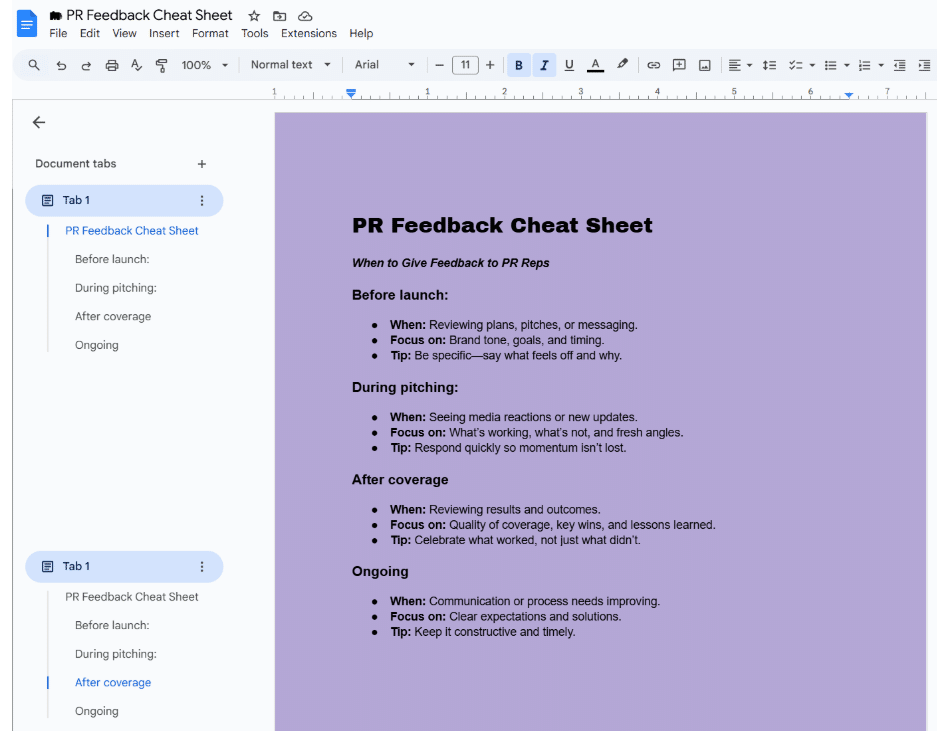
(Image made by Ioana Wilkinson)
Same with when something goes well. Offer positive feedback right away. Don’t wait months to give reps well-deserved kudos.
5. Ground it in evidence
Back up your points with examples, metrics, or campaign data. PR pros respect specifics.
Instead of saying, “The client wasn’t happy” (which just brings down morale), say, “The client noted that our message didn’t match their brand voice. Here’s what we can adjust.”
Sometimes, referencing a specific negative Google Customer Reviews entry can serve as objective data to help the team understand exactly how public perception is shifting. Grounding feedback in facts takes the emotion out of it and focuses the conversation on solutions.
6. Make two-way conversations part of your feedback process
Invite dialogue to uncover more context and challenges.
When you ask for input, you give people ownership over their improvement. You also help build mutual respect, which can help boost motivation so your employees fix the problem.
For example:
- “What do you think we can do to help?”
- “What resources do you need?”
- “What have you tried so far?”
- “What happened with X?”
Such peer feedback sessions can even reveal deeper communication gaps or conflict early on.
7. Normalize ongoing feedback loops so everyone’s treated fairly
The best PR teams make feedback part of the workflow — from post-campaign reviews to client check-ins. (Consistent feedback can help prevent problems from snowballing and keep PR performance steady. It can also build a stronger team culture and create shared accountability for results.)
*Pro-Tip: Hold short weekly performance reviews or monthly feedback sessions. Discuss what worked, what didn’t, and what to test next.
8. Use tools to share and keep a record of feedback
Use internal communications software to create a central space where PR managers and employees can share feedback in real time, for example through tools like Asana, Slack, or other work management platforms.
(You can also use it to help track employee feedback and progress and keep meeting notes organized.)

For example, instead of waiting for the next team meeting, a manager can send constructive notes through the platform to keep the conversation timely and relevant.
(You can also use it to help track employee feedback and progress.)
9. Recognize your own biases before giving feedback
This is SO important.
Before you give feedback, pause and reflect.
Are you reacting to an employee’s performance? Or to your personal preferences or frustrations?
Strive for fairness and objectivity. In leadership roles, your words carry weight. A biased comment can feel like destructive criticism instead of helpful guidance. Always check your mindset first before communicating.
10. Suggest one clear change, not ten
Focus on one actionable improvement that supports their long-term growth. (People tend to retain more when they have one priority. Plus, too many corrections can feel overwhelming.)
Give clear instructions on how to improve, and trust them to follow through — especially if it’s your first time correcting them. For instance, if an employee struggles with client emails, don’t rewrite their messages.
Instead, say, “Let’s focus on tightening the first sentence since it sets the tone for the rest. Here’s an example.”
Again, one clear directive feedback point is easier to apply and repeat.
11. Offer support, not solely correction
I’ve mentioned support a few times, but it deserves its own dedicated section because feedback without support feels punitive. In other words, offer to help someone apply your advice.
Ask questions like: “Would it help to role-play that scenario?”
Or: “Want feedback on your next draft before it goes out?”
This shows that you care about their growth process. It also reinforces the idea that feedback is meant to help someone succeed. Not punish them.
Another helpful tool here is templates.
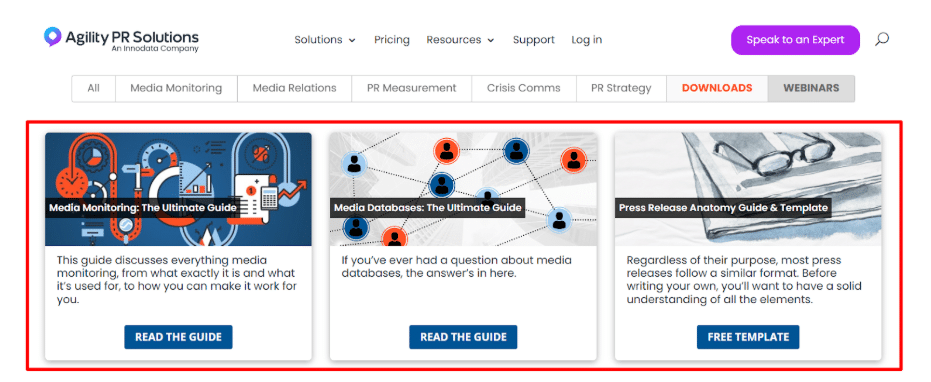
Create scripts, scope-of-work documents, and templates that your PR reps can use to meet your expectations. You can also supply them with ready-made examples. (Keep all of these in one spot so they’re easy to access.)
Wrap up
Feedback is a gift.
In a field built on communication, as a manager, how you talk inside the team defines the impact you make outside of it. A culture of constructive feedback can help your PR pros sharpen storytelling, strengthen relationships, and protect your agency’s reputation.
Speaking of which … need help tracking your agency’s or clients’ reputations?
Use Agility PR Solutions’ media monitoring tools to get insights in real time.
PS: Need a quick checklist for the next time you need to give feedback?
Use this:
Feedback planning and implementation checklist:
- 1. Focus your feedback on what they can actually influence
- 2. Lead with purpose
- 3. Be careful with tone
- 4. Time it right
- 5. Ground it in evidence
- 6. Make two-way conversations part of your feedback process
- 7. Normalize ongoing feedback loops so everyone’s treated fairly
- 8. Use tools to share and store feedback
- 9. Recognize your own biases before giving feedback
- 10. Suggest one clear change, not ten
- 11. Offer support, not solely correction
To your success!