

PR has always moved fast. Campaigns now cross time zones, approvals move between calendars, and a breaking story can arrive while one teammate is starting work and another is signing off. Internal communication now determines whether a team responds together or rebuilds lost context.

Image source: Unsplash
Hybrid teams can hire talent anywhere, respond across longer hours, and distribute workloads more sensibly. Yet distance exposes every vague, brief, undocumented decision and unclear handoff.
This article explains how distributed PR teams can improve alignment, manage asynchronous work, build trust, strengthen culture, and create communication habits that hold up under pressure.
The Evolution Of Internal Communication

Image source: Generated by the author via ChatGPT
If you worked in PR a decade ago, your “internal comms platform” was the bullpen. You walked over to a desk to tweak a pitch, scribbled a headline idea on a whiteboard, and huddled in a conference room when a client called with breaking news. Then PR evolved and went digital, and those habits had to move too.
Jason Ledbetter saw this transition firsthand when he and his team shifted to a hybrid setup.
He says, “We used to walk over to someone’s desk to align on a press strategy. Now that same conversation lives across chat threads, shared docs, and video calls. The medium shifted to digital, and the teams that thrived were the ones who treated those platforms as their new office rather than a temporary workaround.”
Chat, shared documents, and project boards replaced hallway conversations. More voices could contribute in writing, but context also became easier to lose.
Teams that treat their tools as the office record decisions, label final versions, and make updates easy to find. Meetings get shorter, and “Where did that decision happen?” comes up less often.
Challenges Of Hybrid Teams In Distributed PR
Distributed PR leaves little room for communication gaps. A pitch that slips slightly off message can create a morning of unnecessary edits. Hybrid teams often run into trouble in these three areas:
1. Geography and time zones
Hybrid PR teams often lose momentum when work passes between regions. You should implement the follow-the-sun model so progress continues across time zones without relying on late-night shifts. Atlassian describes it as scheduling responsibilities around the daylight hours of teams in different geographic locations. Clear handoffs are still essential, including who owns the task, what has changed, and what needs to happen next.
A useful handoff answers four questions:
- What was completed?
- What changed?
- What remains open?
- Who owns the next step?
Without these details, the next person investigates instead of progressing.
2. Information silos
Context often lives in one person’s head or one private thread. When that person signs off, progress pauses.
Gallup found that 24% of hybrid employees reported decreased team collaboration, 21% experienced weaker working relationships with coworkers, and 18% saw reduced cross-functional communication. These gaps make shared documentation essential, especially when progress depends on context that might otherwise stay with one person.
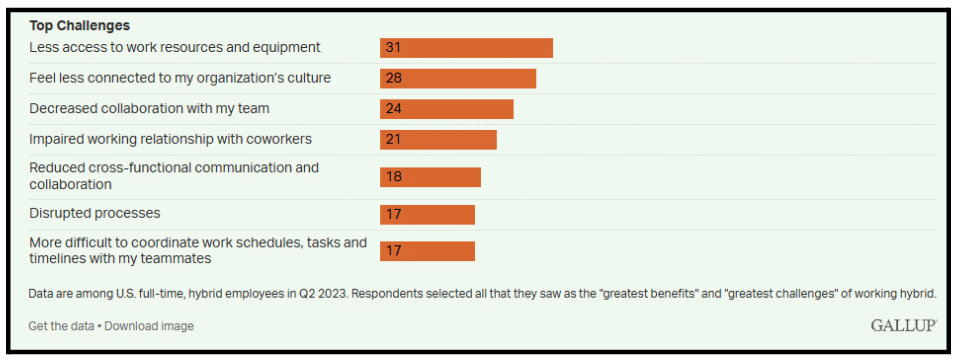
The larger risk is information that cannot travel. A campaign may drift because someone missed why a message changed.
Save accessible briefs, record approvals, and move conclusions out of private chats.
3. Balancing asynchronous and synchronous communication
Too many meetings, and you burn daylight. Too few, and important details can be missed or misunderstood. The trick is deciding what needs a live conversation and what can be handled in writing. Use meetings for discussion and decisions, while routine updates, background details, and follow-ups can usually stay asynchronous.
Before scheduling, ask whether the issue requires debate, sensitivity, or an immediate decision. If not, use a clear written update.
Strategies For Building Alignment In Hybrid Teams
Alignment isn’t a poster on the wall. It’s a rhythm people can feel. In PR, where dozens of micro-decisions shape the story, clarity around what matters most lets people act fast without tripping over each other. Follow these strategies to build stronger alignment across hybrid teams:
1. Alignment comes from rhythm
Run short daily stand-ups and set clearly defined goals every quarter so everyone knows exactly what success looks like. When people understand the shared objective, they make better independent decisions, which is essential when your team is spread across three continents.
That rhythm strengthens PR and communication skills by teaching people to explain priorities, surface risks, and request decisions clearly.
2. Make it concrete
Use a 10–15 minute daily stand-up around three prompts:
- What did I finish?
- What am I doing next?
- Where am I blocked?
Add a weekly planning session and one shared document for absentees. For executive briefings, state the decision, context, risk, and requested action.
3. Connect work to goals
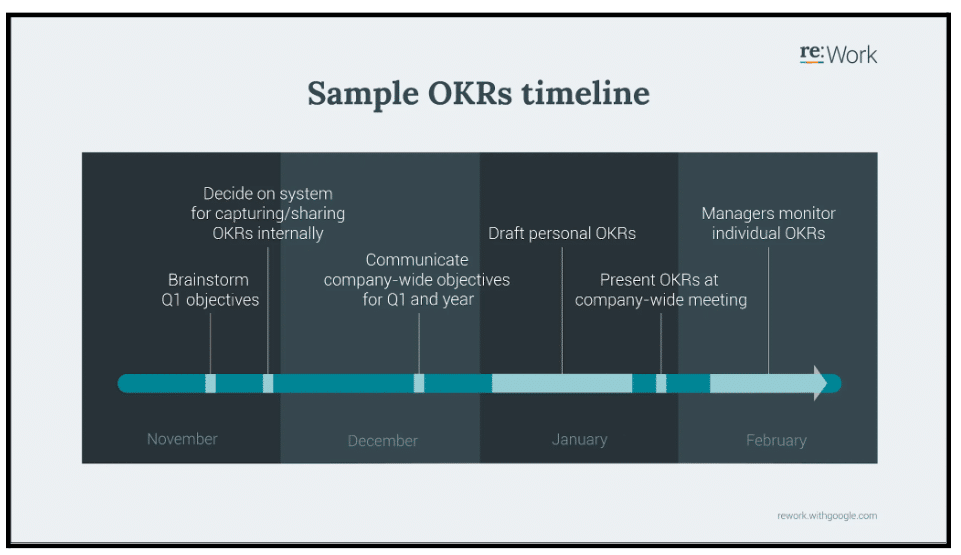
Use OKRs or a similar framework so people can see how each task supports a larger outcome. Google’s re:Work guide explains how to define objectives, create measurable key results, update OKRs regularly, and track progress.
Define “done” for every deliverable:
- Intended audience
- Approved message
- Responsible owner
- Due date
- Review path
This makes work ready for assessment and supports sound decisions while a manager is offline.
4. Centralize tools and decisions
On the tools front, you should have one source of truth for assets and messaging, with version control. Channel and folder naming conventions should make it obvious where work lives. Decision logs should capture key calls, so no one has to chase down why something changed. A simple naming rule helps new teammates find approved assets without relying on someone who may be offline.
Centralization means final information has a clear home. A chat may spark an idea, but the approved message belongs in the campaign brief.
That rule supports enhancing PR workflow. People spend less time checking versions and more time acting on accurate information.
Fostering Trust In Distributed PR Teams
Trust is the remote team’s oxygen. You can operate without it, but not for long. In hybrid settings, people cannot read a room as easily, so leaders have to make the reasoning behind decisions visible and invite honest pushback.
Daniel Apke, Founder of Land Portal, prioritizes visibility and transparency to keep distributed teams aligned and confident in their work.
He puts it simply: “Trust in a hybrid team is earned through visibility. When leaders share the reasoning behind decisions and invite honest feedback, people stop second-guessing and start collaborating. We make a point of celebrating wins publicly too, because recognition is one of the simplest ways to remind a remote colleague that their work matters.”
Here are three practical ways to build trust across a distributed PR team:
1. Share briefs and tradeoffs
Share the brief, the assumptions behind it, and the tradeoffs that shaped the final direction. Open dashboards for campaign health also make it easier for team members to spot problems and ask for help early.
According to the 2026 Edelman Trust Barometer, 75% of respondents say their employer is obligated to build trust, but only 58% believe it is doing well. That 17-point gap shows why transparent briefs, visible tradeoffs, and open campaign data matter.
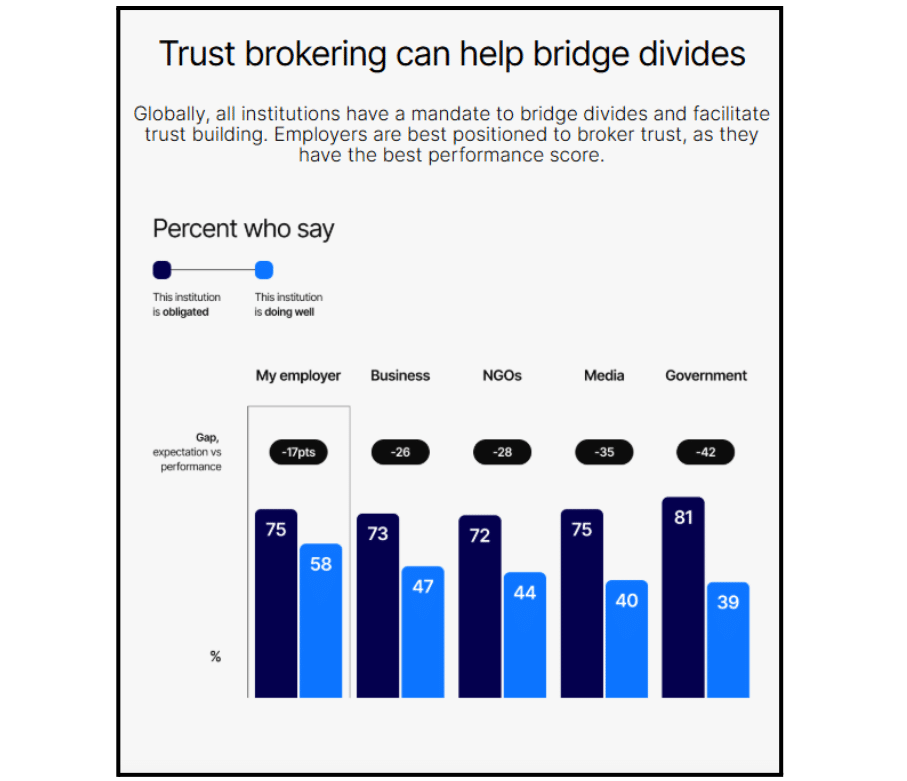
Visibility reduces guesswork and helps people apply the same judgment elsewhere.
2. Set predictable team forums
Schedule AMAs and retrospectives after major launches. Use structured debate when the stakes are high, and make respectful disagreement normal.
Use specific public recognition and peer-nominated kudos. Keep forums predictable so people know where concerns can be heard.
3. Follow through consistently
Trust weakens when leaders ask for input but never explain what happened to it. Close the loop by showing which suggestions were adopted, which were not, and why the final decision was made. Consistent follow-through proves that feedback is taken seriously, even when it does not change the outcome.
A short explanation is often enough. Silence creates doubt and delays useful feedback.
Cultivating A Unified Culture In Hybrid Settings
Culture isn’t what you write. It’s what people feel day to day. The mistake is assuming distance automatically weakens it. It doesn’t. It just makes intention more important.
Culture weakens when expectations remain unspoken, recognition feels uneven, or only the loudest voices shape decisions.
Write down how the team works. Explain speed versus polish tradeoffs, how client surprises are handled, and what happens when an embargo changes. Values become credible when they shape hiring, onboarding, feedback, and everyday choices.
The brand narrative belongs here too. People should understand what the organization says and why its messages matter.
Keep team-building simple:
- Hold a monthly show-and-tell for recent wins.
- Rotate hosts for short coffee chats.
- Share a Friday “headline of the week.”
- Use 20-minute creative prompts instead of elaborate events.
These rituals support storytelling about results, near misses, and lessons.
Using custom frames to recognize milestones or celebrate team successes adds a personal touch that helps remote employees feel connected and appreciated.
At the same time, rotate meeting times, use accessible documents, avoid confusing idioms, write dates clearly, and document decisions promptly.
That consistency matters because culture is learned through repeated small interactions, not formal statements or annual events.
Culture becomes unified when people experience the same standards, not when every office copies the same social activity.
Where This Is Headed
Distributed PR isn’t a trend anymore. It’s just how a lot of good work gets done. The through line is simple: write things down, agree on goals, make trust visible, and practice a steady communication rhythm. Tools will keep evolving, and AI will help summarize threads and draft recaps, but technology can’t replace clarity or care.
The strongest distributed teams will not be the ones using the most tools. They will be the ones that turn good habits into shared systems, so people can act with confidence even when colleagues are offline. That consistency helps teams move faster without sacrificing judgment, context, or relationships.
To turn these practices into day-to-day systems, Agility PR Solutions gives distributed PR teams a shared place to coordinate outreach, track coverage, organize media intelligence, and keep campaign updates visible across locations and time zones.