

Press releases have always been the backbone of brand communication, but now brands are drafting them in unexpected ways.
For example, 75% of PR professionals now use generative AI in their workflows, a dramatic jump from just 28% in early 2023.
But does AI hold up under journalistic scrutiny, or reflect your brand’s voice?
Unfortunately, the answer isn’t so straightforward.
Below, let’s take a closer look at why AI tools are so appealing for press release writing, the advantages they bring, the risks they introduce, and how communicators can blend automation with human expertise.
Why AI is tempting for press releases
PR professionals are under pressure like never before. News cycles move at lightning speed, budgets are shrinking, and there’s little tolerance for delays. Against this backdrop, the appeal of AI is obvious.
AI can produce a draft in seconds with just a short prompt. That means press release writers no longer need to wrestle with the dreaded blank page.
Instead, they can start with a rough framework and refine it into polished copy.
This speed translates into serious efficiency for agencies that juggle multiple clients or in-house teams that handle back-to-back announcements.
AI tools can also generate multiple variations of a press release for different audiences, regions, or platforms, saving hours of repetitive rewriting. This leads to greater scalability, which can make a lean operation appear much larger—perfect for smaller businesses and startups.
What makes AI even more tempting is the rise of AI-powered PR platforms that integrate these capabilities directly into existing workflows. Some solutions combine draft generation with media list building, media monitoring, and distribution. This allows teams to move from idea to polished press release faster than ever.
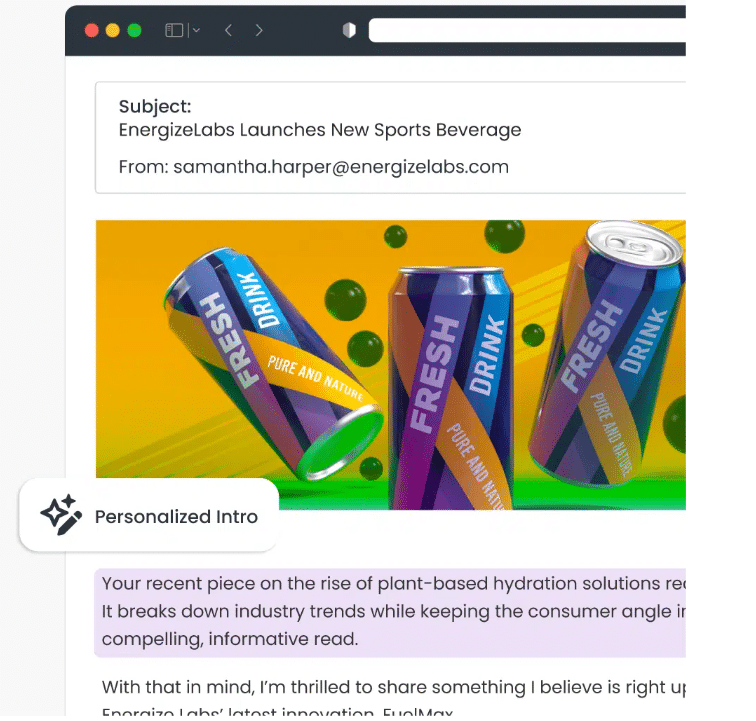
So, communicators can save time on content creation and use AI to optimize every stage of the release process, from tackling content projects to ensuring that content reaches the right audience.
Pros of using AI in PR copy
Many PR professionals use AI tools because they solve practical challenges that arise when drafting press releases under pressure. Here are the main advantages:
Speed
Instead of spending hours building a release from scratch, AI can generate a complete draft in minutes. This allows PR teams to respond quickly to breaking news or announce updates that can’t wait. The faster a draft is in hand, the sooner it can be refined, approved, and published.
Scalability
Brands often need to customize press releases for different audiences, whether that’s trade media, local press, or investors.AI makes it easier to produce multiple tailored versions of the same announcement without having to rewrite it from scratch, which saves valuable time and effort.
Cost efficiency
Drafting releases is a time-consuming process. And time is money. By reducing the time spent on first drafts, AI frees up resources, allowing communicators to invest more energy in PR strategy, technology journalist relationships, and storytelling. This can be especially impactful for teams with limited budgets.
Idea generation
Sometimes the hardest part of writing is just getting started. AI can help overcome the blank page problem by producing a structured draft or suggesting angles to develop. That starting point gives writers momentum and helps teams focus on shaping the message rather than struggling to begin.
Cons of using AI for PR writing
Despite its advantages, relying too heavily on AI for press releases comes with significant risks. Here are the main drawbacks to consider:
Weak storytelling
A good press release both shares facts and frames a story in a way that grabs attention, even by search engines. AI-generated drafts often sound formulaic and miss the nuance or “hook” that makes journalists care. Without a compelling angle, even the fastest draft won’t be suitable for earned media coverage.
Risk of errors
While AI can quickly generate PR drafts for various companies, tfor example, those selling clean cosmetics. These drafts often require human editing and data verification to ensure accuracy, tone, and brand voice. Additionally, PR often involves input from multiple stakeholders across a company, from marketing to legal.
Therefore, revisions can be complex and may require multiple file formats. After approving a draft, a writer might need a tool to edit the PDF text and make final adjustments to your document before distribution. (This can be helpful if you’ve already converted your Google Doc into a PDF document)
Generic voice
Overreliance on AI can make press releases sound flat or indistinguishable from others. A brand’s unique tone of voice is one of its most valuable assets. And if releases lose that identity, they become less engaging for journalists and audiences alike.
Reputation risks
Beyond the copy itself, there’s a bigger question of authenticity. If a brand leans too heavily on AI, it may raise concerns about transparency or suggest a lack of human oversight. Since press releases represent official communications, this can undermine the trust they’re designed to build.
How to use AI for PR without losing the human touch
AI can be a valuable assistant, but it works best when human judgment takes the wheel. Rather than handing over the entire drafting process, communicators should treat AI as a support tool that saves time without replacing expertise.
A smart workflow looks something like this:
- Start with AI, finish with people: Use AI to generate the initial draft or to reframe existing messaging. Have a PR professional refine the angle, tighten the storytelling, and inject brand voice.
- Always fact-check: AI tools are prone to fabricating details. Verify names, dates, statistics, and quotes before releasing any information.
- Protect the narrative: Apply a “journalist lens,” whether you’re working with a medical or technology journalist This involves determining whether the release contains a clear and compelling hook that makes it newsworthy.
- Set internal guardrails: Define when and how your brand allows AI in the press release drafting process. For example, it may be appropriate for brainstorming or first drafts, but not for final approvals or media-facing quotes.
- Maintain transparency: Brands should be mindful of disclosing how they use AI and ensure the final release accurately reflects authentic messaging.
Final thoughts
AI is becoming a routine part of PR workflows. And press releases are no exception. It offers clear advantages in speed, scalability, and cost. But it also introduces risks around accuracy, tone, and credibility.
The most effective use of AI for PR press releases is as a starting point, with communicators applying their judgment to shape the story, fact-check details, and align the message with the brand strategy.
That way, AI supports the work, but doesn’t replace it. This helps PR teams stay efficient without compromising quality.
Level up your PR game with Agility PR Solutions by optimizing your workflow, from content project creation to communication. Get seen by search engines. Speak to our PR professionals today.