
Pollock Communications and Today’s Dietitian have released their 14th annual What’s Trending in Nutrition Survey, revealing the health and food trends shaping consumer choices in 2026. Over 800 Registered Dietitians (RDNs) weighed in on the biggest shifts in wellness, eating choices and functional foods.
Key findings include:
- Protein reigns supreme – Consumers continue to prioritize protein, and brands across all categories are highlighting it. Despite this, RDNs report that consumers are confused about protein. According to the survey, the biggest misconceptions are not knowing how much protein is needed daily, followed by thinking too much protein is needed, showing that many consumers could use guidance on meeting their protein needs.
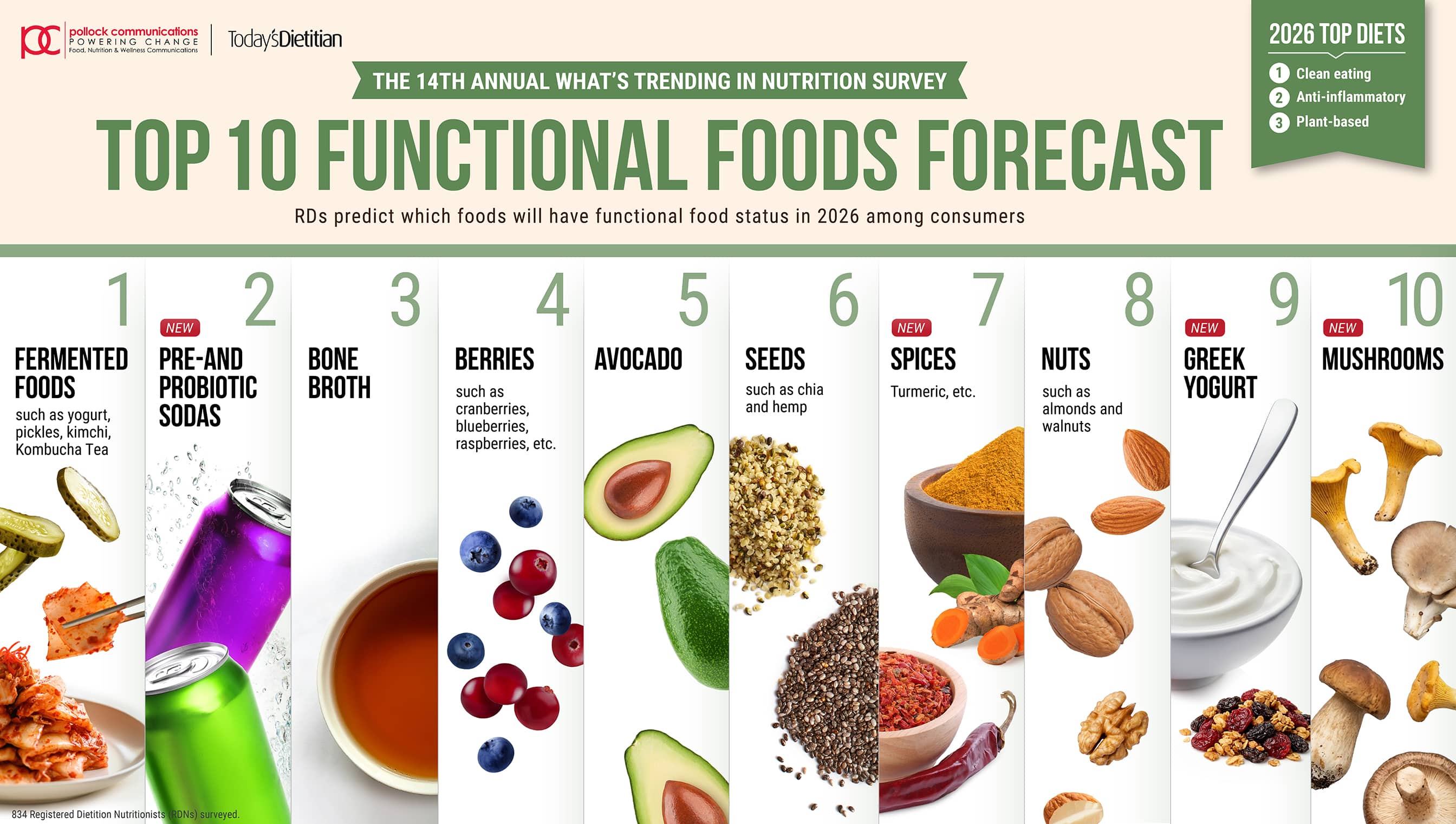
- Functional foods gain momentum – The top functional foods anticipated for 2026 include:
- Fermented foods (yogurt, pickles, kimchi, Kombucha Tea)
- Pre- and probiotic sodas – NEW!
- Bone broth
- Berries (Cranberries, Blueberries, Raspberries, etc.)
- Avocado
- Seeds, such as chia and hemp
- Spices (Turmeric, etc.) – NEW!
- Nuts such as pistachios, almonds and walnuts
- Greek yogurt – NEW!
- Mushrooms – NEW!
- Clean eating tops the list – Clean eating is predicted to be the #1 eating pattern for 2026, replacing intermittent fasting which held the top spot in 2025. Anti-inflammatory diets rank #2, and plant-based eating holds #3.
- Affordability drives choices – With rising prices, shoppers are looking for value while still prioritizing personal health goals. RDNs report that the top three factors influencing food purchases are affordability and value, emotional well-being/comfort and gut health support.
- Gen Z leads the wellness charge – Gen Z has surpassed Millennials as the most health-conscious generation, showing how younger shoppers are influencing today’s wellness trends and lifestyle choices.
- Pre- and probiotic beverages gain attention – Prebiotic and probiotic sodas may be everywhere, but RDNs report that they view these products as mostly marketing with little proven benefits, somewhat beneficial followed by unsure/need more research.
- Social media shapes health decisions – TikTok has overtaken Instagram as the top source for nutrition information, but is also listed by RDNs as the leading source of misinformation, with consumers often relying on celebrities and influencers for dietary guidance.