

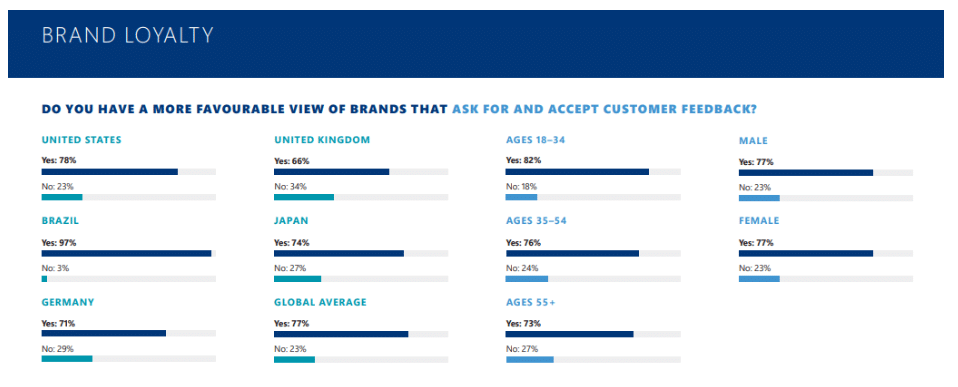
Customer feedback is gold. They are real voices from customers that tell you how helpful your product really is, where it’s lagging, and how best to fix it. According to Microsoft’s 2017 State of Customer Service report, 77% of consumers prefer brands that solicit feedback and act on it.
However, most feedback lives in support tickets and survey dashboards. A customer complains of a lagging page on your store’s mobile app. Your technical support team steps in and works with the technical department to resolve the issue.
That’s all. The feedback ends there.
You want something different and more effective? Turn the feedback into a story highlighting how a customer noticed something wrong, how you moved in to quickly fix it, and how the end result benefits everyone. This approach tells customers their voice matters and becomes your brand’s PR.
In this article, we’ll share practical steps on how to do that.
Why Customer Feedback is Important
Customer feedback is any input from your customers that tells you what they think and feel about your product, service, or experience. Collection points often include surveys, reviews, community comments, emails to your CEO, support chats, user interviews, and star ratings.
It might even come from a “this could be better if…” suggestion your sales team hears every day. Other channels include social posts when your customers take to social media to air their grievances or share positive reviews of your services.
According to Spiegel Research Center, displaying reviews or feedback can boost conversions up to 270%, especially for lower-priced items and newer products. Moreover, 74% of consumers now read online reviews when evaluating local businesses, according to BrightLocal’s 2025 consumer review survey.
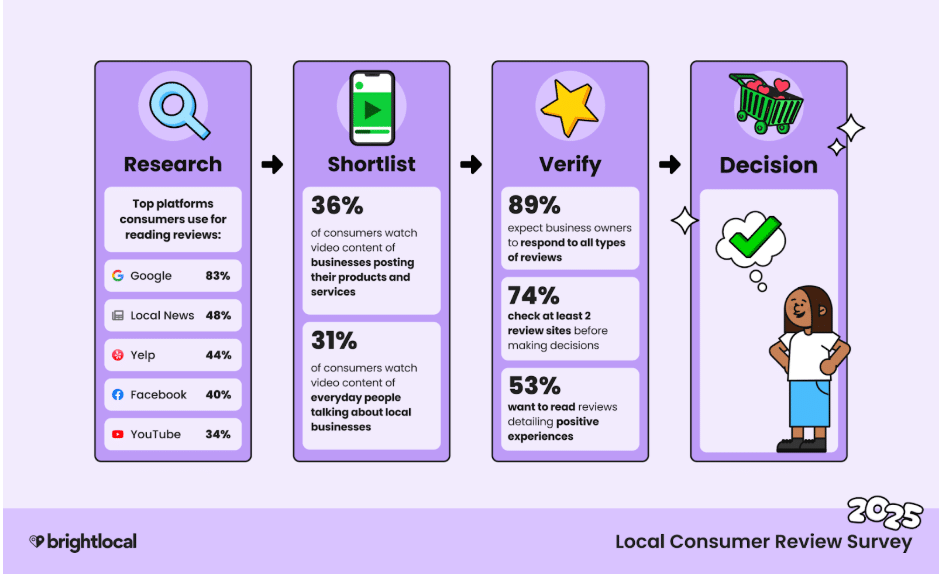
That makes feedback a credible, steady stream of PR-ready proof.
6 Practical Ways to Utilize Customer Feedback for PR
Customer feedback shouldn’t just sit in your archives. You should turn them into your PR drive. Here’s how:
1. Repurpose Feedback into Testimonials
Scan for short, specific praise that names a problem and a result. These are your testimonial seeds, which you can embed on web pages, social channels, and other places where your audiences are. Follow these steps to make it more effective:
- Tag feedback as potential testimonials during your regular review cycles
- Reach out for permission and context. You need to know what changed and what surprised them
- Edit lightly for clarity and length, but keep the voice and details
- Match the testimonial to the right channel, like site pages, pitch decks, product pages, and social posts, each needs different lengths and tones
- Disclose material connections if the customer received compensation or incentives, per the FTC’s Endorsement Guides
Short quotes build social proof on owned channels. Longer quotes paired with a stat or outcome give your comms team something they can repurpose in media pitches.
“Customer feedback is more than data. It is the foundation of compelling stories that build trust and credibility. When brands listen and act on what their customers say, they do not just improve products, they create narratives that resonate with both the media and their audience. Every piece of feedback is an opportunity to turn real experiences into authentic PR”, says Joern Meissner, Founder and Chairman of Manhattan Review.
2. Use for Case Studies and Success Stories
When you have detailed feedback, especially with metrics, go deeper and create case studies and stories. First, start with one customer’s detailed feedback, one problem, and one measurable outcome. Follow this straightforward arc to keep it tight:
- The situation: What wasn’t working
- The decision: Why they chose you
- The change: What they implemented
- The outcome: What improved, with specific numbers and timeframes
- The human detail: A quote or moment that shows why it mattered
If sensitive data is involved, anonymize it responsibly or obtain permission to use ranges. You can create up to three well-structured success stories and case studies that can fuel an entire quarter of earned media. Later, you can pitch the story outputs to the right editors while the case studies end up on your newsletter and website.
Take Kardex’s case study as an example. The brand received feedback that its vertical lift module helped Van Meter streamline warehouse operations. It should have ended there, right? Kardex took a step further. It requested more details, including measurable metrics demonstrating the effectiveness of their VLM, and turned them into a case study.
3. Utilize Feedback for Media Outreach
Reporters are inundated with product-first pitches. Look for patterns in aggregated feedback that highlight common pain points, changing behaviors, and measurable shifts, and build a narrative around them.
- Use feedback trends as your peg: “We analyzed 1,200 customer surveys and found X is up 30% since last year”
- Pair the trend with a single customer example and a crisp stat
- Offer a short, visual data point and a spokesperson who can talk beyond your product
- Time it with seasonal coverage or industry cycles that reporters already plan around
Adrian Iorga, Founder & President at Stairhopper Movers, where he ensures customer satisfaction through efficient delivery and service, advises ensuring each angle of your pitch aligns with what target journalists are already seeking.
“If your target journalists are into real estate, your pitch should focus on a topic within that niche. Given the nature of this niche, you’ll need to package your collated insights with specific customer examples, numbers, and possible references. This ensures it stands out in any editor’s inbox.”
61% of journalists cited original research reports, such as trends and market data, as the content they most want to receive from PR professionals.
4. Create Engaging Content from Feedback
Andrew Bates, COO at Bates Electric, says, “A single piece of feedback can power a blog post, a short video, a podcast vignette, a carousel, a newsletter snippet, and a conference slide. This helps you reach your audience where they already are with what they like.”
Bates suggests doing the following:
- Turn a five-sentence customer email into a 90-second vertical video, then into a how-we-fixed-it blog post
- Record quick audio clips of customers reading their own feedback; add light editing, and you have a podcast mini-series
- Build a quarterly “customer insights” newsletter that pools the best wins and lessons, and credits contributors by name with permission
Resist the urge to sand down the rough edges and polish every output. Instead, leave in the phrases your customer actually uses. If you offer a discount or perk to participate, ensure you clearly disclose it per FTC guidelines.
5. Build Community and Encourage More Feedback
Feedback results in another cycle of feedback when you make participation feel valued. Create lightweight ways for customers to communicate with you and with each other.
- Host monthly office hours with your product or service leads
- Spin up a simple community hub or forum and seed it with helpful prompts
- Start a customer council and rotate membership so new voices get a turn
- Celebrate community contributions publicly by releasing notes that thank specific customers, or create a “most helpful idea of the month” spotlight
When you publicly acknowledge, appreciate, and act on customer input, you demonstrate your brand values in action. This consistent engagement creates a positive feedback loop that generates ongoing PR opportunities and strengthens customer loyalty.
The long-term PR upside compounds over time.
6. Monitor and Respond to Feedback
You can’t elevate what you don’t see. Set up alerts and workflows so feedback never goes unnoticed. That means:
- Social listening and review monitoring for your brand and competitors
- A triage path that tags items as product, support, or PR opportunities
- SLAs for responding on public channels with a clear, human voice
- A simple close-the-loop ritual: publicly acknowledge the input, share what you’re doing, and follow up when it’s done
If you hear the same friction point three weeks in a row, that’s a canary in the coal mine. Fix and draft a future narrative about how you fixed it.
Conclusion
Customer feedback is your most renewable source of trust. When you treat it like a newsroom treats tips, you get a steady stream of stories that humanize your brand, clarify your value, and build credibility with both media and customers.
Start by picking an existing feedback, just one. Repurpose it into a testimonial, case study, story, or trend that’s worth sharing. Reach out to the people who provided feedback for more information to shape your narratives, and request permission to disclose where necessary.
To keep the loop going, you can create a community hub that gamifies feedback collection and encourages your customers to share it at any time.