
Investing in content marketing is a low-cost, high ROI method for driving business results. It’s effective at building brand awareness. It can help boost brand trust or remove common conversion obstacles. And, when done right, it can even nurture brand loyalty, contributing to the long-term profitability of your marketing campaigns.
Nevertheless, not all content is equally successful at driving conversions. If you look at the research on the effectiveness of content marketing campaigns in the B2B sector, you’ll find that 41% of marketers had mixed or poor results.
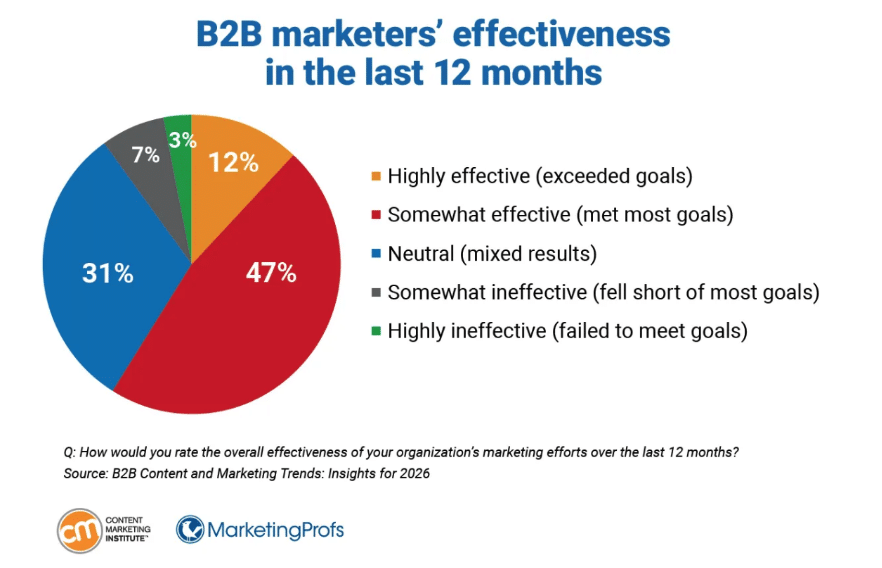
Source: contentmarketinginstitute.com
But why does this happen? And how do you change your outcomes for the better?
This guide will explore the real reasons your content isn’t driving conversions, offering you actionable tips to optimize and enhance your campaigns for more effective outcomes. Let’s get into it.
You’re Failing to Produce Relevant and/or Valuable Resources
Perhaps one of the biggest downsides of operating in a digitized world, where brands can reach their audiences at any time, is that consumers are fed up with being bombarded with marketing messages.
In fact, if you look at the statistical data on people’s ad-blocking behavior, you’ll find that 42.7% of internet users block ads. Their main reasons for doing so include the number of ads they see, the intrusiveness of these messages, privacy concerns, and the fact that most marketing messages are irrelevant to their needs.
But what’s even more fascinating is that even when they don’t take active steps to stop brands from bombarding them with sales pitches, consumers still manage to filter out irrelevant messages.
According to a recent survey, 81% of people actively ignore irrelevant marketing content, while 96% say that personalized marketing pitches make them more likely to convert.
So, if you’re wondering why your content isn’t converting, the simple fact may be that it’s either irrelevant or insufficiently valuable to your target audience.
One of the best ways to fix this is to approach your content strategy by asking what your audience really needs and wants to learn from your business.
For instance, Start in Wyoming understands that its prospects have several questions about the possibility of starting an LLC in Wyoming, depending on their actual address. To draw them into its sales funnel and provide them with relevant value, this business created several in-depth resources teaching potential customers about how they can benefit from starting an LLC in the state, even as non-residents.
This is a marvelous approach, and not just because the topic choice perfectly aligns with what Start in Wyoming’s audience is searching for online. More importantly, this type of resource expertly demonstrates that the business comprehends its audience’s needs, is willing to provide educational value for free, and is an expert in the field, meaning that customers can genuinely rely on it to solve their pain points.
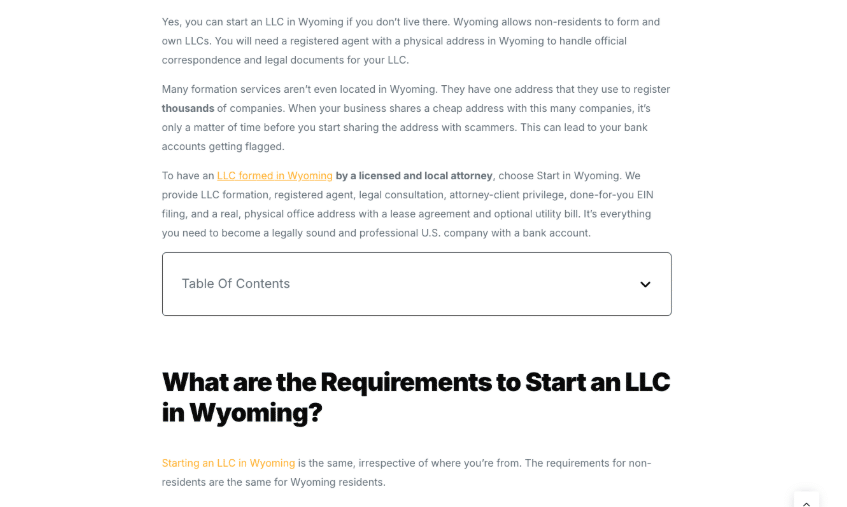
Source: startinwyoming.com
Your Content Is Too Complex or Insufficiently Engaging
When it comes to using content to drive conversions, keep in mind that consumers have very little patience and even shorter attention spans.
According to research, the average person will pay attention to a single screen for only 47 seconds. But even if they spend longer interacting with your content, they’re much more likely to skim than read it word for word. And you can forget about them paying attention if the content isn’t aesthetically attractive or engaging enough to satisfy modern internet users.
If the resources you’re publishing aren’t doing enough to help reach your conversion goals, it might be time to ask yourself whether you’re doing enough in the readability and engagement departments.
Essentially, by making your content easy to read and attractive, your chances of engaging your target audience (and moving them through the sales funnel) are going to be much higher than if you don’t pay attention to these things.
The good news is that reducing content complexity and boosting engagement for the sake of elevating conversion rates shouldn’t be too difficult.
One of the best ways to accomplish these goals is to use visuals to communicate key user benefits — a tactic that significantly elevates content comprehension and engagement.
For instance, if you check out Custom Sock Lab, you’ll notice that the brand uses illustrations to summarize its key value propositions, with each visual clearly linking to a benefit like bulk ordering, white-glove service, customizability, or USA production quality.
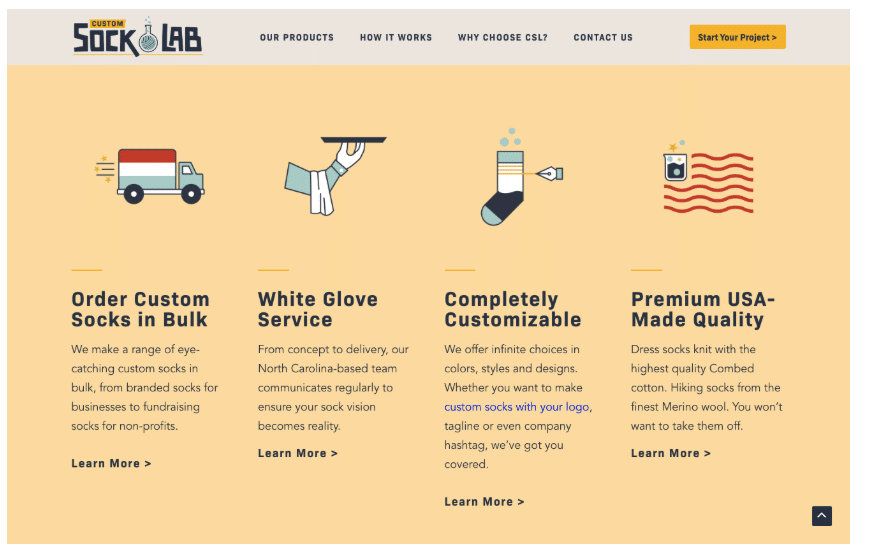
Source: customsocklab.com
Alternatively, you can also opt for more user-friendly formats, like video, podcasts, or other multimedia content types. These tend to be both attractive and engaging. Plus, they’re exceptionally effective at educating audiences, which is one of the primary tactics for elevating your prospects’ purchase intent.
But, you don’t have to invest in expensive marketing formats to yield positive outcomes — especially if it’s outside your budget.
If you’re trying to keep production costs low while ensuring that your audience can extract maximum value from your resources, try something similar to EXT Cabinets. This brand’s Gas vs. Charcoal Grill guide is the perfect example of how simple formatting and content organization contribute to user-centricity, creating an easy-to-read and easy-to-understand article that presents readers with genuine value without being too complex or expensive to produce.
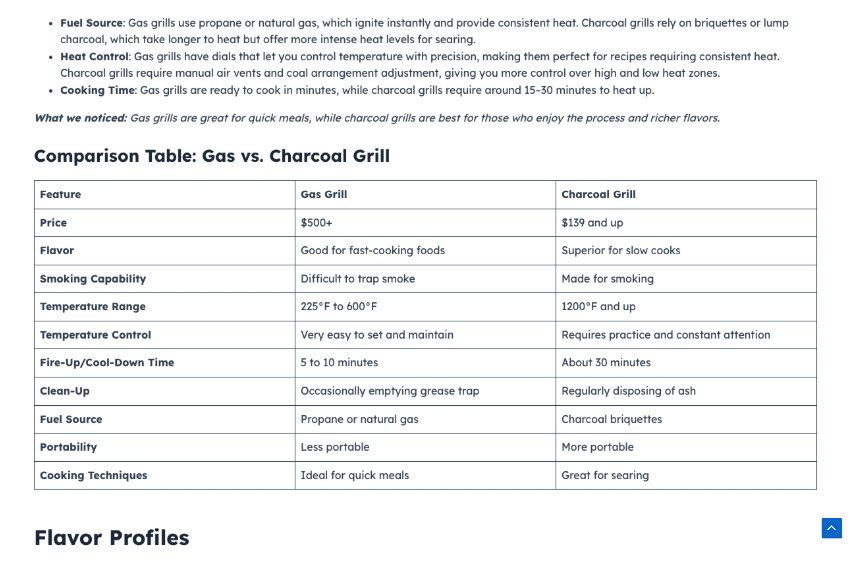
Source: extcabinets.com
It’s Not Positioning Your Brand as an Industry Authority
Brand trust is crucial for achieving satisfactory conversion rates.
After all, research from Edelman shows that 88% of consumers consider brand credibility an essential factor that influences their buying decisions.
So, if you feel like your content isn’t driving conversions, the real reason behind this may be that you’re not doing enough to position your brand as a knowledgeable and experienced industry authority.
What’s great is that there are several effective strategies to elevate brand trust through content.
For starters, including customer stories or case studies in high-value areas of your website (like landing pages optimized for the mid-stages of the sales funnel or even product pages) can be a great method to use content marketing to encourage sales.
If you check out brands like Glassbox, you’ll see how seamlessly they integrate trust-building content into their homepage design, using case studies and UGC to boost brand authority and remove common conversion obstacles.
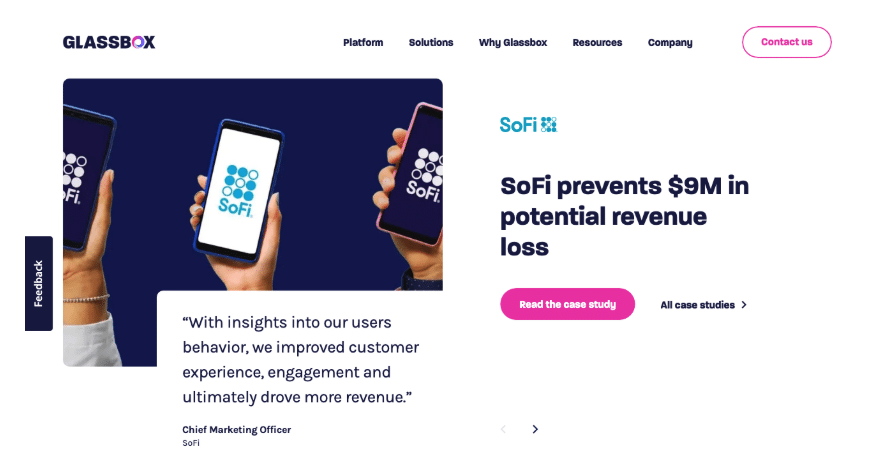
Source: glassbox.com
But, of course, this isn’t the only method to use content marketing to position your brand as a credible and user-centric voice in your industry.
Investing in high-quality resources that remove your prospects’ pain points for free — like downloadables, interactive tools, original research, or in-depth educational guides — can be equally effective in helping your potential customers see they can trust your brand and rely on it to prioritize value over profits.
For instance, Brevo’s Martech Benchmark competitive intelligence tool is an amazing example of how easily a business can make itself indispensable to potential customers, all the while allowing them to reap the benefits for free and with zero commitment. The latter is fantastic for reducing last-minute conversion opt-outs.
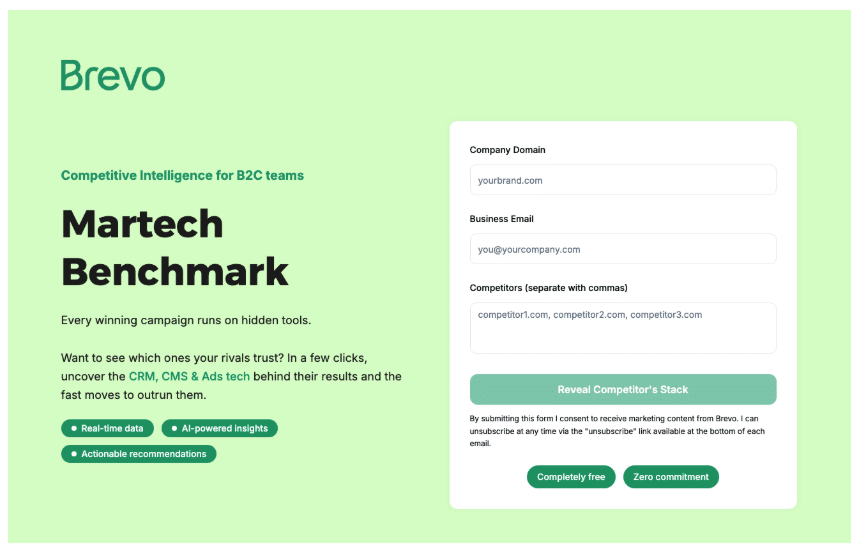
Source: get-brevo.com
You’re Selling Too Hard (or Not Selling Hard Enough)
Here’s one of the most confusing things about using content to drive conversions.
If they’re well-made, valuable, and distributed in a way that aligns with your target audience’s content consumption habits, most of your marketing resources can be effective at encouraging sales. Unless, of course, you make your intention to sell too overt.
The reason is simple. Most consumers are tired of constantly being bombarded with ads.
According to SurveyMonkey, 74% of people feel like they’re seeing too many ads (especially on social media). Moreover, 44% feel that these ads are irrelevant to their wants and needs.
Pair this with the fact that seemingly aggressive sales messaging alienates consumers and reduces their purchase intent, and it’s clear that selling too hard through your content marketing strategy is not the way to go.
So, unless you want your potential customers to start actively ignoring your content (or worse yet, form a negative perception about your business, seeing it as a company only trying to sell), then it’s crucial that the content you produce and publish isn’t too sales-oriented.
But here’s the deal. Avoiding sales messages and CTAs altogether isn’t an answer either.
Ultimately, why would your audience continue to interact with your brand after finishing a blog post, unless you present them with an attractive incentive for continuing their browsing journey?
With this in mind, one of the best ways to boost content conversions is to hit the right balance between not selling and selling.
Yes, you need to avoid constantly reminding your audience to buy your solutions. But, don’t forget to enable them to do so (when they’re likely to want to).
For example, the product cards in AG1’s blog posts perfectly align with the reader’s position in the buyer’s journey and present handy conversion mechanisms that web visitors can use to move through the sales funnel.
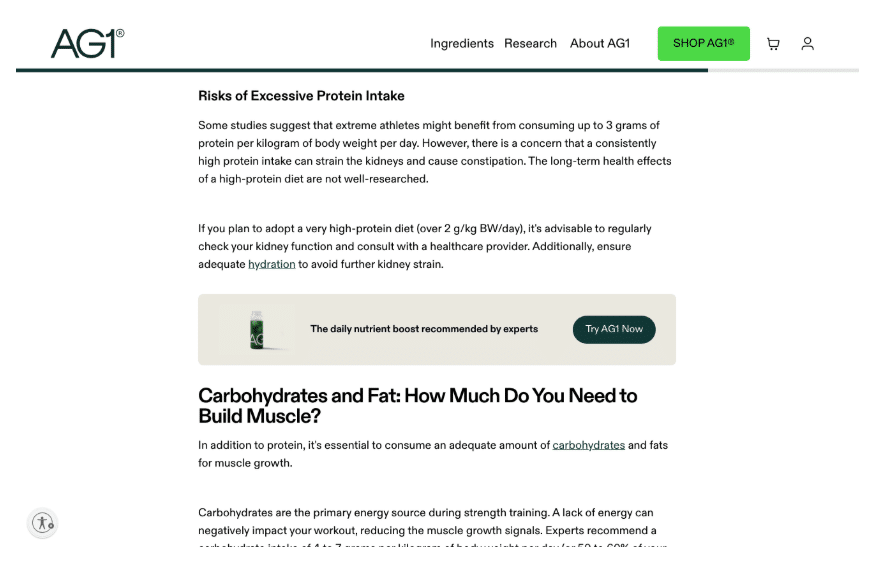
Source: drinkag1.com
Of course, if you’re producing content meant for consumers in the earlier stages of the funnel, such overt product mention probably won’t be effective at driving conversions. In these cases, the better way to integrate the content into your sales funnel is to use strategic CTAs to nudge prospects toward product awareness.
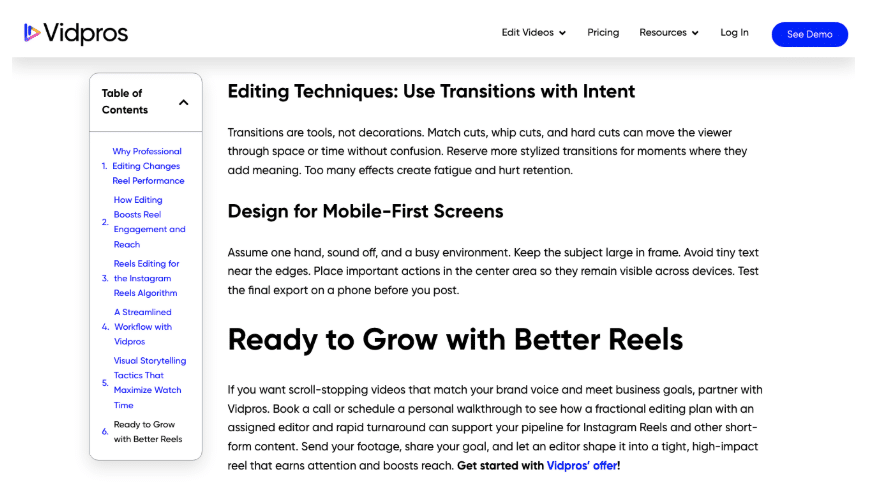
For example, Vidpros’ How Editing Boosts Reel Engagement and Reach only mentions the brand’s services at the very end of the article. Why? Because the brand’s content team understands that first-time web visitors probably aren’t looking to hire video editors. Rather, they’re considering the idea of adopting a DIY approach. So, by presenting readers with high-quality educational content and showing them what the process looks like (and communicating the fact that it’s not easy or fast), Vidpros creates the ideal opportunity to say how it can take care of this pain point for its potential customers without alienating prospects by presenting them with a sales pitch before they’re ready to receive one.
Source: vidpros.com
You’re Not Maintaining a Consistent Brand Identity
Despite being incredibly important for marketing and selling a solution, branding is still often disregarded in most businesses’ content strategies. And that could be one of the primary reasons your content isn’t converting.
If you think about how consumers choose what products to invest in, you’ll find that brand names often play a key role in influencing their purchasing behavior.
For example, when exploring products and services on Google, 82% of internet users choose a familiar brand for their first click. And 52% of young buyers prefer classic brands, with 81% enjoying it when businesses bring back products and trends that remind them of their childhoods.
Of course, a strong brand heritage isn’t crucial for ensuring that your content converts. However, a recognizable and consistent brand identity is.
With this in mind, one of the best methods for elevating conversion rates on your content pages is to ensure they align with your brand’s reputation — both in terms of voice and tone as well as visuals.
For instance, take a look at how John Sells Hilton Head uses this tactic in its blog section. You’ll see that each article includes a stunning feature image that aligns with the brand’s visual identity. And you’ll notice a strong consistency between all of the brand’s digital distribution channels. Ultimately, the primary reason why the business is so careful when choosing its visuals is that it understands that its audience expects to see stunning, aspirational imagery when interacting with the brand. So, to meet their expectations (and create a subtle set of hints about what buyers can expect from it), John Sells Hilton Head pays close attention to what visuals it uses in its company blog, choosing each photo intentionally and knowing that it’s bound to impact its online reputation (and potential conversion rates).

Source: johnsellshiltonhead.com
Final Thoughts
High-quality, well-targeted content should play a key role in your conversion strategy. So, if you’re not seeing the outcomes you’re after, it’s worth paying closer attention to the potential causes described in this guide.
Recognize any of these mistakes? Don’t panic. Most of them are easy to solve, even if you do have to go through some trial and error to find the best approach. So, don’t stall and get to work. The sooner you address these conversion killers, the faster you’ll start seeing your business grow and reaping the fruits of your labor.