

Only fresh content wins attention. That is true, but not complete! If you keep your posts updated and do not let them lose their relevance, then they are more likely to rank than even newer content.
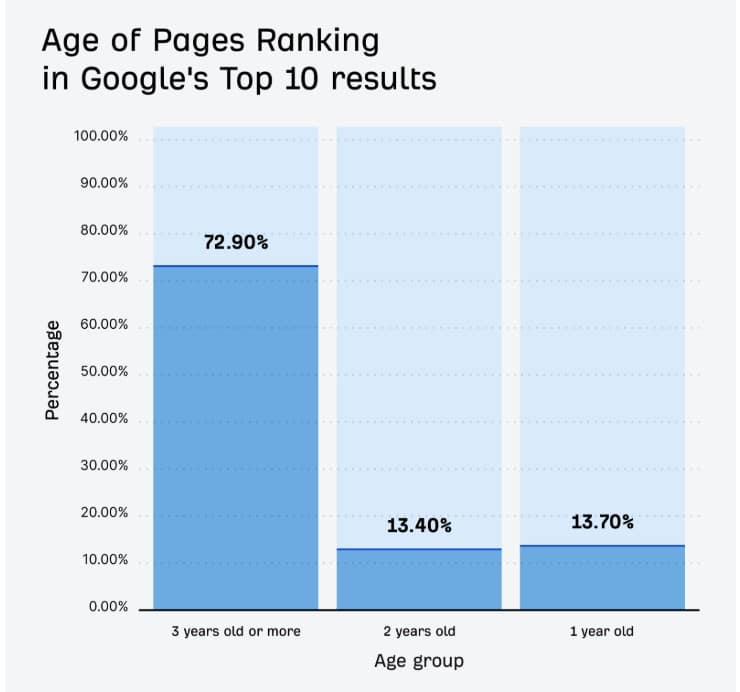
In fact, a study by Ahrefs found that nearly 72.9% of top-ranking pages are at least three years old. SERPs are dominated by older pages in 2025.
Source: Ahrefs
However, they only hold their positions because they’ve been updated and optimized over time. Outdated examples, old data, and irrelevant keywords will eventually get your posts down in rankings.
That’s why refreshing your old posts is so necessary. AI has made it easier for you to quickly give your existing content new life without losing its core message.
In this article, I’ll share 7 practical tips for marketers to refresh old posts using an AI rewriting tool. So your content stays relevant, engaging, and high-performing.
7 tips for marketers to refresh old posts using AI
Refreshing old posts does not mean just fixing some typos or adding a new image. It’s about making your content feel relevant and valuable for the current audience. An AI rewriter speeds up this process. And gives your older articles a modern touch without starting from scratch.
1. Update outdated statistics and data
Nothing makes a blog post feel older than outdated numbers. Readers and search engines both notice when your content has stats that are no longer relevant.
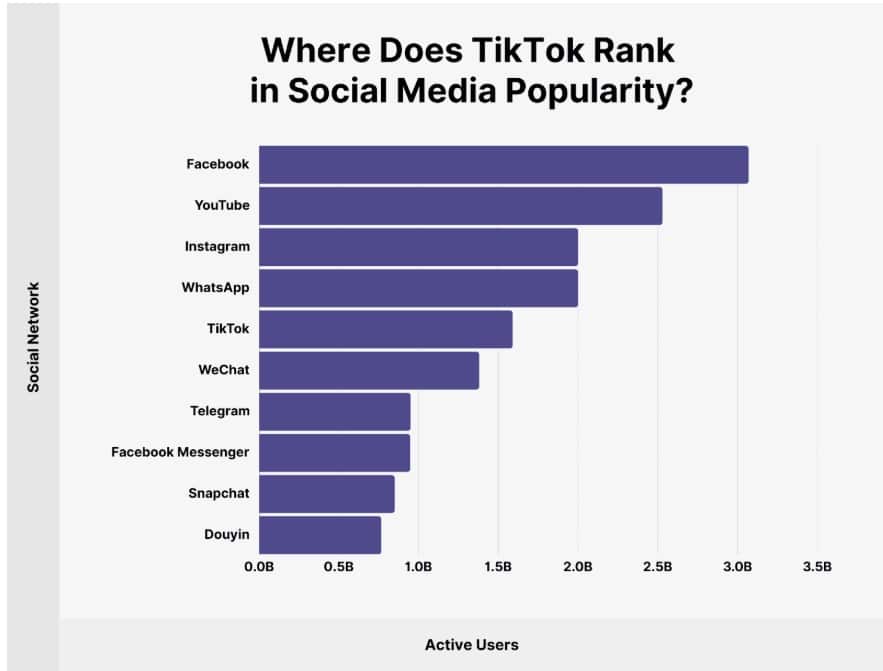
For example, you wrote an article in 2019 about social media marketing trends. You mentioned that TikTok had 500 million active users. Today, the platform has over 1.59 billion users worldwide (DemandSage).
Source: BackLinko
That’s a massive gap. And if you don’t update it, your readers might lose trust in your content.
So, keep looking for new numbers. Your page should be the first to feature them. Sometimes, facts or stats are written in images. You do not have to retype them. Just use an imagetotext.online and extract them. Then you just have to copy them and paste wherever you want.
Update facts and give a new look to your sentences with an AI rewriter. It offers many tones, like professional, persuasive, casual, formal, and academic. This combination maintains your tone and flow while ensuring your post looks current and trustworthy.
2.Refresh titles and headlines
Your headline is the first impression of your post. If it feels outdated or irrelevant, readers will not click. That’s the major reason why 80% of readers do not get past headlines, according to a study by Moz.
Means a stale headline can hold back your entire article.
Take this example:
- Old title: “Tips for Social Media Marketing in 2020.”
- Updated title: “10 Proven Social Media Marketing Strategies to Win in 2025.”
The second one not only feels fresh but also aligns with the modern way of writing titles. So it looks much more relevant.
A rewriter AI can quickly generate multiple headline variations with power words, numbers, and urgency. This helps you A/B test different styles and pick the one most likely to grab attention.
3. Improve readability and flow
If your data is up to date, but the sentences are clunky, people will still not like it. Because only a few readers will be able to understand it fully. According to the Hemingway App, content should be at a grade 8 level or lower. So a broad audience can read it easily.
For example:
- Grade 14: “Marketers should attempt to leverage innovative strategies that are applicable in the digital landscape to maximize visibility.”
- Grade 8: “Marketers should use new digital strategies to boost visibility.”
See the difference? The second one is more readable. It’s better suited for today’s audiences.
An AI rewriter tool online can automatically improve your readability. It simplifies complex sentences, adjusts tone, and makes better word choices. That makes your posts more natural for readers and search engine marketing.
4. Update keywords and SEO optimization
Search trends change fast. A keyword that you used two years ago might be irrelevant today. In fact, 15% of daily Google searches are brand-new queries (Search Engine Journal). That means your old posts might be missing out on organic traffic.
For example, you wrote a post in 2021 with the keyword “social media tools.” Today, people are searching for “AI-powered social media tools.”
Other than that, the trend of stuffing your posts with keywords is gone. Google algorithms are context-aware now. They can sense if some words do not fit in naturally.
Again, the AI rewriter can help you here. This tool is also context-aware. Provide your keyword-stuffed or messy content to it. And it will analyze the context and recreate it from scratch. With a natural tone and keywords adjusted properly.
5. Add new examples or insights
People can ask anything to AI tools like aianswergenerator.org. Then why would they come and read your content? Because you will have a unique opinion, insights, or experience that AI cannot have. That’s why AI content often feels generic.
And that’s why updating posts with new examples and case studies can increase organic traffic up to 106% (HubSpot). Google wants this. It is even a factor for SERP rankings. Google defines it as EEAT (Experience, Expertise, Authoritativeness, and Trustworthiness).
For example, you can review the latest tool and tell how it helped you. Can you try a strategy and explain how much it costs you? Or if you are an expert at something, you can define how things work differently in reality vs in theory. It will make your content valuable to your audience.
While the rewriting AI tool we have here cannot provide the latest examples or insights, it can make them sound better. It has a first-person voice mode as well. You can use it to rewrite your addition in the content and make it sharper.
6. Enhance engagement with conversational tone
Posts are not refreshed for Google only. They are meant to improve the connection with people as well. And they read more when they feel the content speaks directly to them.
That means updating pain points and rewriting problems in today’s context. Then, presenting solutions in a way that feels personal.
The main thing is emotion. Studies show that emotional posts can quickly grab attention and induce discussion. Why? Because people don’t just remember facts—they remember how you made them feel.
Exactly why poems are said to be the best words an emotion can find (Robert Frost). You can also use poetry if you want. In fact, it will be better. You can also take help from a poem maker. It can create poems on any topic within seconds.
You will have to tweak the poems generated by aipoem-generator.com. But it will provide you with a starting point and save you time.
For the regular, non-rhyming sentences, you already have the AI rewriter free from paragraph-generator.com. It will help you add emotions to them as well.
7. Fix broken links and technical updates
A link leading to a 404 error is the most frustrating thing for a user. Broken links also signal poor maintenance to search engines, which can hurt your rankings.
According to Ahrefs, around 66.5% of links break after a decade of being published. A clear reminder that no post stays “evergreen” without regular upkeep.
So keep testing all outbound and internal links, and replace the ones that don’t work. An AI rewriter can help you smoothly reframe sentences around updated references. It ensures the context flows naturally with any update.
You also need to check formatting issues, slow-loading speeds, and outdated embeds (like YouTube videos that are no longer available). These small details make your content user-friendly. Both readers and Google want that.
Conclusion
Refreshing old posts is like breathing new life into them. So they stay relevant and SEO-friendly.
Today, you don’t have to do it all manually. An AI rewriter helps you update structure, optimize keywords, and reframe ideas without losing your voice. Pair it with your creativity, personal insights, and audience understanding. You’ll have content that’s both timeless and impactful.
So, don’t let your old posts collect digital dust. Refresh them and watch them climb back up in rankings.